

To avoid misunderstanding, PM directs Ministry of Unity and Minister of Religious Affairs to meet MCCBCHST
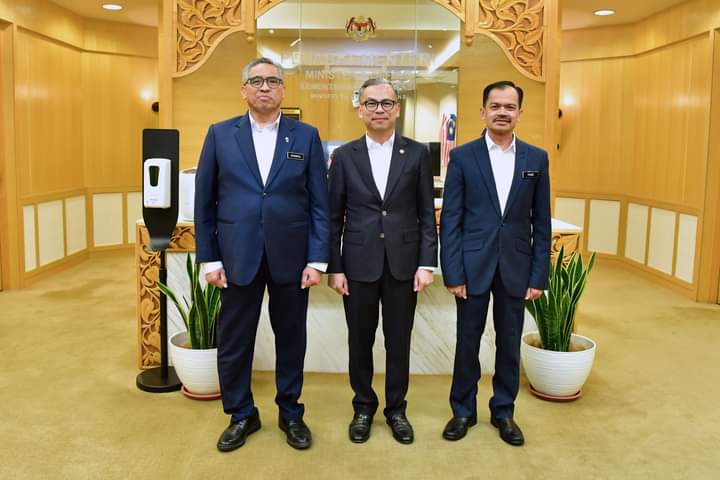
KUALA LUMPUR: Communication Minister Fahmi Fadzil announced that Prime Minister Datuk Seri Anwar Ibrahim has directed the Ministry of Unity and the Minister in the Prime Minister’s Department (Religious Affairs), Datuk Mohd Na’im Mokhtar, to discuss with the Malaysian Consultative Council of Buddhism, Christianity, Hinduism, Sikhism, and Taoism (MCCBCHST).
According to the Wilayahku portal, Fahmi said this is to prevent misunderstandings regarding the placement of officers from the Department of Islamic Development Malaysia (JAKIM) in all government departments.
“The meeting aims to hear the views of MCCBCHST and to clarify the government’s position.
“As much as possible, these issues should be managed well to avoid misunderstandings, especially since an explanation was already provided about three weeks ago,” he said.
Fahmi made these comments during a press conference at the Ministry of Communications as part of the Unity Government Week.
Yesterday, the MCCBCHST opposed the proposal to place JAKIM officers in all government departments.
The MCCBCHST claimed that this action could potentially undermine constitutional guarantees, including human rights protected under Articles 5 to 13, which form the constitutional framework.
However, Na’im clarified that the purpose of placing JAKIM officers is solely to manage religious programs.
Meanwhile, Fahmi, who is also the spokesperson for the Unity Government, stated that the issue of placing JAKIM officers in all government departments was addressed by JAKIM on August 7.
He mentioned that MCCBCHST had issued a new statement, which created a situation considered to be a misunderstanding.
Fahmi explained that the claim that JAKIM is involved in policy-making within the ministries where they are placed is far from the target and original objective.
He said that JAKIM officers are placed in government departments to assist, particularly in terms of integrity or spiritual input within the ministries.
“They are not there to provide opinions on policy matters,” he said.