

Sultan Nazrin Reprimands Mismanagement of Waqf, Puts Forward 4 Steps to Empower the Institution
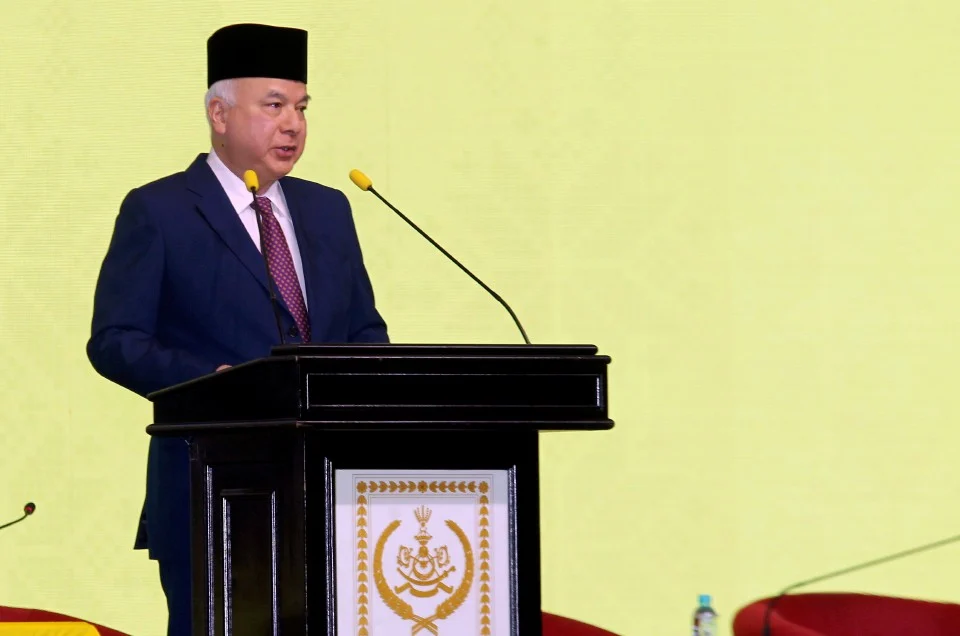
KUALA LUMPUR: The management of waqf assets and its governance is not merely an administrative matter, but rather a great trust that must be carried out with full integrity to ensure that the trust of the endowers (wakif) continues to be preserved.
The Sultan of Perak, Sultan Nazrin Muizzuddin Shah, decreed that Muslims must be honest about the current reality of the waqf institution in order to preserve its credibility, besides taking concrete actions to remedy the weaknesses that still exist.
His Majesty decreed that the establishment of various financial instruments such as cash waqf sukuk is insufficient if it is not balanced with a deep appreciation of the true spiritual purpose and values.
At the same time, His Majesty reprimanded the condition of waqf assets and land that are still left abandoned, records that are incomplete, and their potential failing to be realised optimally.
“In some places, waqf properties are lost due to neglect or mismanagement, which is like insulting the endowers. When administered weakly, blessings diminish and the trust of the endowers is silently betrayed,” decreed His Majesty.
Sultan Nazrin decreed this at the International Da’wah Waqf Convention of the Muslim Welfare Organisation of Malaysia (PERKIM) 2026, themed ‘Strengthening the Ummah’s Well-being Agenda’ at the Kuala Lumpur Convention Centre (KLCC).
Hence, Sultan Nazrin emphasised that Muslims cannot simply take pride in the past glory of the waqf institution, but must take concrete steps to restore and empower it.
His Majesty also reminded that waqf administrators are not the owners of the assets, but rather trustees on behalf of the poor, students, the sick, and future generations.
His Majesty decreed that efforts to maintain clear records, account for every ringgit transparently, and invest wisely are the essence of obedience, because a well-managed ledger is a form of worship.
Consequently, to empower the waqf institution, Sultan Nazrin put forward four concrete proposals.
“First, proposing the establishment of an international working group to integrate the Indonesian Waqf Core Principles, AAOIFI standards, and the Kazakhstan framework into a common core principle that can be adopted voluntarily, with INCEIF University proposed to act as the secretariat.
“Second, accelerating the absorption of digital cash waqf platforms through a transparent real-time public dashboard to enable donors to track their contributions directly.
“Third, launching a pilot project, Waqf for Peace and Planetary Resilience, in clusters of mosques and community centres in ASEAN to finance solar energy and climate-resilient water infrastructure.
“Fourth, ensuring that the charter of waqf institutions registers the principles of balance, justice and mercy from the Al-Mizan framework as binding governance criteria,” decreed His Majesty.
Sultan Nazrin decreed that this conference is a golden opportunity to propel the waqf institution into the future and remind today’s generation not to merely admire past achievements without contributing something new.
Meanwhile, PERKIM Chairman, Tan Sri Abang Johari Openg, said that waqf can no longer be seen merely as a welfare institution, but must be recognised as a strategic instrument for sustainable socioeconomic development.
He said a well-managed waqf ecosystem is capable of complementing public expenditure and supporting the education, health, entrepreneurship, housing, and humanitarian aid sectors.
He said this approach also contributes to social justice and shared prosperity through development measured by the well-being and opportunities enjoyed by the community.
The AAOIFI standards are international guidelines for Islamic finance covering the fields of accounting, auditing, governance and Shariah.
The convention organised by PERKIM brought together nearly 1,000 participants consisting of waqf experts, scholars and da’wah practitioners from within and outside the country to discuss the harmonisation of waqf governance models, the potential of funds for education, asnaf welfare and the empowerment of new converts (muallaf).
Berita Harian