

Missiles Threaten Gulf’s Lifeline: Desalination Plants Face New Risks Amid Regional Conflict
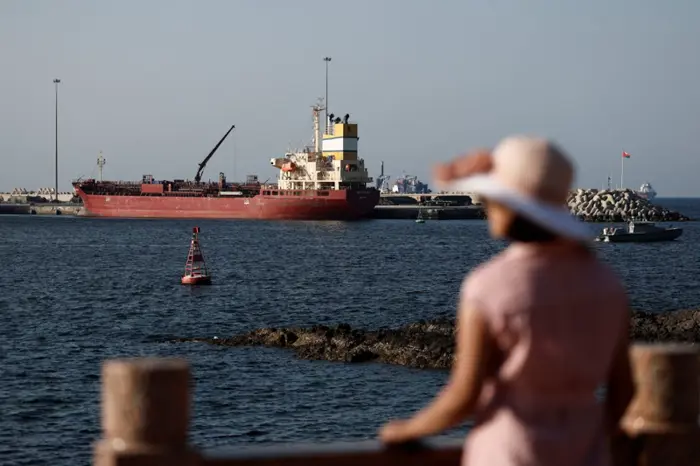
DUBAI: As tensions escalate across the Middle East, analysts warn that the region’s greatest vulnerability may not be oil but water. While global attention focuses on energy markets, the desalination plants that supply drinking water to millions in the Persian Gulf could become a critical target if the conflict widens.
The Gulf region, known for its vast oil reserves, relies heavily on seawater desalination to meet its freshwater needs. Countries such as Kuwait obtain nearly 90% of their drinking water from desalination, while about 86% in Oman and roughly 70% in Saudi Arabia depend on the same technology.
Desalination plants remove salt from seawater commonly through a process known as reverse osmosis to produce fresh water used by cities, hotels, industries, and even agriculture in one of the world’s driest regions.
However, the ongoing conflict that began on Feb. 28 following attacks by the United States and Israel on Iran has brought fighting dangerously close to vital water infrastructure.
On March 2, Iranian strikes near Dubai’s Jebel Ali port landed roughly 12 miles from one of the world’s largest desalination plants. The facility supplies a major portion of drinking water to residents of Dubai. Damage has also been reported at the Fujairah F1 power and water complex in the United Arab Emirates and at the Doha West desalination plant in Kuwait, though the impacts appear to have resulted from nearby port attacks or debris from intercepted drones.
Experts say desalination plants are particularly vulnerable because many are integrated with power stations. Any disruption to electricity infrastructure could directly affect water production.
According to Michael Christopher Low, director of the Middle East Center at the University of Utah, Gulf states are more than just oil powers.
“Everyone thinks of Saudi Arabia and its neighbors as petrostates,” he said. “But they are also saltwater kingdoms—man-made, fossil-fuel-powered water superpowers.”
The risk is significant because more than 90% of the region’s desalinated water comes from just 56 major plants. A 2010 analysis by the Central Intelligence Agency warned that attacks on such facilities could quickly trigger national crises.
If a major desalination plant were knocked offline, some Gulf cities could lose most of their drinking water within days. A leaked 2008 U.S. diplomatic cable even suggested that the Saudi capital Riyadh might have to be evacuated within a week if critical desalination infrastructure on the Gulf coast were severely damaged.
Although countries like Saudi Arabia and the UAE have invested heavily in pipelines, storage reservoirs, and backup systems, smaller states, including Bahrain, Qatar, and Kuwait, have fewer alternatives.
Beyond war, environmental challenges are also raising concerns. Desalination is energy-intensive and produces large volumes of concentrated brine that are discharged back into the ocean, potentially harming marine ecosystems such as coral reefs.
The region has faced similar threats before. During the Gulf War in 1990–1991, Iraqi forces sabotaged desalination plants and power stations while retreating from Kuwait. Massive oil spills also threatened to contaminate seawater intake systems used by desalination facilities across the Gulf.
Security experts warn that the erosion of long-standing norms against targeting civilian infrastructure—seen in conflicts from Ukraine to Gaza—raises new concerns for water systems across the Middle East.
Meanwhile, Iran itself faces a growing water crisis. After years of severe drought, reservoir levels in Tehran have reportedly dropped to around 10% of capacity. Iranian President Masoud Pezeshkian recently warned that the capital could even face evacuation if shortages worsen.
Unlike many Gulf states, Iran relies primarily on rivers, reservoirs, and underground aquifers rather than desalination. However, the country is now racing to expand desalination projects along its southern coast despite financial and technical constraints.
Analysts say the situation highlights a stark reality: in the Gulf’s desert climate, water infrastructure may prove even more critical and more vulnerable than oil facilities in the event of prolonged conflict.