

Malaysia Sees Opening to Break SEANWFZ Deadlock, Gain Support from Nuclear-Armed Powers – Analysts
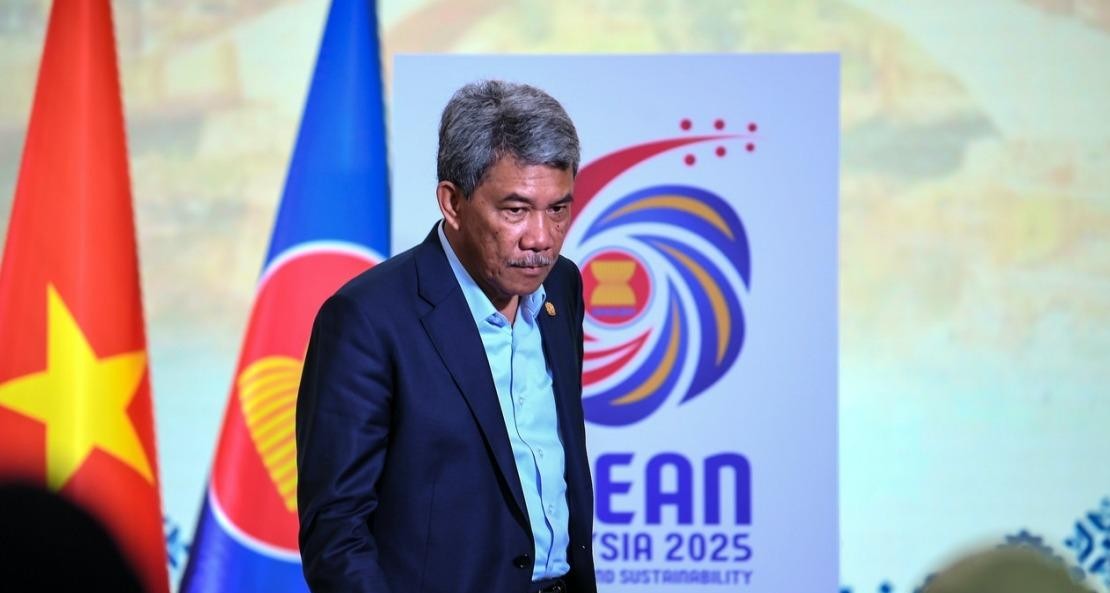
KUALA LUMPUR || July 6: Malaysia’s upcoming role as ASEAN Chair in 2025 offers a strategic window to push forward regional nuclear disarmament efforts and secure long-awaited support from nuclear-armed states for the Southeast Asia Nuclear Weapon-Free Zone (SEANWFZ) Treaty, analysts say.
This comes after Foreign Minister Datuk Seri Mohamad Hasan revealed that China and Russia have agreed to sign the SEANWFZ Protocol, while the United States is reviewing the possibility of doing so. If realized, this would mark the end of a nearly 20-year stalemate in getting the five nuclear-weapon states under the Non-Proliferation Treaty (NPT) to back the regional initiative.
“This is a major breakthrough,” said Associate Professor Dr. Mazlan Ali of the Perdana Centre, Universiti Teknologi Malaysia. “Malaysia has a rare opportunity to be recognized globally as a successful facilitator of nuclear disarmament diplomacy—an achievement no ASEAN country has attained so far.”
He added that if all five nuclear-weapon states—China, the US, France, Russia, and the UK—were to sign the Protocol, it would not only solidify ASEAN’s stance on nuclear non-proliferation but also raise Malaysia’s diplomatic profile globally.
No nuclear-weapon state has ever signed the SEANWFZ Protocol since the treaty was adopted in 1995 and came into force in 1997. The treaty commits ASEAN states to keeping the region free of nuclear weapons and prohibits nuclear weapon testing, possession, or use in Southeast Asia.
The upcoming Meeting of the SEANWFZ Commission’s Executive Committee, held alongside the 58th ASEAN Foreign Ministers’ Meeting (AMM) at the Kuala Lumpur Convention Centre, will see participation from major powers including the US, UK, Russia, and China.
Dr Mazlan said Malaysia’s role in securing consensus would be a key legacy for Prime Minister Datuk Seri Anwar Ibrahim, who has been a vocal advocate for the Global South and equitable international governance.
“If Malaysia can rally support for SEANWFZ, it will show that ASEAN is not just a passive bloc but an active voice for a nuclear-free future,” he said.
Meanwhile, Azril Mohd Amin, Chairman of the Centre for Human Rights Research and Advocacy (CENTHRA), stressed that a stronger SEANWFZ would serve both as a regional security measure and a moral stand for global peace.
“SEANWFZ is a binding legal framework that closes the door to any nuclear justification in this region. It reflects ASEAN’s collective commitment to peace and rejects strategic inequality,” Azril said.
He urged Malaysia to push for a reactivation of the SEANWFZ Commission and introduce a five-year action plan involving international bodies like the UN and the International Atomic Energy Agency (IAEA) to enhance monitoring and implementation.
Azril also proposed a “Kuala Lumpur Declaration 2025” to symbolize renewed regional political will and a unified ASEAN approach to engaging with nuclear powers.
Echoing this, Dr. Noor Nirwandy Mat Noordin, a Fellow in Psychological Operations at UiTM, highlighted that Malaysia’s leadership comes at a critical time of global tension and geopolitical rivalry, especially in the Indo-Pacific.
“Malaysia must uphold ASEAN’s diplomatic norms of non-interference and peaceful negotiation. This model of security diplomacy offers stability and prevents Southeast Asia from becoming a pawn in global power struggles,” Noor Nirwandy said.
He added that backing for SEANWFZ by major powers would reinforce the region’s identity as a peaceful, nuclear-free zone and dissuade militarization of its strategic waters.
The treaty, also known as the Bangkok Treaty, prohibits the use, testing, or deployment of nuclear weapons within Southeast Asia. Its protocol obliges nuclear-weapon states to respect this commitment, not threaten ASEAN members with nuclear force, and avoid violating the treaty’s terms.
Analysts agree that 2025 could become a defining moment for Malaysia to drive regional security forward—turning diplomatic will into a concrete legacy of peace.