

Implications Of Diesel Price Reduction On The Country’s Economic Structure
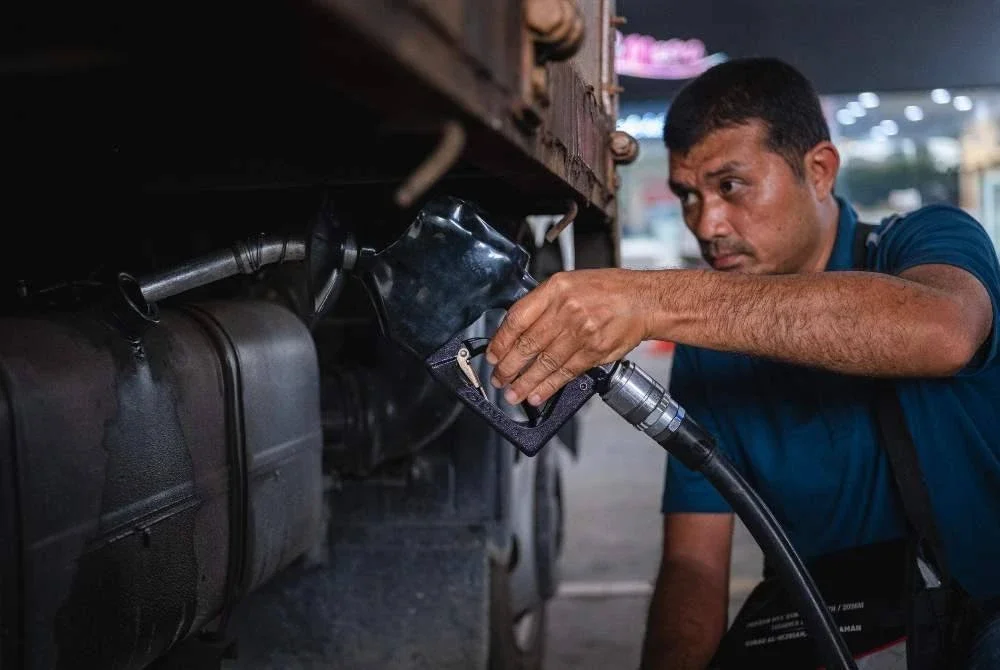
The government’s latest move to announce the reduction in the retail price of diesel as well as the realignment of the targeted subsidy assistance programme (BUDI MADANI) starting July 2026 is a clear signal that the country’s economic management is now on the right track.
Amid geopolitical uncertainty and global supply chain disruptions, the ability to restructure the domestic fuel pricing formula proves Putrajaya’s commitment to balancing national fiscal consolidation with the well-being of the people.
Essentially, this development did not occur by chance. The reduction in the free market retail price of diesel and the setting of the BUDI Diesel subsidy rate at RM2.10 per litre is also strongly supported by projections of global crude oil prices which are expected to experience a downward trend in the near future.
This combination of external factors and pragmatic domestic policies is seen as capable of providing ‘additional oxygen’ to the local market, stimulating economic activity, controlling the cost-push inflation chain, and injecting new dynamism into the logistics sector.
Economic Momentum Recovery And Industrial Competitiveness
The corporate sector and micro, small, and medium enterprises (SMEs) are the backbone of Gross Domestic Product (GDP) growth. Often, energy costs—especially fuel such as diesel—are the most burdensome component of operating expenditure. When diesel prices begin to show a decline, the multiplier effect will be immediately felt by the business ecosystem.
The reduction in production input costs allows local companies to redistribute their capital for operational expansion, technology investment, or even employee welfare improvements. This situation directly stimulates domestic investment and enhances the competitiveness of Malaysian products in the international market.
Foreign investor confidence will also increase when they see the government successfully managing energy price stability without affecting the fiscal consolidation targets outlined in the MADANI Economy framework.
Taming Inflation And Controlling Goods Prices
One of the post-pandemic nightmares for consumers is cost-push inflation. Every now and then, fuel price increases have often been used as a classic excuse by some traders to drastically raise the prices of daily necessities. However, with the current downward trend in diesel prices, this chain of justification has been successfully broken.
The government through the Ministry of Domestic Trade and Cost of Living (KPDN) now has a solid basis to ensure that this reduction in fuel costs is translated into lower or at least stable prices in the market. Through firm enforcement and cooperation from the business community, inflationary pressures can be controlled more effectively.
The ability to maintain stable retail and food prices not only restores purchasing power but also reduces the cost of living burden on the people, who have to be careful in managing their domestic expenditure.
Revitalising The Logistics Sector
The logistics and transport sector can be likened to the lifeblood that moves the entire national physical supply chain. From container lorries at ports to e-commerce delivery vans, all depend entirely on the stability of diesel prices.
The reduction in commercial diesel prices along with the implementation of assistance schemes such as the Subsidised Diesel Control System (SKDS) provides double relief to logistics operators. The reduction in transport operating costs means healthier profit margins for logistics companies, thus reducing their need to raise freight rates.
This positive chain effect guarantees the smooth flow of domestic goods in and out, as well as ensuring that the final product prices reaching consumers do not skyrocket. An active and competitive logistics sector will indirectly attract more global logistics firms to make Malaysia a major distribution hub in Southeast Asia.
Prudent Fiscal Management For The Future
To ensure that this positive momentum continues, targeted subsidy implementation through BUDI Diesel proves that the government no longer wishes to fall into the trap of blanket subsidies, which previously leaked significantly to foreigners and the ultra-rich. By channelling cash or special prices directly to eligible private diesel vehicle owners through MyKad verification, national fiscal savings can be reused for public infrastructure, education, and healthcare development.
Projections of declining world oil prices in the future provide ample breathing room for national policymakers. This strategy places Malaysia in a strategic geopolitical-economic position and mitigates external shocks due to extreme global commodity price fluctuations.
The current reduction in diesel prices in Malaysia is not merely a change in numbers at fuel pumps, but rather a reflection of far-sighted economic governance. It is a strong indication that the country’s macroeconomic approach is moving towards the right destination—a resilient, sustainable, and inclusive economy.
The main challenge post-price reduction is to ensure that all parties, especially the wholesale and retail chains, act honestly by lowering goods prices in line with the reduction in their input costs. If the synergy between global oil price declines, firm government policies, and local traders’ ethics can be harmonised, it is not impossible that Malaysia will witness a new phase of economic leap that is more vigorous, stable, and brings true prosperity to all levels of society.
Prof. Dr. Mohd Abdullah Haji Jusoh, Department of Logistics Management and Business Administration, Faculty of Defence Studies and Management, National Defence University of Malaysia.
Sinar Harian