

Hamas identifies hostages for release after accusing Israel of violating the ceasefire
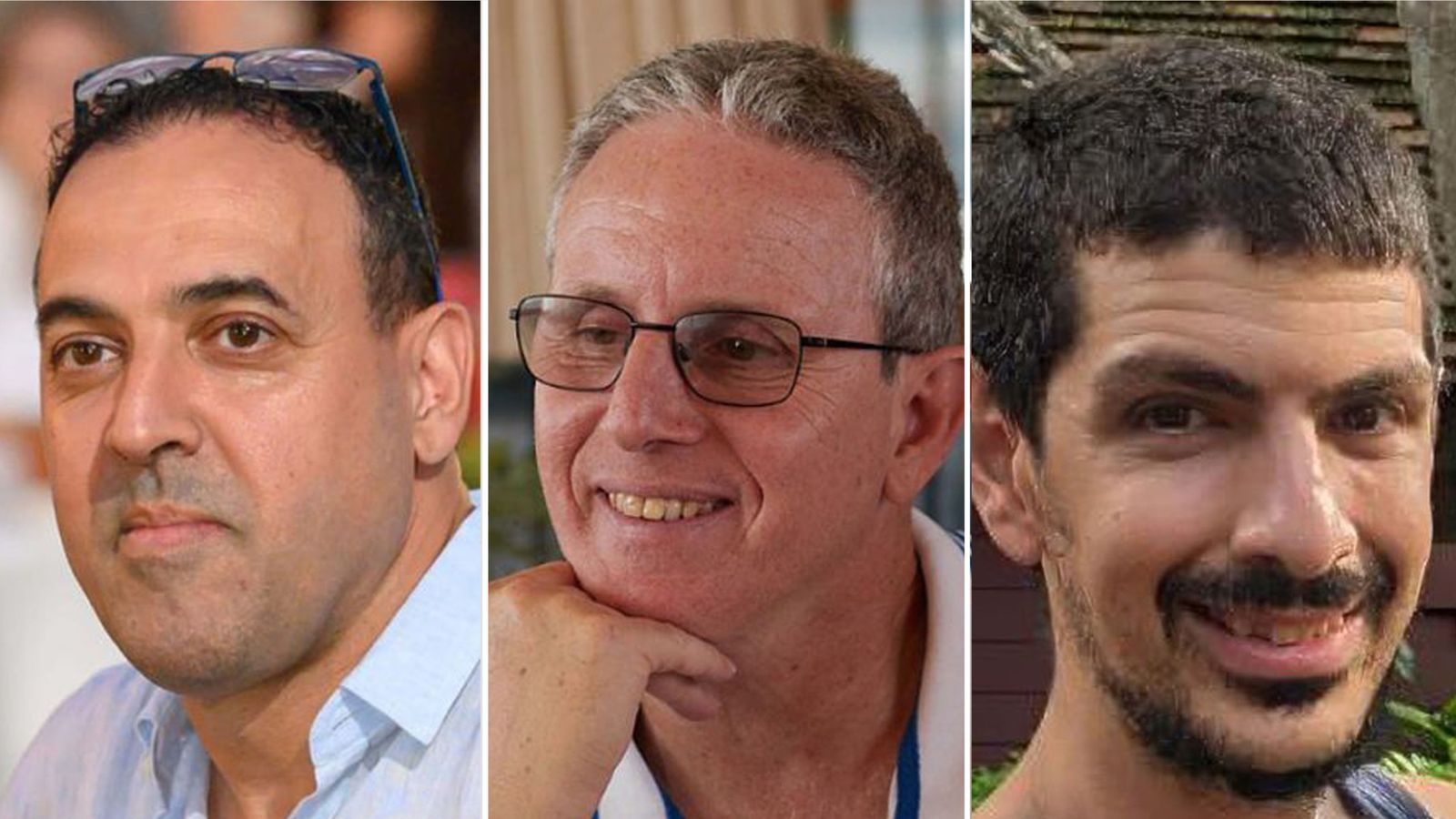
Hamas announced on Friday the names of three Israeli hostages set to be released on Saturday in exchange for Palestinian prisoners, following a delay that highlighted the challenges facing a fragile deal aimed at ending the war in Gaza.
Ohad Ben Ami and Eli Sharabi, both taken hostage from Kibbutz Be’eri during Hamas’s cross-border attack on October 7, 2023, along with Or Levy, abducted from the Nova music festival on the same day, will be handed over on Saturday, according to Hamas.
The group’s media office stated that Israel is expected to release 183 Palestinian prisoners and detainees in return, including 18 serving life sentences, 54 with long sentences, and 111 detained in Gaza during the conflict.
Earlier, Hamas accused Israel of violating the ceasefire agreement and withheld the names of the three hostages until after a 4 p.m. (1400 GMT) deadline. It remains unclear whether the delay will impact the planned exchange on Saturday.
Hamas claimed Israel was obstructing the entry of hundreds of trucks carrying food and humanitarian aid agreed upon in the truce deal that took effect on January 19. The group also alleged that Israel had supplied only a small fraction of the tents and mobile homes needed to shelter displaced Gazans.
“This demonstrates clear manipulation of relief and shelter priorities,” Hamas said in a statement.
COGAT, the Israeli military agency overseeing aid deliveries, denied Hamas’s accusations and warned that Israel would “not tolerate violations by Hamas.”
The dispute adds to the uncertainty surrounding the ceasefire, which has been further complicated by U.S. President Donald Trump’s unexpected remarks this week. Trump stated that he envisioned Gaza under U.S. control, developed into the “Riviera of the Middle East,” and suggested relocating Gazans to a third country such as Egypt or Jordan.
“We’re in no rush on it,” Trump said on Friday at the White House, referring to his plan for Gaza.
His comments underscored the delicate nature of the deal brokered last month by Egyptian and Qatari mediators with U.S. support. Israeli Prime Minister Benjamin Netanyahu praised Trump’s proposal as “remarkable,” but it was immediately rejected by Arab nations, Palestinian factions, and many Gazans, who insisted they would rebuild their homes and communities themselves.
Israeli leaders have reiterated that Gazans who wish to leave should be allowed to do so. On Thursday, Defense Minister Israel Katz instructed the military to develop a plan facilitating the voluntary departure of Gaza residents.
So far, 13 Israeli hostages—part of the 33 women, children, and elderly captives slated for release in the initial 42-day phase of the agreement—have returned home. Hundreds of Palestinian prisoners and detainees have been freed in exchange, along with five Thai hostages.
Negotiations for the second stage of the multi-phase agreement, aimed at securing the release of approximately 60 male hostages and the withdrawal of Israeli troops from Gaza, have begun. An Israeli delegation is expected to fly to Doha on Saturday for further talks, according to Israeli media.
However, Hamas’s accusations against Israel highlight the deep mistrust between both sides after more than 15 months of the deadliest phase in their long-standing conflict.
The Israeli military said Friday that commanders were conducting situational assessments ahead of the next stage of the agreement, with troops stationed at various points around Gaza.
Hamas reported that only 8,500 of the 12,000 expected aid trucks had entered Gaza, mostly carrying food and non-essential goods like snacks and chocolate rather than urgent supplies. The group also claimed that only 10% of the 200,000 tents and 60,000 caravans needed for shelter had arrived, leaving many displaced civilians exposed to harsh winter conditions.
Additionally, Hamas stated that heavy machinery required to clear debris and recover thousands of bodies presumed buried under the rubble had not been delivered.
Israel dismissed the claims as “completely unfounded,” asserting that it had facilitated the entry of thousands of trucks carrying aid, including tents and shelters. COGAT reported that over 100,000 tents had reached Gaza since the agreement took effect and that caravans and tractors had been allowed in from Egypt since Sunday.
Despite both sides accusing each other of ceasefire violations, the truce has so far held, keeping open the possibility of ending the war and rebuilding Gaza.
Hamas-led militants launched an attack on Israel on October 7, 2023, killing approximately 1,200 people and kidnapping more than 250 in what became Israel’s deadliest day since its founding in 1948.
In response, Israel launched a large-scale air and ground campaign in Gaza, which, according to Gaza health authorities, has resulted in over 47,000 Palestinian deaths and widespread destruction in the densely populated enclave.