

Sudan urges global action against janjaweed atrocities, seeks support from Malaysia amid strong diplomatic ties
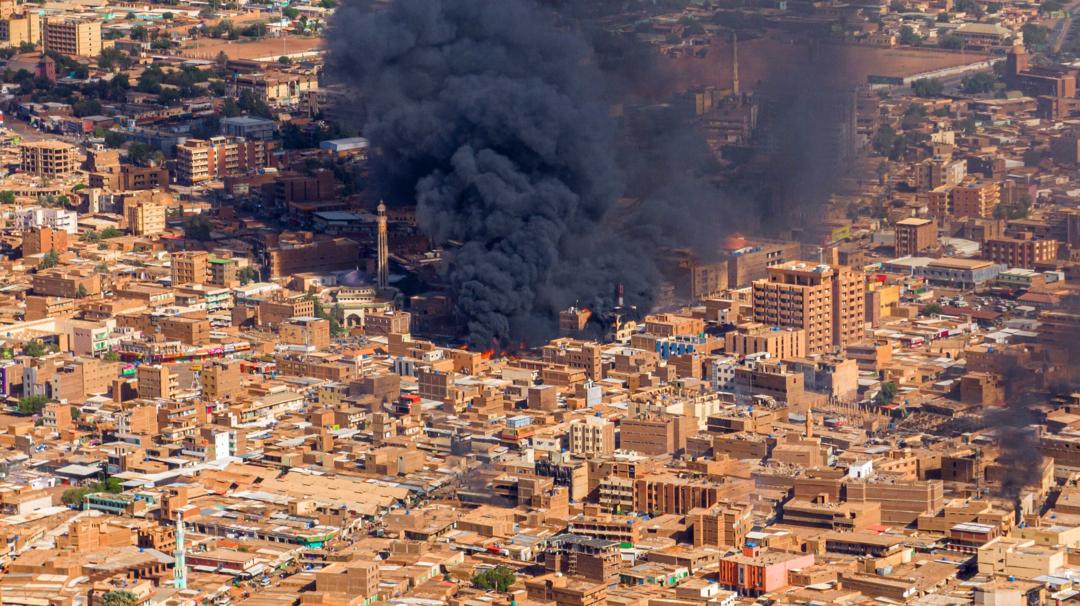
KUALA LUMPUR – In a passionate call for international action, Sudan’s Ministry of Foreign Affairs issued a statement condemning recent Janjaweed militia attacks in Eastern Al-Jazirah and Al-Butana, describing the violence as “genocide and ethnic cleansing.”
Sudan urged the global community to respond decisively, as civilians face brutal retaliatory campaigns following recent leadership defections within the militia.
This appeal for action comes on the heels of Sudan’s Acting Foreign Minister Hussein Awad Ali Mohamed’s visit to Kuala Lumpur in August 2024, where he engaged Malaysian leaders and participated in a conference organized by the International Institute of Advanced Islamic Studies (IAIS) Malaysia.
Titled “Sudan: The Forgotten War,” the event aimed to shed light on Sudan’s often-overlooked conflict, calling for a renewed global response and emphasizing Malaysia’s potential role in championing Sudan’s cause.
Escalating Crisis and Sudan’s Call for Accountability
The Sudanese Foreign Ministry’s statement details the Janjaweed militia’s violent campaign against civilians, primarily targeting individuals based on tribal and regional identities.
The government reports that hundreds have been killed or injured, with thousands more forcibly displaced from their homes.
Sudan warns that these systematic attacks constitute acts of genocide and that, without a forceful international response, the militia will continue to act with impunity.
“The silence and indifference of the international community embolden the militia and its regional sponsors,” the Sudanese statement declared, urging swift action to hold the Janjaweed’s leaders and backers accountable.
Sudan’s call to action includes halting the flow of arms and mercenaries to the militia, measures the government deems essential to curb the ongoing violence.
Malaysia and Sudan: A History of Diplomatic Cooperation
Sudan’s diplomatic outreach to Malaysia builds on a history of strong relations dating back to 1973, formalized with the establishment of embassies in 1991 in Kuala Lumpur and in 1999 in Khartoum.
In the decades since, Sudan and Malaysia have deepened their cooperation across trade, culture, and defense, driven by a shared commitment to South-South cooperation and active participation in international organizations such as the Non-Aligned Movement (NAM) and the Organization of Islamic Cooperation (OIC).
A cornerstone of Sudan-Malaysia relations has been PETRONAS, Malaysia’s state-owned oil giant, which entered Sudan’s oil sector in 1999.
This investment, alongside agreements on double taxation, fiscal policy, and cultural exchange, has built a foundation of trust and mutual benefit, making Malaysia one of Sudan’s most consistent international allies.
Malaysia’s Response and Potential Role
In Kuala Lumpur, Acting Foreign Minister Mohamed participated in IAIS Malaysia’s “Sudan: The Forgotten War” conference, a significant step in raising international awareness of Sudan’s current crisis.
The conference brought together scholars, diplomats, and humanitarian experts to discuss the conflict’s root causes and potential solutions, highlighting the humanitarian toll and strategies for global engagement.
While Malaysia has yet to issue a detailed public observers suggest Malaysia’s involvement in Sudan’s crisis could strengthen its role as a diplomatic leader in humanitarian advocacy.
Malaysia’s established relations with Sudan, its significant role in Sudan’s economy, and its support for peace and stability across the Muslim-majority world position it as a powerful ally.
By standing in support of Sudan, Malaysia could rally additional ASEAN and OIC members to push for a coordinated international response.
Economic and Strategic Benefits of Sudan-Malaysia Partnership
Beyond humanitarian concerns, Sudan offers Malaysia access to the substantial markets of Sub-Saharan Africa.
With a population exceeding 1.2 billion and a rapidly growing middle class, the region presents economic opportunities for Malaysia’s trade, technology, and manufacturing sectors.
In return, Sudan’s strategic location along the Red Sea and its potential for regional influence position it as an asset to Malaysia’s foreign policy objectives.
Bilateral agreements, including those on defense, investment protection, and cultural exchanges, further solidify this partnership.
The deep level of cooperation and mutual trust fostered by these agreements gives Malaysia an unparalleled reputation in Sudan, allowing for a strengthened alliance that could yield economic and strategic benefits for both countries.
Toward a Unified Response and Renewed Global Awareness
As Sudan grapples with one of its most challenging humanitarian crises, its partnership with Malaysia exemplifies the importance of international alliances.
Sudan’s urgent appeal for action, amplified by the Kuala Lumpur conference, reinforces the message that protecting civilians from mass violence requires a unified global response.
Both nations stand to benefit from a stronger alliance: Sudan through increased international support, and Malaysia through enhanced diplomatic influence and economic ties.
By supporting Sudan in its hour of need, Malaysia could reaffirm its commitment to humanitarian principles and contribute to a more peaceful and stable region.
The recent engagement in Kuala Lumpur signals Sudan’s intent to build a global coalition to end the violence and mobilize critical humanitarian support for the affected populations.
For Malaysia and Sudan, this partnership not only builds on decades of trust and cooperation but also paves the way for a future of shared prosperity and strategic influence across Africa and Southeast Asia.