

PVAC : The Face of Perlis Volunteers and Operational Challenges
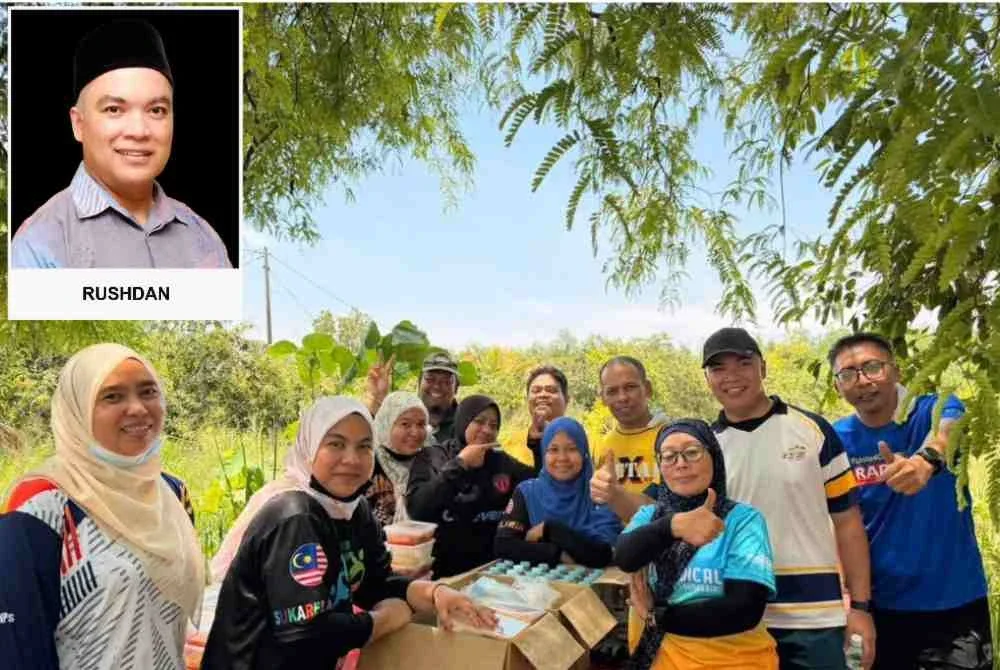
IN an increasingly challenging world marked by economic pressures, natural disasters and a growing vulnerable segment of society, the role of volunteer organisations has become ever more important.
In the state of Perlis, one organisation that is increasingly prominent in welfare work is PVAC, or the Perlis Volunteer Action Community, officially known as the Perlis Welfare Volunteer Community Association.
Established in October 2019 under the purview of the Perlis Department of Social Welfare (JKM), PVAC is a rebranding of the Perlis JKM Volunteers with the aim of empowering the volunteer movement in a more structured, professional and high-impact manner for the community.
Recently, a special meeting and discussion session was held involving myself, PVAC Chairman Effendey Harun, as well as the committee and a representative of the Perlis Department of Social Welfare (JKM), Shariman Hashim.
The meeting opened up space for a more in-depth discussion on the real realities of volunteer operations in this state, including the challenges often faced on the ground.
During the session, various issues were raised, including volunteer manpower constraints, difficulties in obtaining time off from employers, logistical limitations and the need for official recognition of the state’s volunteer movement.
I also expressed appreciation for PVAC’s high commitment in continuing to help the community despite facing various operational and financial constraints.
According to a PVAC representative, the organisation is not merely involved in seasonal welfare work, but is among the frontliners in assisting JKM’s target groups, including low-income families, the elderly, persons with disabilities, single mothers and disaster victims.
Throughout the Covid-19 pandemic period, PVAC played a major role in distributing food aid to the people affected by the Movement Control Order (MCO). Its volunteers went door-to-door delivering food packs and basic necessities to families who had lost their source of income.
This role continued when floods occurred, with PVAC helping to set up temporary evacuation centres (PPS), managing aid distribution and carrying out post-flood cleaning work. In many situations, it is the volunteers who are the first team to arrive and assist the victims.
One of the key initiatives that has captured public attention is the Boutique4Community, operated by PVAC. Through a community-based welfare concept, this boutique provides clothing, food and basic necessities, whether new or used, free of charge to those in need.
This approach not only helps reduce the people’s burden but also promotes a culture of recycling and social solidarity within the local community.
In addition, PVAC also manages the Basic Food Distribution Centre (PAMA) to ensure aid is channelled more systematically.
PVAC’s strength is also evident through its strategic relationships with various parties, including the Perlis Islamic Religious and Malay Customs Council (MAIPs). This collaboration enables aid to asnaf (eligible tithe recipients) and disaster victims to be distributed in a more structured and comprehensive manner.
PVAC also benefits from the use of a special Volunteer Activity Centre (V@C) premises contributed by MAIPs as its welfare operations hub.
From a management perspective, the organisation has good integrity, as every fund received from the government, the corporate sector and the public is directly monitored by the Perlis JKM.
However, behind these strengths, the real reality of PVAC’s operations is not as easy as one might think. In the discussion session with me, one of the biggest issues raised was the full reliance on volunteers without fixed remuneration.
The majority of PVAC members have their own full-time jobs and must divide their time between their careers, families and welfare duties. This situation makes the mobilisation of volunteers during critical times often fraught with difficulty.
The challenge becomes even greater when many volunteers among civil servants and private sector workers find it difficult to obtain leave to participate in relief missions. For civil servants, the approval of Leave Without Record is still subject to the discretion of the head of department and the needs of the service.
As for the private sector, there is no specific act requiring companies to provide paid leave for external volunteer activities. Most workers have to use their own annual leave or rely on the goodwill of their employers.
As a result, PVAC often faces a manpower shortage during the most critical period, which is the first 24 to 48 hours after a disaster strikes. The burden of duties ultimately falls on a certain group of volunteers, such as retirees, university students or individuals without permanent jobs. I will also raise this matter in Parliament later.
Apart from human resource issues, financial stability is also a major challenge. Although it receives support from the state government, corporations and individuals, the funds obtained are still seasonal and inconsistent.
At the same time, PVAC also faces competition with other NGOs for limited community donations. The current uncertain economic situation also affects the amount of sponsorship and aid received.
However, the outcome of the meeting with me also opened up space for several improvement proposals seen as capable of strengthening PVAC’s role in the future. My experience in various NGOs, both domestic and international, since my secondary school days, has been very helpful in this regard.
Among my proposals is the creation of an official mobilisation protocol between JKM and the state government so that PVAC can be recognised as an official disaster rapid response squad for the state of Perlis.
This step is important to facilitate the issuance of official call-up letters that can be used by volunteers to obtain time off from their employers.
Additionally, a proposal was also submitted for PVAC to be officially registered under the National Disaster Management Agency (NADMA) as a strategic NGO partner for disasters at the national level.
PVAC volunteers are also proposed to undergo professional training with the Malaysian Civil Defence Force (APM), the Fire and Rescue Department as well as related agencies so that they possess specialised skills in disaster management and emergency relief.
During the meeting, I also expressed my commitment to help strengthen the cooperation network between PVAC, government agencies and the corporate sector to ensure that the state’s volunteer movement remains relevant and sustainable.
I also call upon all other Members of Parliament to assist entities like PVAC in their respective states to facilitate matters during disasters.
The fact is, PVAC is not just an ordinary welfare NGO, but a symbol of the solidarity of the people of Perlis in helping communities in need. Despite all the constraints, these volunteers remain present when the community needs help.
With more structured support from the government, employers and the community, PVAC has the potential to become a model state volunteer movement that can be emulated throughout the country.
*The writer is the Member of Parliament for Padang Besar and former State Director of Khidmat Malaysia for Selangor. *
Sinar Harian