

Felda At 70: Land Now Owned, The Generations Must Not Be Disconnected
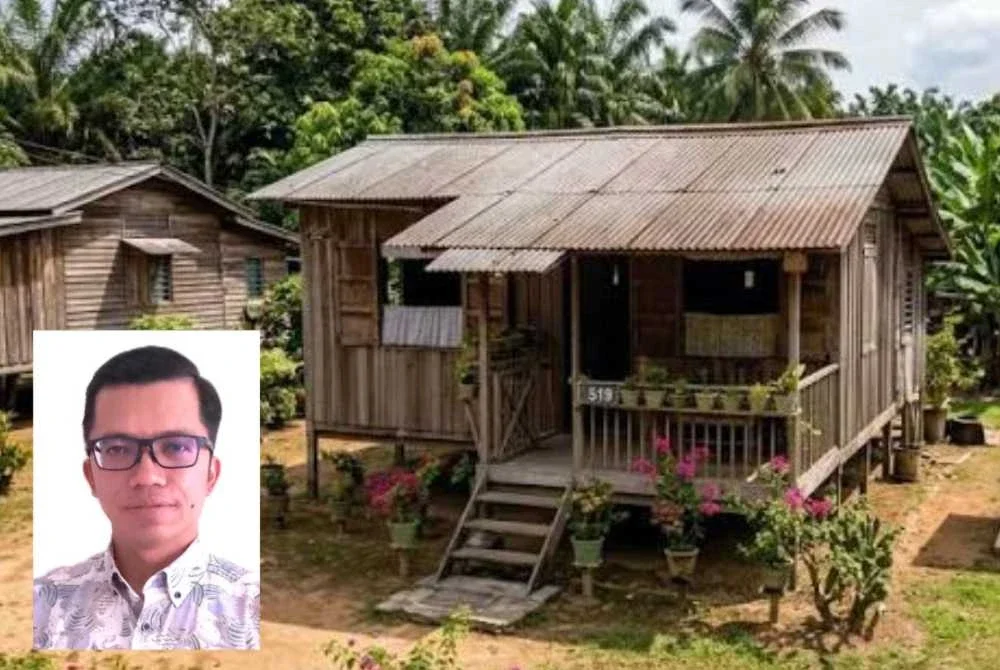
WHEN Felda settlers have fully paid the development costs of the plantation and settlement through the Repayment Scheme deducted from the proceeds of the 10-acre land they work on, the settlers become eligible to receive the land titles promised to them when they were offered entry into the Felda scheme.
To date, more than 90 per cent of settlers have received their land titles, with Johor being the highest-ranking state with 99.9 per cent of titles granted.
This proves that the development model and objectives of Felda’s establishment through the slogan “Land for the Landless, Job for the Jobless” was not merely a political slogan, but a clear, measurable development target that has had a significant impact on the nation.
Through the land they worked on, settlers succeeded in building families, owning land, forming communities and creating an economic cycle worth tens of billions of ringgit annually through the commodity industry, particularly oil palm.
With the settlers’ success in owning land, Felda and the Government have succeeded in building a socio-economic model that was planned from the very beginning of its establishment.
After 70 years of Felda’s existence, the challenges have changed.
If the challenge before was to open up land, settle settlers and build new lives, the challenge now is to ensure that the land already owned remains productive, and that the Felda generation continues to have a connection with the plantation and the settlement scheme.
It is undeniable that Felda’s current focus is largely on cash flow recovery, financial restructuring and strengthening the institution’s position.
This step is crucial because without a stable financial position, it is difficult for Felda to fully carry out its responsibilities to the settlers and the Felda community as a whole.
However, cash flow recovery cannot be the ultimate goal. It only provides breathing space for Felda.
The real challenge for the next 50 years is how Felda charts a direction that can reconnect the settlers, the plantations, the communities and the generations.
A major shift in Felda began to be felt when plantation management, particularly after the replanting phase, saw the settlers’ plantation management model changed, with Felda taking over the entire plantation operation.
This approach may help some settlers who are ageing or unable to manage their own plantations.
However, in the long run, it also changes the character of the settlers or heirs from land operators to mere recipients of proceeds.
The generation is also becoming increasingly distant from the plantation; they inherit the land but do not inherit the knowledge, discipline and working relationship with the land.
When the connection between people, land and work is severed, the original spirit of Felda as a human and socio-economic development programme also weakens.
Therefore, Felda’s direction after 70 years must focus on two major areas: the management and finances of settlers’ plantations, and the management of the Felda community and generation.
Both are interconnected because the plantation is the economic foundation of Felda, while the community is the social foundation that binds the settlers, heirs and generations.
Settlers’ Plantation Management and Finance
In the early days, Felda’s strength lay in the direct relationship between the settler and the plantation.
Settlers did not merely receive land, but worked it, understood its yields and built their lives from it.
That is where discipline, a sense of ownership and the true success of Felda’s human development were born.
They must understand the plantation’s position as an economic unit that has revenue, costs, debt, productivity and net income.
The financial management of settlers’ plantations must have a clear method and be separated from Felda’s financial management.
All this time, the pooling of settlers’ plantation proceeds with Felda’s financial management accounts has caused many problems, such as delayed payments and arrears in payments to plantation contractors.
This is because everyone is aware that Felda has been experiencing severe cash flow problems, to the point of having to use settlers’ plantation proceeds for Felda’s own operations.
With various cash flow recovery measures undertaken by Felda, such as the re-acquisition of FGV and the government’s sukuk assistance, the separation of settlers’ plantation accounts and Felda’s management accounts must be implemented so that the economic source of the Felda community can operate smoothly and productively.
As for settlers’ plantation operations, Felda or its subsidiaries managing them should offer plantation operating costs at a fixed rate per tonne of yield.
This “single cost” method is important to avoid confusion when operating costs fluctuate every month even though the scope of work is essentially the same.
With this fixed rate, claims by subsidiaries to Felda are easier to review and pay, thereby reducing the risk of arrears that could disrupt plantation operations.
In addition, plantation management options must be fairer and suited to the current situation.
There are settlers or heirs who still want and are able to manage on their own.
There are settlers who require full assistance from Felda. There are also members of the generation interested in getting involved in modern management through cooperatives, mechanisation, logistics, plantation data or support services.
All these options must be given space within a clear framework, not viewed narrowly as supporting or rejecting Felda. The settlers’ ability to be self-reliant should not be seen as leaving the spirit of Felda.
On the contrary, it is the original sign of Felda’s human development success. If settlers are able to manage their land well, generate income and maintain productivity, it proves that Felda has succeeded in shaping settlers as responsible land owners.
Felda Community and Generation Management
Felda is not an ordinary plantation agency. Felda is a community. A Felda scheme is not merely a plantation area, but a place where settlers build families, social institutions, schools, mosques, cooperatives and community life.
Today’s challenge is that the Felda community is changing. Many from the younger generation have migrated to cities to work, do business or build new lives.
Some schemes are increasingly inhabited by senior citizens. Some settler houses are empty, inheritance issues remain unresolved, and the generation’s connection with Felda is increasingly limited to certain matters only.
With the original settler population declining and the majority being elderly, a new provision needs to be formulated so that replacement settlers or heirs have clear responsibilities just like the original settlers.
Replacement settlers or heirs should be required to reside in the scheme, or at least have a clear management commitment and responsibility, so that the Felda community remains inhabited, alive and functional.
The Felda community structure built over so many years is very unique and has proven successful in developing the nation’s socio-economy.
The Scheme Progress and Beautification Committee represents all levels of the community, while the Sustainable Plantation Management Committee is a plantation management model driven by the spirit of consensus.
Both must be strengthened and provided with technical training related to plantation management so that the community’s economic source continues to be optimised.
Felda also needs to give serious attention to the issue of inheritance. This is one of the major issues that will determine the future of the settlement land.
If inheritance is not resolved, plantation management becomes complicated, family decisions are left hanging, and the generation’s connection with the land weakens.
The Felda community’s direction from now on must view the generation not merely as heirs to the land, but as development partners.
They must be given space to re-engage in the plantation and community economy, whether physically in the scheme or through digital connections, cooperatives, businesses and support services.
Felda’s future does not depend solely on who still lives in the scheme, but also on who still has an economic, emotional and responsible connection to their family’s original scheme.
Felda, Settlers And The Generation Must Remain Connected
Settlers actually bear a great responsibility within the framework of fardhu kifayah (communal obligation), namely ensuring that the supply of palm oil, which produces various necessities of human life both domestically and abroad, continues to be available.
As long as palm oil is used in food, energy, industry, pharmaceuticals and daily necessities, Felda will still have a strategic role to play for the nation.
But Felda cannot only be remembered as a past success. Felda must continue to survive as an institution capable of adapting to the times, technology and the demands of the commodity industry.
The land has been given. Ownership has been achieved. The task after 70 years is to ensure that the land does not lie idle, plantations do not lose productivity, communities do not become empty, and the Felda generation is not disconnected from the socio-economic roots that raised their families.
The slogan “Land for the Landless, Job for the Jobless” has achieved its original purpose. Now Felda needs a new resolve: the land that has been owned must continue to be cultivated, settlers must continue to be empowered, and the Felda generation must once again become part of the future of the settlement land.
If the connection between land, work, community and generation can be re-established, then Felda will not only have succeeded in its first 70 years, but will remain relevant for the next 50 years.
*The writer is a 2nd and 3rd Generation Felda member.
Sinar Harian