

Afghan-Pakistan Peace Talks Collapse, Raising Fears of Renewed Cross-Border Conflict
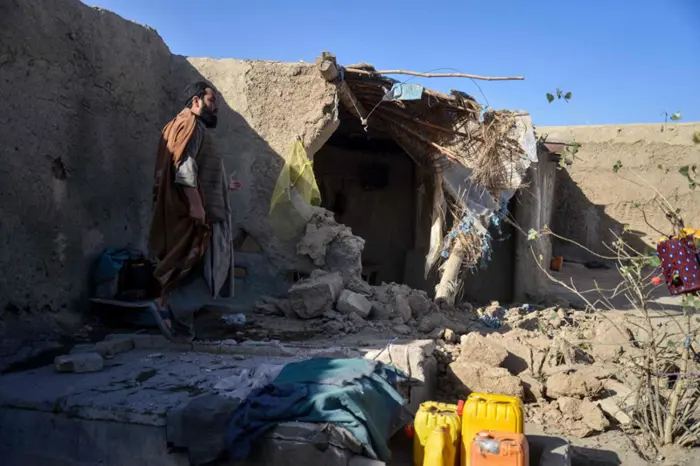
WASHINGTON, Nov 9: Peace talks between Afghanistan and Pakistan have collapsed without progress, heightening fears of escalating cross-border violence and regional instability. The third round of negotiations, held in Istanbul and brokered by Turkey and Qatar, ended on November 7 in a deadlock.
“The talks in Istanbul are at a stalemate and over,” confirmed Pakistani Defence Minister Khawaja Asif, warning that failure to reach a settlement could push both countries to the brink of open conflict.
The breakdown follows a surge in deadly cross-border attacks inside Pakistan by the Tehreek-e-Taliban Pakistan (TTP), a militant group Islamabad accuses the Taliban government in Kabul of sheltering. In recent months, dozens of Pakistani security personnel have been killed in TTP attacks, prompting retaliatory airstrikes by Pakistan in Kabul and other Afghan provinces.
“Pakistan does not need to use even a fraction of its full arsenal to completely obliterate the Taliban regime,” Minister Asif warned on social media, vowing a “befitting response” if further attacks originate from Afghan soil.
Pakistan’s military, one of the most powerful in the Muslim world, is far better equipped and organized than the Taliban’s forces. However, analysts warn that a direct confrontation could devolve into a protracted guerrilla war, given the Taliban’s experience in insurgency warfare.
“There is no real military comparison between Afghanistan and Pakistan,” said Dr. Moonis Ahmar, a professor of international relations at Karachi University. “But the Taliban’s guerrilla tactics and ideology could prolong the conflict and worsen regional instability.”
Islamabad has long accused the Taliban of harboring the TTP since seizing power in 2021, after the withdrawal of US and NATO troops. The TTP, formed in 2007, has carried out hundreds of attacks on Pakistani military and civilian targets, including the 2014 Peshawar school massacre and the 2012 shooting of Nobel laureate Malala Yousafzai.
During the Istanbul talks, the Taliban reportedly demanded the restoration of Pakistan’s former tribal belt, the Federally Administered Tribal Areas (FATA), and called for the enforcement of an “Afghanistan-style” Sharia system in the border regions.
Sources close to the negotiations told The Straits Times that Islamabad rejected these demands, viewing them as a direct challenge to Pakistan’s sovereignty and territorial integrity.
The FATA region, once a semi-autonomous buffer zone along the Afghan border, was merged into Khyber Pakhtunkhwa province in 2018, a move the Taliban has never formally recognized. Kabul’s renewed claim on the area revives the century-old dispute over the Durand Line, the colonial-era border drawn in 1893 and never accepted by Afghanistan.
Pakistan has also accused India of using the TTP as a proxy force in Afghanistan to destabilize its western border. Tensions deepened after Afghan Foreign Minister Amir Khan Muttaqi’s high-profile visit to India in October, which Islamabad viewed as a sign of shifting regional alliances.
“The Taliban’s engagement with India signals growing hostility toward Pakistan,” said Professor Tricia Bacon of American University. “While New Delhi may not directly support the TTP, it benefits from Pakistan’s strategic discomfort.”
Analyst Dr. Ahmar added, “For decades, Pakistan provided Afghanistan with refuge and support, yet Kabul now appears to be undermining those ties by aligning with India and harboring militants.”
The United States has expressed concern over the rising TTP threat. A recent US intelligence assessment warned that the group, though primarily targeting Pakistan, could develop transnational capabilities with help from Al-Qaeda networks.
Washington is unlikely to redeploy troops to the region after its 2021 withdrawal, but experts predict renewed counterterrorism cooperation with Islamabad. Pakistani Prime Minister Shahbaz Sharif and Army Chief General Asim Munir have held multiple meetings with US President Donald Trump, who praised Pakistan’s role in containing terrorist threats and offered to mediate peace.
Islamabad has also requested additional intelligence and surveillance equipment from the US to strengthen counterinsurgency operations along the Afghan frontier.
With both sides entrenched in their positions, the Pakistan-Afghanistan border remains a potential flashpoint. Analysts warn that if the peace process collapses entirely, the region could slide back into chaos reminiscent of the early 2000s.
“If these talks fail, history will repeat itself,” cautioned Dr. Ahmar. “And this time, the violence could be far worse.”