

Ukrainian Drone Pilots Turn to AI as Fight for Battlefield Advantage Intensifies
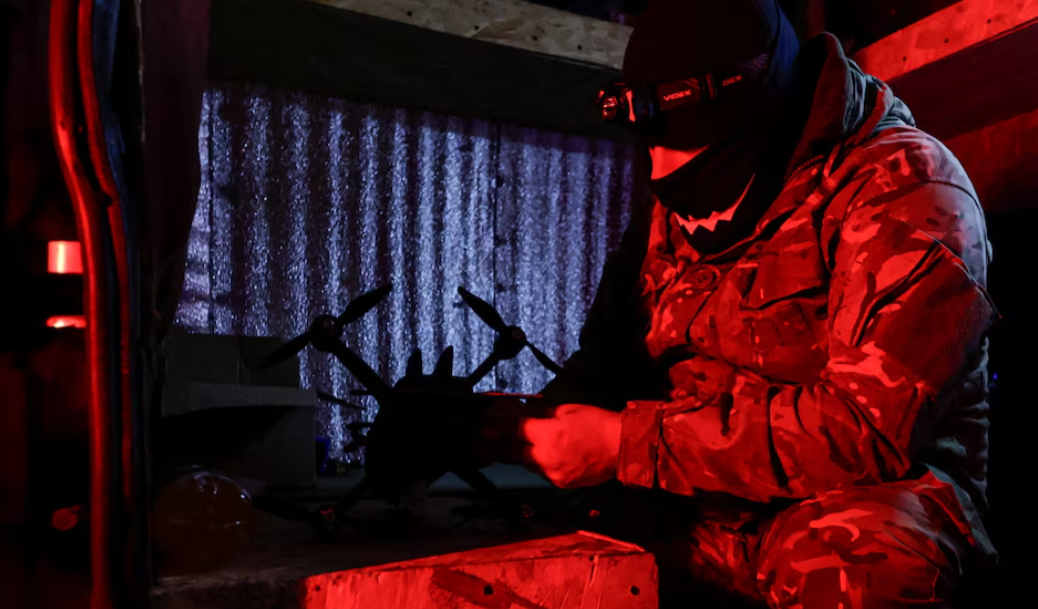
KHARKIV REGION, Ukraine, Nov 29: Ukrainian drone operators are increasingly relying on artificial intelligence–assisted systems to improve precision and overcome the growing complexity of battlefield conditions, according to frontline soldiers who say AI guidance is becoming essential in long-range strikes.
One drone pilot, known by his military call sign “Mex,” from Ukraine’s 58th Separate Rifle Brigade, described a recent mission targeting what appeared to be a Russian tank located roughly 20 kilometers away. He said the strike would have been impossible without support from an AI-powered targeting platform.
“Without the additional guidance, we simply could not hit it. Absolutely no way,” said the 31-year-old soldier, who has flown dozens of reconnaissance and strike missions since the full-scale invasion began in 2022.
Ukrainian units have been experimenting with AI-based tools to analyze terrain, calculate flight paths, counter electronic jamming, and adjust mid-air targeting. The systems are designed to compensate for the increasing effectiveness of Russian electronic warfare, which often disrupts the GPS signals and communication links used by conventional drones.
Drone operators say AI processing helps stabilize targeting, particularly during long-distance flights where manual control becomes difficult or impossible.
“AI gives us the accuracy we need when the enemy tries to blind or disrupt us,” Mex added.
The reliance on AI underscores a rapidly evolving drone arms race between Ukraine and Russia. Both sides have deployed thousands of first-person-view (FPV) drones, loitering munitions, and reconnaissance aircraft, with each attempting to outmatch the other through improved software, jamming systems, and autonomous capabilities.
Ukrainian officials have previously said they aim to produce over one million drones annually, with a significant focus on integrating machine-learning technology into frontline systems.
Analysts say Ukraine’s adoption of AI is a strategic response to Russia’s superior manpower and artillery advantage.
“AI helps level the playing field,” one military technology adviser said. “Automation and precision are becoming as important as ammunition.”
Despite advancements, drone pilots say more improvements are needed, particularly in resisting electronic warfare and expanding the range of autonomous flight. The risks remain high, with pilots often operating close to the front lines under constant threat of shelling and counter-drone attacks.
Still, for operators like Mex, the shift toward AI is already reshaping combat.
“It’s not the future anymore,” he said. “It’s happening right now, and it’s helping us survive and strike back.”