

Saudi Arabia Welcomes Canada and Malta’s Move to Recognize Palestinian Statehood at UNGA
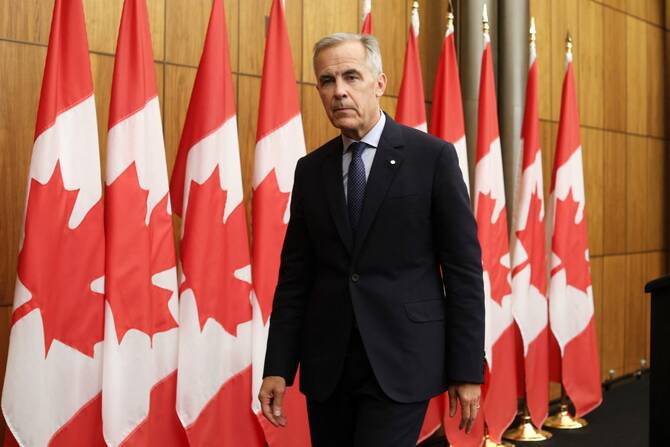
LONDON: Saudi Arabia has officially welcomed the announcements by Canadian Prime Minister Mark Carney and Maltese Prime Minister Robert Abela expressing their countries’ intentions to recognize the State of Palestine during the upcoming United Nations General Assembly (UNGA) session in September.
In a statement released by the Saudi Ministry of Foreign Affairs, Riyadh commended both nations for what it described as “positive decisions that pave the way toward a two-state solution” to the decades-long Israeli-Palestinian conflict.
The declarations by Canada and Malta were made following their participation in a high-level international conference in New York, co-chaired by Saudi Arabia and France, which aimed to reignite diplomatic momentum for a peaceful settlement between Israel and Palestine.
“The Kingdom appreciates the alignment of the international community on the urgency to end the suffering of the Palestinian people,” the statement said, reaffirming Riyadh’s longstanding support for Palestinian self-determination.
Saudi Arabia further called on other countries to follow suit, urging the global community to take “serious and responsible steps” to support a peaceful resolution through mutual recognition and diplomacy.
Canada and Malta were among 15 Western nations that endorsed the New York Declaration on the Peaceful Settlement of the Question of Palestine, a document that reaffirms the international consensus on a two-state solution as the only viable path to lasting peace.
Other signatories of the declaration include:
-
Australia, Finland, France, Iceland, Ireland, Luxembourg, New Zealand, Norway, Portugal, San Marino, Slovenia, Spain, and Andorra.
While the declaration underscores support for Palestinian statehood, not all of the signatory countries have formally recognized Palestine to date.
Saudi Arabia’s statement comes amid growing international efforts to revive the Israeli-Palestinian peace process, which has stalled for years. The Kingdom, which has long advocated for a two-state solution based on pre-1967 borders, views broader global recognition of Palestine as a critical step toward restarting negotiations.
Canada’s and Malta’s impending recognition is expected to add further diplomatic pressure on other Western nations to reconsider their positions, especially in the context of continued tensions in the region and increasing calls for justice and self-determination for the Palestinian people.
The upcoming UN General Assembly session in September is now being closely watched, with the possibility of a significant shift in international consensus and policy on the status of Palestine.