

Royal Prerogative Powers Serve As Pillar Of National Stability
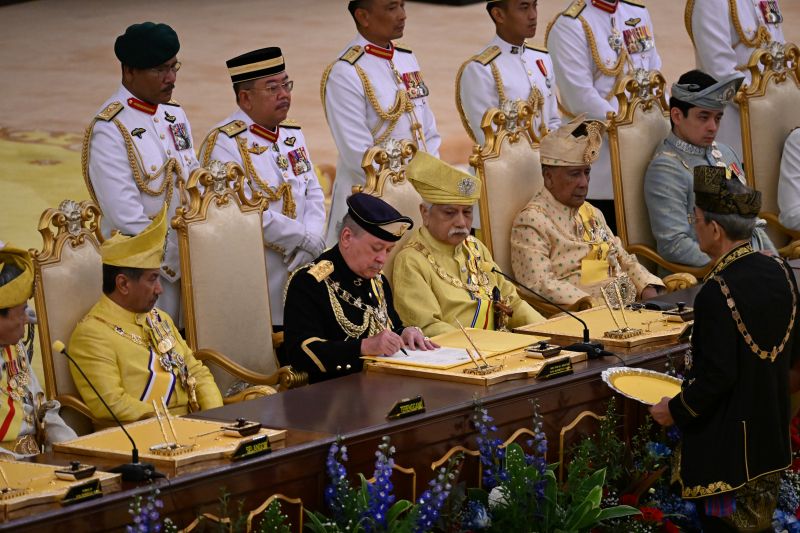
PETALING JAYA: The prerogative powers of the Malay Rulers, as enshrined in the Federal Constitution and the State Constitutions, serve as a crucial mechanism for ensuring the continuity of governance, particularly when facing extraordinary situations.
Founder of Jurisprudens Watan and Associate Professor at the International Institute of Islamic Thought and Civilisation (ISTAC), International Islamic University Malaysia (IIUM), Datuk Dr. Wan Ahmad Fauzi Wan Husain said Malaysia’s constitutional system, rooted in the Malay Sultanate heritage, has proven its ability to manage various situations that are not explicitly detailed in the Constitution.
The country’s experience through several episodes of Prime Minister appointments in a short period previously, for example, demonstrates that the prerogative powers of the ruling Ruler play a vital role in ensuring the continuity of national administration.
“Our Constitution inherits the existing constitutional traditions of the Malay Peninsula, which were further strengthened when the teachings of Prophet Muhammad SAW began to be embraced by local ruling Rulers.
“The nature of our Constitution, which is a heritage of the Malay Sultanate, maintains the position of the ruling Ruler in Malaysia’s governance structure, which possesses prerogative powers. That position is preserved through Article 181(1) of the Federal Constitution, as well as provisions in the State Constitutions.
“Thus, we can see how the royal prerogative is capable of managing situations that are not specifically provided for in the Constitution,” he said when contacted by Utusan Malaysia.
He was commenting on the decree of the Tengku Ampuan of Pahang, Tunku Azizah Aminah Maimunah Iskandariah, who stressed that the Ruler’s authority in appointing someone to a position or granting pardons should not be disputed or challenged, as it is clearly provided for in the Constitution and the Pahang State Constitution.
Commenting on allegations that the Ruler’s decisions could be influenced by political considerations, Wan Ahmad Fauzi explained that politics cannot be completely separated from the institution of the Ruler, as His Majesty is the supreme leader at both the Federal and state levels.
However, he said what needs to be distinguished is the influence of partisan politics, which should not influence the exercise of the ruling Ruler’s prerogative powers.
“The ruling Ruler upholds the Constitution and the legislative, executive and judicial governance by bearing the trust.
“Not only must the ruling Ruler stand above partisan politics, but those who carry out the functions of the ruling Ruler’s authority must also uphold the rule of law and the supremacy of the Constitution, above the interests of partisan politics, at the moment they swear their respective oaths of office,” he said.
According to him, in the appointment of the Prime Minister, for example, the ruling Ruler does not merely select an individual who meets the requirements as provided for in the Constitution, but also ensures that the candidate is capable of upholding the oath of office and carrying out the trust of governance.
In fact, he said, the prerogative power of pardon is exercised after the ruling Ruler considers the advice of the Pardon Board and has reasons that align with Islamic law.
“This prerogative is not subject to partisan political influence, but is based on maslahah (public interest) permitted by syarak (Islamic law), in line with His Majesty’s position as the trustee of sovereignty belonging to Allah SWT,” he said.
When asked whether there are institutions that can check or balance the Ruler’s power in matters related to appointments or pardons, Wan Ahmad Fauzi said every governance decision requires a full stop to ensure that national administration can run smoothly.
“Every decision needs a full stop. Without a full stop, governance cannot run smoothly. It is the royal prerogative that places that full stop.
“The ruling Ruler does not put a full stop to a decision arbitrarily. Although that full stop can no longer be questioned in the courts of the world, that full stop must be made with full responsibility because His Majesty will be questioned on the Day of Judgment,” he said.
He said that is why the Tengku Ampuan of Pahang, Tunku Azizah Aminah Maimunah Iskandariah, also emphasised the aspect of governance ethics contained in the Hukum Kanun Melaka (Malacca Legal Code), which was later preserved through the Hukum Kanun Pahang (Pahang Legal Code) and other state legal codes.
“As such, the Tengku Ampuan of Pahang also emphasised the aspect of governance ethics contained in the Hukum Kanun Melaka, which was preserved in the Hukum Kanun Pahang and other legal codes.
“As Her Majesty elaborated, that prerogative is preserved in the Pahang State Constitution,” he said.
Utusan Malaysia