

Student Admission Policy Must Be Transparent
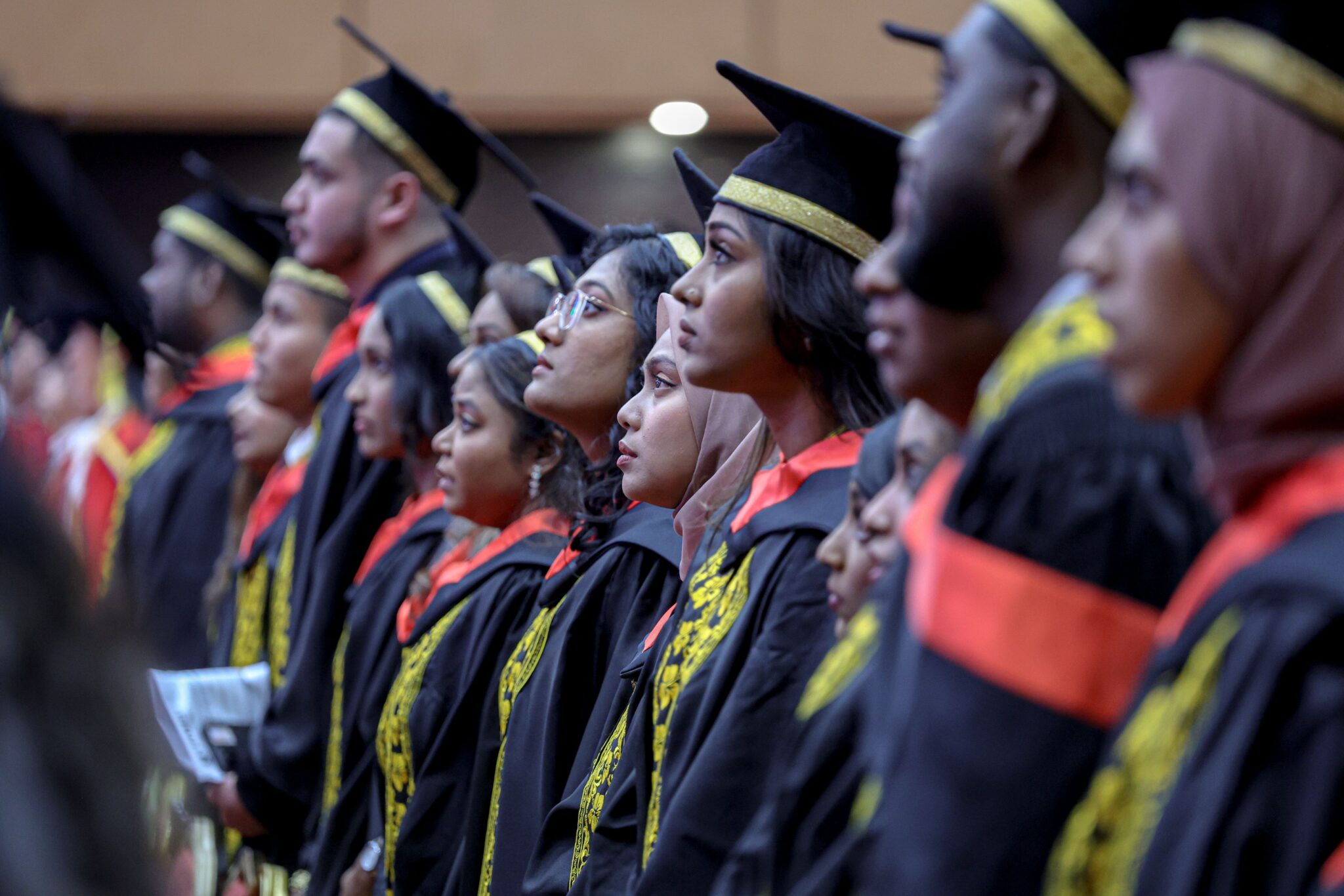
IF we look specifically at public universities, the total enrollment is 634,706 students, of which 56,565 (8.9 per cent) are international students, while 578,141 (91.1 per cent) are local students.
These statistics show that local students still constitute a clear majority at the country’s public universities.
At the undergraduate level, 502,212 (96.56 per cent) are local students, while only 17,893 (3.44 per cent) are international students.
Conversely, at the postgraduate level, international students number 38,672, accounting for 33.74 per cent of total postgraduate enrollment.
This means that the majority of international students are actually pursuing Master’s and PhD studies, rather than directly competing with Sijil Pelajaran Malaysia (SPM), Sijil Tinggi Persekolahan Malaysia (STPM), matriculation or diploma holders for places at the bachelor’s degree level.
At the five research universities – Universiti Malaya (UM), Universiti Sains Malaysia (USM), Universiti Kebangsaan Malaysia (UKM), Universiti Putra Malaysia (UPM) and Universiti Teknologi Malaysia (UTM) – 145,727 (78 per cent) are local students and 41,097 (22 per cent) are international students.
However, of the total international students, 68.5 per cent are at the postgraduate level, in line with the function of research universities, which emphasise research, innovation and international academic networks.
The Ministry of Higher Education has also explained that international students studying in Malaysia pay full fees without government subsidies, meet the prescribed academic requirements, and go through the university’s screening process.
Their presence not only contributes to strengthening university finances but also helps expand research collaborations, increase high-impact publications, and support Malaysian universities’ positions in international rankings such as the QS World University Rankings.
Nevertheless, public perception cannot simply be dismissed.
Many parents and local students view the increasing number of international students on campus as an indication that opportunities for local students are shrinking.
This perception becomes more pronounced when high-demand programmes such as medicine, dentistry, pharmacy, law and engineering have limited capacity and extremely competitive entry.
The reality is that the real issue may not be the number of international students per se, but rather the extent to which university capacity grows in tandem with the increasing demand for higher education among Malaysians.
If capacity, facilities and academic staff can be enhanced, the internationalisation agenda and access to education for local students should not be seen as two conflicting goals.
In the global context, almost all countries aspiring to become international education hubs – such as Australia, the United Kingdom, Canada and Singapore – also rely on international student admissions to strengthen their academic and research ecosystems. Malaysia is also moving in the same direction through its higher education internationalisation agenda.
Official data shows that local students still dominate enrollment at public universities, particularly at the undergraduate level.
Nevertheless, the government and universities must continue to enhance transparency in student admission policies and ensure that the country’s higher education capacity grows in line with public demand.
Only with a balanced approach can Malaysia maintain its competitiveness as an international education hub without neglecting the rights and interests of local students.
DR. NORASYIKIN MOHAIYUDDIN
School of Education
Universiti Utara Malaysia
– Utusan Malaysia