

‘One Command, One Action, One Communication’ Key to Handling Air Disasters, Says Ahmad Zahid
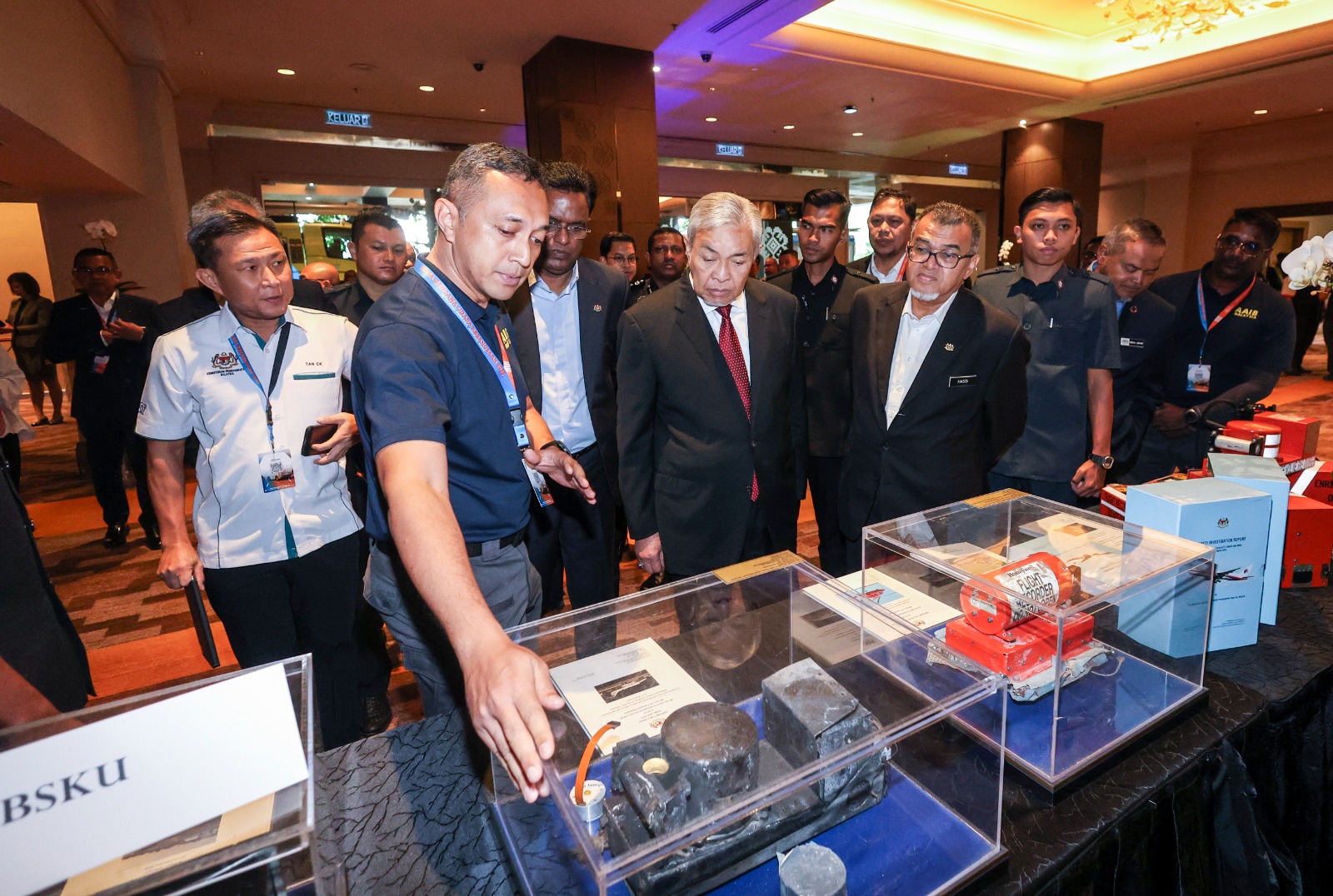
SEPANG: Malaysia must strengthen its preparedness for air disasters through an integrated management system that places all agencies under a single command, communication and response structure, Deputy Prime Minister Datuk Seri Dr Ahmad Zahid Hamidi said today.
He said such an approach is crucial to ensure all agencies can respond in a coordinated and organised manner, avoiding delays that could cost lives during emergencies.
“We cannot wait until a real crisis happens to find out whether our instructions are clear, our communication is effective and all agencies can move in the same direction.
“A good system is not one that looks complete on paper. It is a system that can function under pressure, when information changes rapidly and decisions must be made within a very short time,” he said.
He was speaking at the opening of the National Air Disaster Preparedness 2026: Air Disaster Management Workshop here today.
Ahmad Zahid, who is also chairman of the National Disaster Management Committee, said agencies involved in disaster response must not work in isolation but operate as one team with a common goal of saving lives and restoring normalcy as quickly as possible.
“The real strength is not in the number of assets or personnel we have, but in how effectively all assets, expertise and authority can be mobilised towards a common objective.
“Our principle must be clear – one system, one command and one action. As a national disaster response team, we must unite all strengths under a purpose greater than individual organisational interests,” he said.
He added that aviation safety should not be viewed merely as a technical or operational issue but as a strategic national interest that connects people, drives trade, attracts investment and opens the country to the world.
Highlighting the importance of preparedness, Ahmad Zahid said Malaysia Airports recorded 104.4 million passenger movements across 39 airports in 2025, with Kuala Lumpur International Airport (KLIA) alone handling more than 63.3 million passengers.
“During peak festive seasons, more than one million passengers were handled over three consecutive days.
“With traffic volumes this high, even a small disruption can quickly escalate into a major crisis if not managed effectively,” he said.
He noted that aviation safety is closely linked to the country’s economic strength, pointing out that Malaysia welcomed 42.2 million international visitors last year, generating RM110.6 billion in revenue, while domestic tourism spending reached RM121.3 billion.
As such, he said investments in disaster preparedness should be seen as investments in protecting lives, maintaining global confidence in Malaysia and ensuring all sectors continue contributing to the nation’s economic growth.