

Nepal’s First Woman Prime Minister Sushila Karki Takes Charge After Deadly Protests
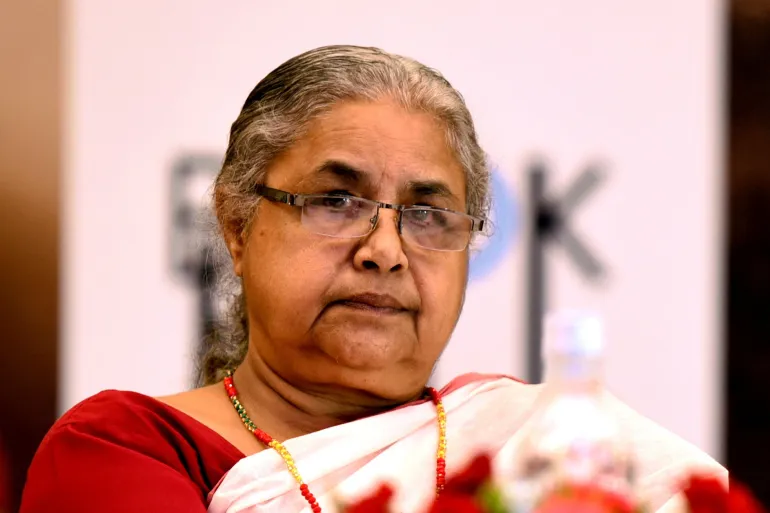
KATHMANDU, Sept 13 (VoM): Nepal has returned to a fragile calm as Sushila Karki, the country’s first woman prime minister, formally assumed office on Saturday following days of violent anti-corruption protests that toppled her predecessor.
Karki, 73, a former chief justice known for her independence, began her tenure by visiting young protesters wounded during the unrest that left at least 51 people dead—the worst violence since the end of the civil war and abolition of the monarchy in 2008.
Appointed late Friday, Karki was tasked with restoring stability, addressing youth-led demands for accountability, and preparing the nation for fresh elections scheduled for
While she has yet to deliver a public address, her hospital visit to the injured marked her first step in signaling a government focused on healing divisions.
On Saturday, the capital saw curfews eased, markets reopening, traffic flowing, and families returning to temples. Soldiers reduced their street presence after a week of heavy deployment.
“We don’t know what will happen in the future now, but we are satisfied today,” said Durga Magar, a 23-year-old shopworker in Kathmandu.
The youth-led protest movement, organized largely through the Discord app, had called for Karki to take charge. Unemployment among 15-24-year-olds in Nepal stands at 20 percent, according to the World Bank, fueling anger over corruption and economic stagnation.
“Corruption is the main issue,” said Magar. “It doesn’t matter if it’s Gen Z or older politicians who fight it; it just needs to stop.”
Regional and global leaders welcomed Karki’s appointment. Indian Prime Minister Narendra Modi voiced support for Nepal’s “peace, progress, and prosperity.”
Bangladesh’s Nobel laureate Muhammad Yunus, who currently serves as his country’s interim leader, said Karki had taken over at a “critical time” but expressed confidence in her “able leadership.”
Human rights organizations, including Amnesty International, urged the new administration to end past impunity and secure protections for all citizens.
Despite optimism, Karki faces formidable challenges. More than 12,500 prisoners escaped during the unrest, presenting major security risks. At the same time, uprooting entrenched corruption will test her credibility and ability to bring reforms.
Karki’s rise has also been viewed as a break from Nepal’s cycle of political “musical chairs,” which saw long-serving leaders like KP Sharma Oli repeatedly return to power. Oli resigned on Tuesday during his fourth term and has not been seen since.
“Nepal has got its first woman prime minister,” said Suraj Bhattarai, a 51-year-old social worker. “We hope she will lead the country toward good governance.”
For many, Karki’s appointment marks not only a historic milestone but also a potential turning point in Nepal’s fragile democracy.