

Malaysia Strengthens Implementation Of ASEAN Agreement To Address Haze
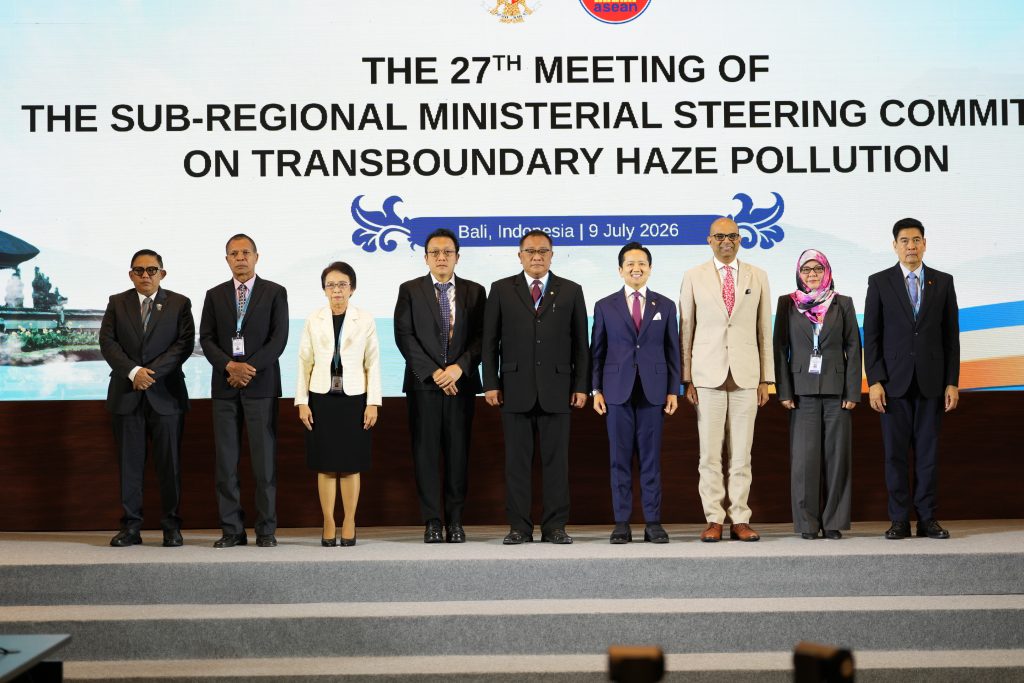
KUALA LUMPUR: Natural Resources and Environmental Sustainability Minister, Datuk Seri Arthur Joseph Kurup led the Malaysian delegation to the 27th Meeting of the Sub-Regional Ministerial Steering Committee on Transboundary Haze Pollution (MSC) in Bali, Indonesia, where Malaysia served as the Deputy Chair of the meeting.
The meeting was chaired by the Indonesian Minister of Environment as the host country and was attended by environment ministers and senior officials from ASEAN countries in the southern region, namely Brunei Darussalam, Indonesia, Malaysia, Singapore, Thailand, Timor-Leste, with the ASEAN Secretariat serving as the meeting’s secretariat.
The Ministry of Natural Resources and Environmental Sustainability (NRES) in a statement said that during the meeting, all MSC member countries expressed their commitment to strengthening the effective implementation of the ASEAN Agreement on Transboundary Haze Pollution (AATHP).
The ministry also said that the meeting welcomed Indonesia’s ongoing efforts in preparing for the establishment and operation of the ASEAN Coordinating Centre for Transboundary Haze Pollution Control (ACC THPC).
“In addition, the meeting welcomed the progress of the ASEAN Investment Framework for Haze-Free Sustainable Land Management (AIF-HFSLM), which complements the implementation of the Second ASEAN Haze-Free Roadmap 2023–2030 as well as the Second ASEAN Peatland Management Strategy (APMS) 2023–2030.
“At the same time, member countries also encouraged closer cooperation with ASEAN Dialogue Partners in supporting sustainable forest, peatland and agricultural management to achieve the ASEAN Haze-Free target by 2030,” it said in the statement.
NRES informed that during the presentation session, the ASEAN Specialised Meteorological Centre (ASMC) reported that the number of hotspots in the southern ASEAN region increased by 86 per cent in the first half of 2026 compared to the same period last year.
According to ASMC, the ministry said the increase was driven by hotter and drier weather conditions, especially in January, March and April 2026.
“ASMC also expects the El Niño phenomenon to continue throughout the second half of this year and is forecast to become stronger starting from August to September, thus potentially causing prolonged dry weather.
“This condition is expected to cause most areas in southern ASEAN to receive rainfall below normal levels in the coming months, thereby increasing the number of hotspots and the risk of transboundary haze pollution,” it said.
NRES said the 27th MSC Meeting also recognised the ongoing efforts of the Malaysian Meteorological Department (MET Malaysia) in strengthening the operational capability of the Southeast Asia Fire Danger Rating System (SEA FDRS).
“MET Malaysia informed that three Automated Auxiliary Weather Stations (AAWS) have been installed in forest reserve areas in Peninsular Malaysia to enhance early detection capabilities for forest and peatland fire risks,” it said.
Malaysia Gazzete