

Malaysia Calls for Stronger ASEAN Plus Three Cooperation Amid Global Uncertainty
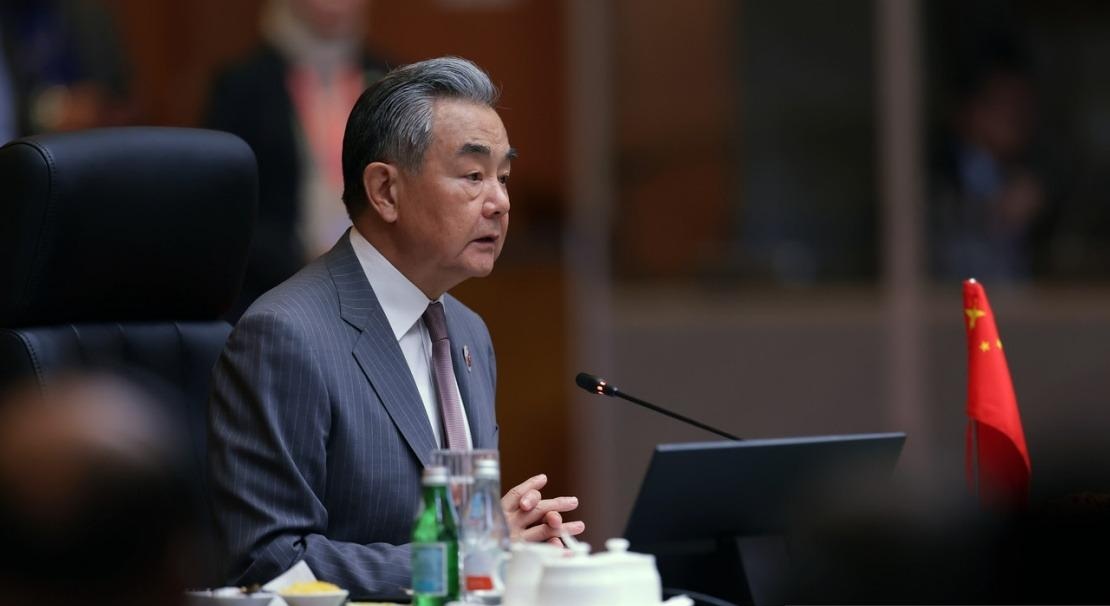
KUALA LUMPUR, July 10 (Voice of Malaysia): Malaysia’s Foreign Minister, Dato’ Seri Utama Haji Mohamad bin Haji Hasan, has called for deeper and more agile cooperation among ASEAN and its Plus Three partners—China, Japan, and the Republic of Korea—to address current global challenges and shape a resilient future for East Asia.
Delivering his opening remarks at the 26th ASEAN Plus Three (APT) Foreign Ministers’ Meeting held in Kuala Lumpur on Thursday, Mohamad welcomed participating ministers and dignitaries, including Japan’s Foreign Minister Iwaya Takeshi, who attended the meeting for the first time as coordinator of the Plus Three countries.
“This meeting reaffirms our collective commitment to further deepen the ASEAN Plus Three cooperation as a driving force for peace, stability, and prosperity in East Asia,” he stated, emphasizing the platform’s importance amid intensifying global tensions, economic fragmentation, and technological disruption.
Reflecting on the APT’s origins during the 1997 Asian financial crisis, Mohamad noted how the framework has matured into one of the region’s most reliable cooperation platforms. “It is a hallmark of teamwork that is dependable and dynamic… helping us consult, coordinate, and cooperate not only in times of crisis but also in our pursuit of sustained peace and inclusive growth,” he said.
The Foreign Minister warned of a “perfect storm” facing the region today—driven by great power rivalries, unilateralism, transboundary threats, and rising nationalism—all of which threaten the foundations of multilateralism. Still, he expressed optimism, citing ASEAN’s proven ability to weather adversity through unity and strategic dialogue.
He highlighted recent developments that demonstrate the bloc’s continued effectiveness, including the endorsement of the Rapid Financing Facility (RFF) under the Chiang Mai Initiative Multilateralisation (CMIM) and leader-level commitments on building an electric vehicle ecosystem and enhancing regional supply chain connectivity.
“These are not isolated achievements,” he said. “They illustrate APT’s capacity to generate value, respond with agility, and lead with foresight.”
Looking ahead, Mohamad urged the group to embrace frontier technologies to remain relevant, pointing to ASEAN’s projected digital transformation, which is expected to contribute approximately USD 2 trillion to the region’s GDP. He noted the critical roles China, Japan, and South Korea can play in driving this transformation through their technological expertise.
As Chair of ASEAN, Malaysia aims to leverage the APT framework to narrow development gaps, promote equitable growth, strengthen human capital, and foster social cohesion across the region. Mohamad stressed that with a combined population of 2.28 billion and a nominal GDP of USD 29.33 trillion (about 25.77% of global GDP), ASEAN Plus Three bears significant responsibility in shaping the future of global development and stability.
“In this light, let us work together to sustain the momentum, strengthen future-oriented cooperation, and deliver tangible benefits to our peoples—and beyond the region,” he concluded.
The meeting forms part of the 58th ASEAN Foreign Ministers’ Meeting and related sessions being hosted in Kuala Lumpur from July 8 to 11.