

“Indonesia Warns of Risks in US Overflight Proposal Amid South China Sea Tensions”
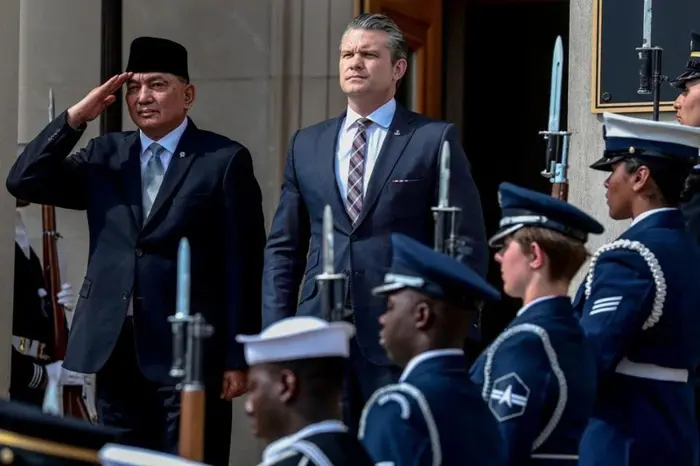
JAKARTA, April 15: Indonesia’s foreign ministry has urged caution over a United States proposal that would grant its military broad permission to fly over Indonesian territory, warning it could draw the country into regional conflicts.
According to sources, the ministry sent an urgent and confidential letter to the defense ministry earlier this month, advising against rushing into any agreement with Washington. The warning came ahead of a meeting between Defense Minister Sjafrie Sjamsoeddin and his U.S. counterpart Pete Hegseth.
The proposal, which reportedly included “blanket” overflight rights for U.S. military aircraft, raised concerns about Indonesia’s long-standing non-aligned foreign policy and its delicate balance of relations with major powers.
While a Pentagon statement following the meeting highlighted enhanced defense cooperation between the two nations, it made no mention of the overflight issue. However, a U.S. official indicated that the topic may still have been discussed privately.
Indonesia’s defense ministry confirmed that the proposal is under careful review, stressing that any decision would take into account national sovereignty and strategic interests.
The foreign ministry’s letter warned that allowing such access could enable the U.S. to expand surveillance and reconnaissance operations over Indonesian waters and airspace, potentially affecting ties with other regional partners, including China.
It also cautioned that the agreement could create the perception that Indonesia is aligning itself with a military bloc, increasing the risk of becoming a target in the event of a regional conflict.
Indonesia’s strategic position spanning more than 17,000 islands and sitting near the southern gateway of the South China Sea makes it a key player in regional security dynamics. The country also controls the Natuna Islands, an area close to overlapping territorial claims.
The letter further highlighted past incidents, noting that U.S. military aircraft conducted at least 18 surveillance operations in the region between January 2024 and April 2025, which Indonesia considers violations of its airspace and territorial waters.
Despite lodging protests, Jakarta said it has yet to receive satisfactory responses from Washington regarding those incidents.
President Prabowo Subianto has consistently maintained a non-aligned stance, pledging to maintain friendly relations with all major powers. His administration continues to balance ties with both the U.S. and China amid rising tensions in the South China Sea, a vital trade route handling trillions of dollars in global commerce annually.
The development comes as military activities in the region intensify, with the U.S. and its allies increasing joint exercises, further heightening geopolitical sensitivities.