

Donald Trump Orders Hormuz Blockade as US-Iran Talks Collapse, Raising Fears of Wider Conflict
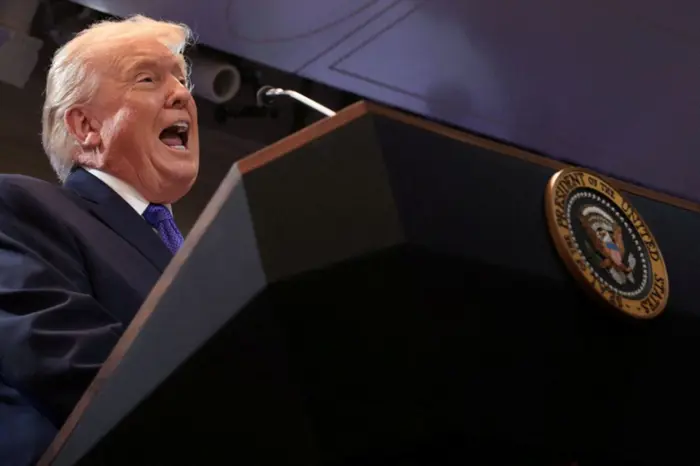
ISLAMABAD: Tensions in the Middle East escalated sharply after Donald Trump announced that the United States would “immediately” begin a naval blockade of the Strait of Hormuz, following the collapse of high-stakes peace talks between Washington and Tehran.
The strategic waterway, which previously handled nearly 20% of global oil shipments, has become a focal point of the ongoing conflict. Trump said the move aims to cut off Iran’s economic leverage by preventing vessels from transiting the strait if they are found to have paid tolls to Iran.
“I have instructed the Navy to interdict every vessel in international waters that has paid a toll to Iran. No one who supports illegal payments will have safe passage,” Trump stated on Sunday.
He further warned that the US was prepared to “finish up” Iran at a time it deems appropriate, signaling a possible escalation in military action.
The announcement came just hours after 21 hours of direct negotiations between US and Iranian officials in Pakistan ended without agreement. The failure has cast doubt over a fragile 14-day ceasefire set to expire on April 22.
US Vice President JD Vance said the talks broke down over Iran’s refusal to commit to abandoning its nuclear ambitions.
“We need a clear and affirmative commitment that Iran will not pursue nuclear weapons or the capability to rapidly develop them,” Vance said.
On the Iranian side, parliamentary speaker Mohammad Bagher Qalibaf accused Washington of failing to build trust, suggesting that key disagreements remain unresolved.
The dispute over Iran’s nuclear program remains the central obstacle. While Tehran insists its program is for civilian purposes, US officials argue that its enriched uranium stockpile puts it within reach of developing nuclear weapons.
The deadlock mirrors earlier failed negotiations, including those in Switzerland, where both sides held firm to opposing demands.
Since the conflict began on February 28, the war has caused widespread devastation across the region. Thousands have been killed, including civilians in Iran, Lebanon, Israel, and several Gulf states. Infrastructure damage has also been extensive.
The situation in Lebanon remains volatile, with Hezbollah continuing to be a flashpoint. Israel has maintained strikes against the Iran-backed group, arguing that ceasefire terms do not apply to its operations there.
Pakistan, which hosted the talks, has called on both sides to maintain the ceasefire and return to negotiations. Foreign Minister Ishaq Dar emphasized the urgency of continued dialogue.
“It is imperative that all parties uphold their commitment to the ceasefire,” he said, adding that Islamabad would continue efforts to bring both sides back to the negotiating table.
With no clear plan beyond the ceasefire deadline, concerns are growing about a broader regional war. Trump’s blockade order marks a significant escalation that could disrupt global energy markets and heighten military tensions in one of the world’s most critical shipping corridors.
As diplomatic efforts stall, the coming days may prove decisive in determining whether the conflict deepens or a last-minute breakthrough can still be achieved.