

Iran Says IRGC Navy Will Exercise Full Control Over Strait of Hormuz Traffic, Warns of Response to Interference
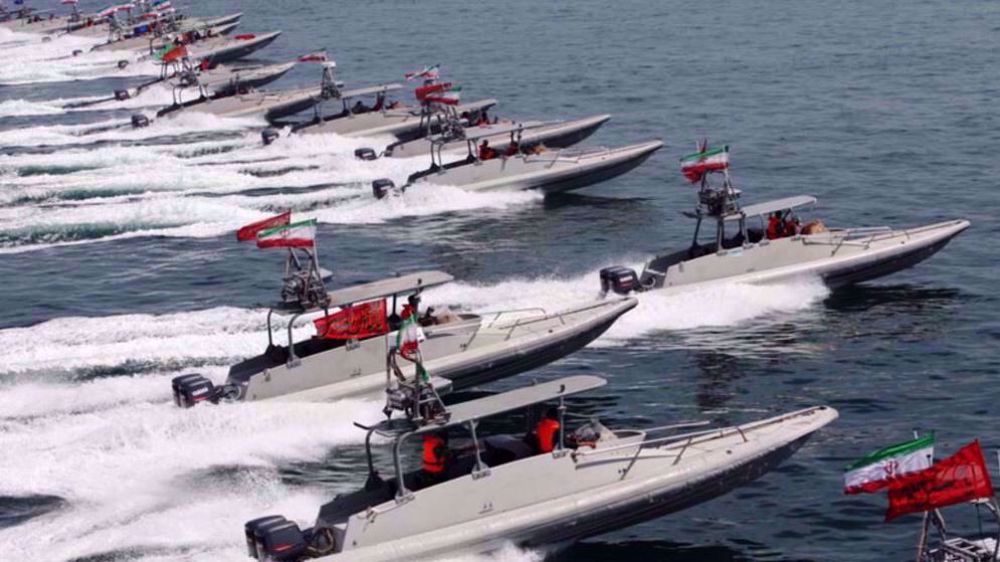
TEHRAN: Iran’s highest operational military command has declared that the Strait of Hormuz remains under full control of the country’s armed forces, stating that all maritime traffic through the strategic waterway must comply with regulations enforced by the Islamic Revolution Guards Corps (IRGC) Navy.
In a statement issued on Saturday, the Khatam al-Anbiya Central Headquarters said the management of the Strait is being carried out “with full authority” by Iran’s armed forces.
It added that all ships, commercial vessels, and oil tankers are required to pass only through designated routes and must obtain permission from the IRGC Navy before transiting the strait.
The command warned that any violation of these regulations would “seriously jeopardise the security” of vessels passing through the waterway.
It also issued a strong warning to foreign naval forces operating in the region, stating that any attempt to interfere with navigation management or disrupt maritime traffic would be met with a response from Iranian armed forces.
“Any action by military vessels aimed at interfering in the management of the Strait of Hormuz or creating disruption in navigation will be targeted,” the statement said.
Iran further indicated tighter restrictions on the strait, through which a significant portion of the world’s oil and gas shipments pass, saying controls have been imposed on vessels linked to the United States and its allies involved in recent regional conflicts.
The statement also referenced ongoing tensions following US actions against Iranian maritime operations and ceasefire-related disputes.
Iranian authorities said the IRGC Navy is enforcing directives from the country’s leadership regarding security in the Persian Gulf and the Strait of Hormuz.
Earlier reports also claimed that the IRGC Navy recently ordered an American tanker to turn back after it allegedly attempted to cross the strait without authorisation and had disabled its tracking system.
The announcement underscores rising tensions in one of the world’s most critical energy shipping routes.