

Hajj 2025: Pilgrims Pray at Mount Arafat
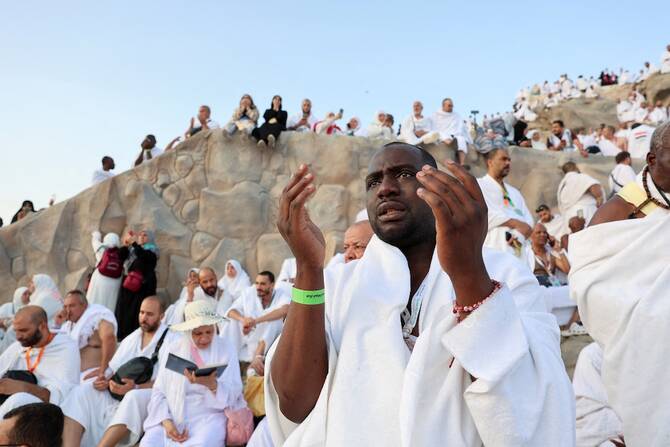
Arafat, June 5, 2025 (Thursday):
Millions of Muslim pilgrims from around the world gathered today at Mount Arafat, marking the most significant and spiritual moment of the annual Hajj pilgrimage. With voices united in the powerful chant of “Labbayk Allahumma Labbayk” (“Here I am, O Allah, here I am”), the vast plains of Arafat echoed with devotion, reflection, and prayer.
Mount Arafat, also known as Jabal al-Rahmah (Mount of Mercy), is where the Prophet Muhammad (peace be upon him) delivered his historic Farewell Sermon over 1,400 years ago. Standing here today is a central rite of Hajj and is considered a pillar of the pilgrimage. The day is known as Yawm Arafah (Day of Arafat) and holds immense spiritual significance for Muslims.
Pilgrims, dressed in simple white garments symbolizing purity and unity, spent the day in prayer, supplication, and seeking forgiveness. Many stood with hands raised toward the sky, weeping and asking for Allah’s mercy. This collective moment of submission and spiritual reflection is regarded as the climax of the Hajj journey.
The sermon (khutbah) for Hajj 2025 was delivered by Sheikh Dr. Saleh bin Humaid, Imam and Khateeb of the Grand Mosque in Makkah. In a notable initiative, the sermon was translated into 20 languages, including Bengali, English, Urdu, and Turkish, ensuring that the global Muslim community could connect with the message. The Bengali translation was done by four Bangladeshi scholars: Dr. Khaleelur Rahman, A. F. M. Wahidur Rahman, Mubinur Rahman, and Najmus Saqib, all of whom are alumni of Umm Al-Qura University in Makkah.
After the sermon, pilgrims performed shortened Dhuhr and Asr prayers together at the Arafat grounds. Following sunset, they departed for Muzdalifah without performing Maghrib prayer, in accordance with Islamic tradition. There, they will pray Maghrib and Isha together and spend the night under the open sky, collecting pebbles for the symbolic stoning of the devil in Mina.
The Day of Arafat: A Day of Mercy and Forgiveness
The Day of Arafat is considered one of the holiest days in Islam. According to Islamic teachings, it is the day when Allah’s mercy is abundant, sins are forgiven, and countless souls are freed from Hellfire. On this day, the last and most complete verse of the Qur’an was revealed to Prophet Muhammad (PBUH), declaring the religion’s perfection:
“This day I have perfected for you your religion and completed My favor upon you and have approved for you Islam as your religion.” (Surah Al-Ma’idah, 5:3)
Prophet Muhammad (PBUH) is reported to have said:
“There is no day on which Allah frees more people from the Fire than the Day of Arafah.” (Sahih Muslim)
What Comes Next
After spending the night in Muzdalifah, pilgrims will return to Mina to perform the ritual of stoning the three pillars (Jamarat), which symbolizes the rejection of evil. The rituals of animal sacrifice, hair shaving or trimming, and the Tawaf al-Ifadah (circumambulation of the Kaaba) follow. The pilgrimage concludes with further days in Mina and a final farewell (tawaf) in Makkah.