

ASEAN Ministers Launch New Action Plan to Tackle Transnational Crime:
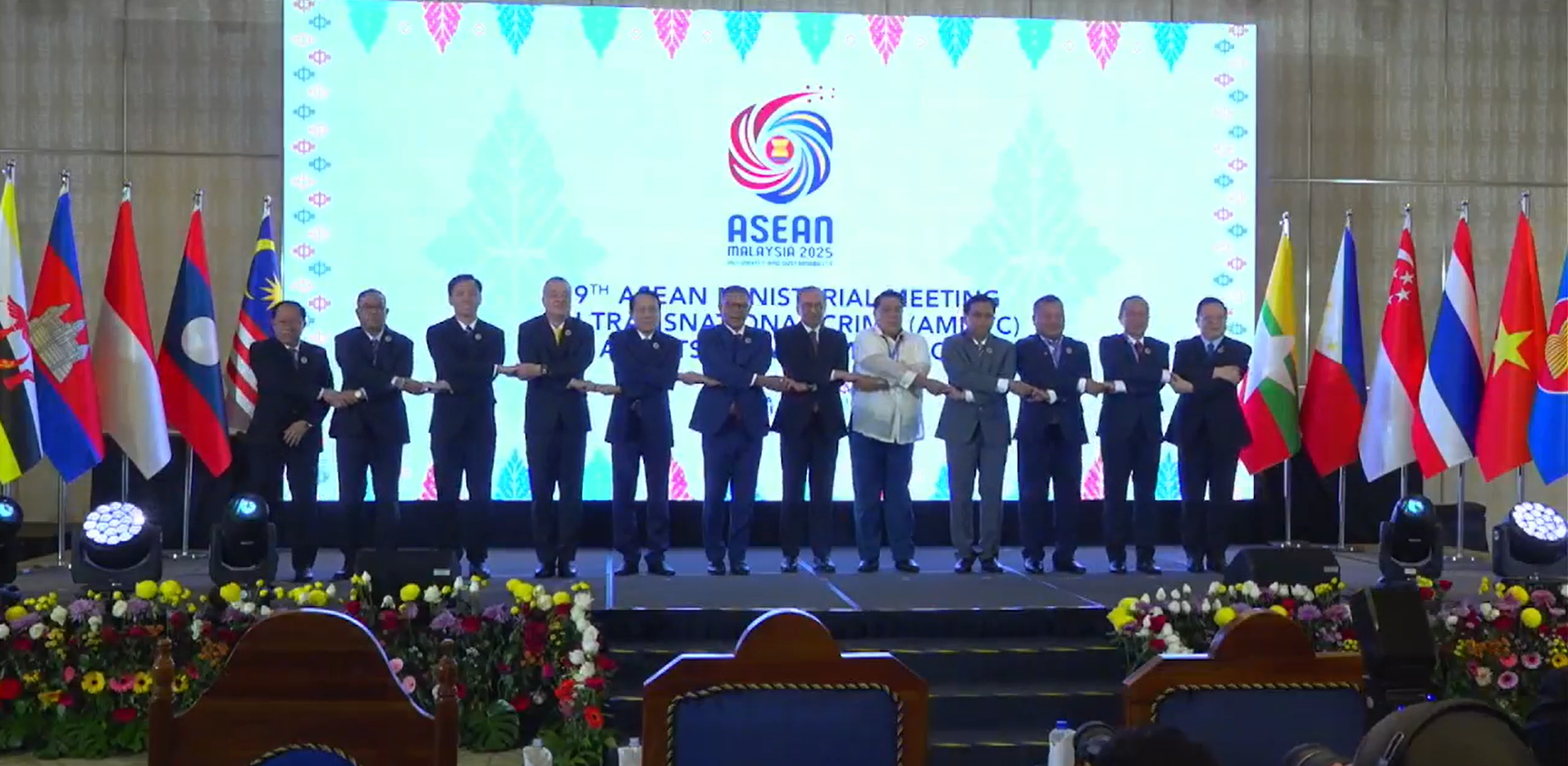
MELAKA, Sept 9 (VoM): ASEAN ministers have agreed to launch a new decade-long action plan to tackle transnational crime, reaffirming their commitment to stronger regional cooperation against human trafficking, cybercrime, money laundering, and border threats.

The pledge was made at the 19th ASEAN Ministerial Meeting on Transnational Crime (AMMTC) and Related Meetings, hosted by Malaysia in Melaka. Prime Minister Datuk Seri Anwar Ibrahim officiated the opening ceremony, accompanied by Melaka Chief Minister Datuk Seri Utama Ab Rauf Yusoh and Home Minister Datuk Seri Saifuddin Nasution Ismail, who chaired the ministerial sessions.
The meeting is especially significant as the ASEAN Plan of Action in Combating Transnational Crime (2016–2025) comes to an end this year. Leaders are now preparing to adopt the ASEAN Plan of Action 2026–2035, setting the course for regional collaboration in the decade ahead.
Among the initiatives expected are the creation of a SOMTC Working Group on Money Laundering, the ASEAN Border Management Cooperation Roadmap, and the Melaka Declaration on Combating Transnational Crime. Ministers are also set to endorse ASEAN Leaders’ Declarations on cross-border law enforcement, anti-money laundering strategies, and innovative community initiatives, including using sports to counter extremism.
The gathering also advances Timor-Leste’s pathway to full ASEAN membership, with the country moving to ratify regional conventions on counter-terrorism and anti-trafficking ahead of a formal decision at the ASEAN Summit in October.
Home Minister Saifuddin underscored the importance of collective action:
“Human trafficking, financial crimes, and cyber-enabled offenses are no longer confined within national boundaries. ASEAN must act together to strengthen enforcement and intelligence-sharing to safeguard our region,” he said.
Analysts say the Melaka meeting signals ASEAN’s determination to reinforce long-term security frameworks while adapting to new and complex threats across Southeast Asia.