

Javanese Muslims Celebrate Eid Al-Adha with Centuries-Old Royal ‘Grebeg’ Tradition
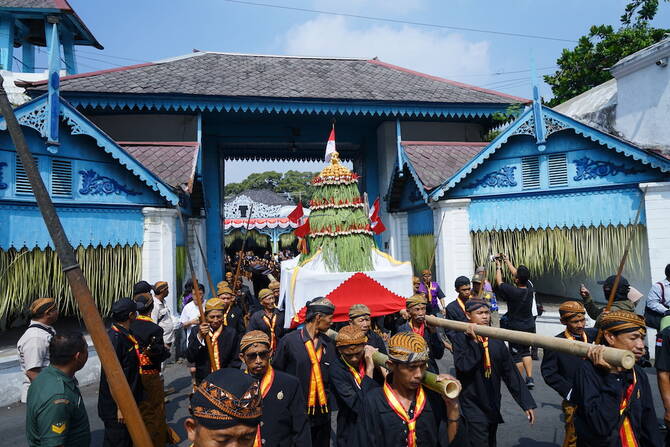
JAKARTA, June 8 — In the heart of Java, the historic city of Solo is celebrating Eid al-Adha with the time-honored royal tradition of Grebeg, a centuries-old ceremonial procession symbolizing gratitude, religious devotion, and leadership responsibility.
Though Muslims across Indonesia began observing Eid al-Adha on Friday, Solo’s main celebration takes place on the second day of the festival, when a mountain-shaped offering made of local produce is paraded from the Surakarta Royal Palace to the city’s Great Mosque.
The ritual, known as Grebeg Besar (Great Grebeg), features elaborately arranged harvest goods — including chilies, cassava, and long beans — shaped into a symbolic “mountain” and accompanied by traditional music and royal guards. Once blessed at the mosque, the offering is brought to the public square, where it is shared among residents.
“This tradition began more than 200 years ago at the Surakarta Royal Palace and continues a legacy dating back to the Demak Sultanate — the first Islamic kingdom in Java,” said Kanjeng Gusti Pangeran Haryo Adipati Dipokusumo, chief administrator of the palace.
The tradition, he explained, reflects Islamic values such as sincerity, patience, and gratitude while also honoring the story of Prophet Ibrahim’s willingness to sacrifice his son — a central theme of Eid al-Adha. In keeping with this, the ceremony includes the ritual slaughter of animals and distribution of meat to the poor.
More than 500 participants are expected to take part in this year’s celebration. Grebeg also serves as an informal gauge of the region’s economic health, as the quality of the harvest on display reflects agricultural conditions.
“If the harvest is lacking or shows signs of trouble, it prompts further investigation by the palace into issues such as pests or supply chain problems,” Dipokusumo noted.
Historians believe Grebeg dates back 400 to 500 years. It is also observed at the royal palace in Yogyakarta, another former seat of Javanese royalty.
“The produce from the king is considered symbolic and blessed,” said historian Ody Dwicahyo from Gadjah Mada University. “People believe it brings good fortune, and many try to bring a piece home.”
More than just a cultural spectacle, Grebeg reinforces the idea that leadership comes with responsibility. Dwicahyo added, “It’s a symbolic gesture of the king giving back to the people — a reminder that leaders must care for the welfare of their communities.”
Today, while the monarchy no longer holds political power, the palaces in Solo and Yogyakarta serve as guardians of Javanese culture, ensuring that this unique and meaningful tradition continues to thrive in the modern era.