

Day 452 of the war between Israel and the Palestinians: what happened?
Israel and Hezbollah both make threats about leaving the region in 60 days; the IDF kills a leader of Islamic Jihad in Gaza; the US and UK hit the Houthis after they fired a rocket at Israel.
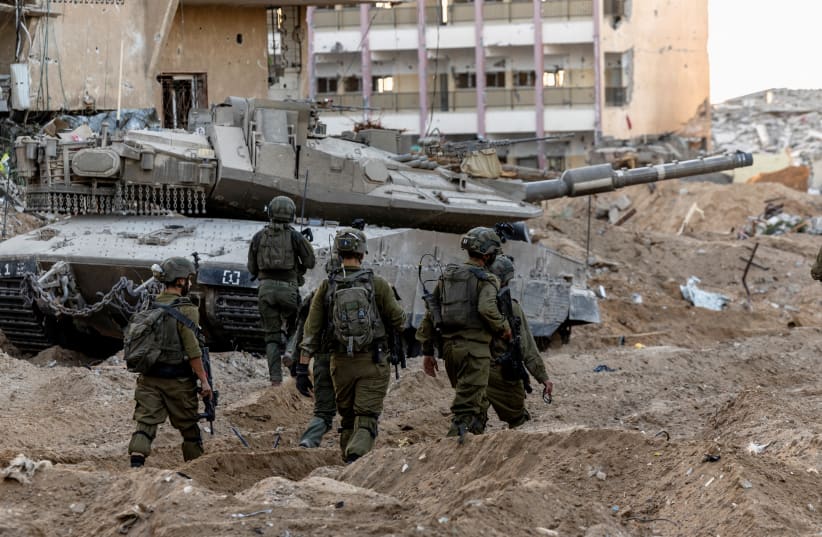
On Tuesday, both Israel and Hezbollah made threats about whether the IDF must finish leaving southern Lebanon 60 days after the ceasefire on November 27. Israel asserts that the situation on the ground allows for some flexibility.
The IDF and government sources stated last week that the 60-day timeline was not definitive. It was said that the withdrawal could be pushed back for days, weeks, or even months if the Lebanese force moved more slowly than expected to control southern Lebanon or if Hezbollah broke the ceasefire too many times.
The 60-day peace between Hezbollah and Israel will still happen, but Mahmoud Komati, the deputy head of Hezbollah’s Political Council, told Al Manar TV in Lebanon late Monday that “day 61 will be different.” He said that if Israel doesn’t leave southern Lebanon, Hezbollah would attack the IDF again.
Komati said that Hezbollah would not let anyone, inside or outside of Lebanon, get in the way of its program to rebuild its weapons.
He stated that Hezbollah still possessed its rockets, missiles, and drones, and that its attack on Tel Aviv had forced Israel to engage in dialogue.
There was a chance that Hezbollah would start firing hundreds of rockets at Israel every day, so Israeli sources said that claims that the 60th day was not a sacred deadline for leaving southern Lebanon did not mean that it was impossible to meet the deadline.
Israeli sources have not said for sure that the IDF will not follow through with the 60-day deadline. They instead say that ground operations are moving more slowly than expected, which may delay the IDF’s departure.
According to reliable sources, Israel’s words only showed that the danger to Israeli troops and citizens grows when Lebanon’s army doesn’t take over an area from the IDF or when Hezbollah tries to get into southern Lebanon.
They said that once this threat gets worse, it makes less sense for IDF troops to finish pulling out.
Sources say that the IDF could also leave almost all of southern Lebanon but keep a tiny security zone there until it was sure that both the Lebanese army and Hezbollah were following through on their promises to end the fighting.
They said that such a weak stance would probably need a vote by the security cabinet, but it would make it harder for Hezbollah to explain a sudden big escalation.
On the other hand, Joseph Aoun, leader of the Lebanese Armed Forces, met with French Foreign Minister Jean-Noel Barrot and Defense Minister Sebastien Lecornu on Monday. They met up with UNIFIL troops on Tuesday near the border between Israel and Lebanon.
People who know about the situation told The Jerusalem Post that even though both sides have made work toward the ceasefire, it is still not fully in place.
Breaking the ceasefire
Both Israel and Hezbollah have faced criticism for violating the truce up to now. But Israel hasn’t gone after high-level Hezbollah officials, and Hezbollah hasn’t fired into Israel either, except for one time in the days after the ceasefire.
The IDF and Shin Bet (Israel’s Security Agency) killed Anas Muhammad Saadi Masri in Gaza on Tuesday. He was in charge of the rocket unit for the northern area of the Palestinian Islamic Jihad.
It said that earlier this month, Masri was killed when an IAF plane hit him based on information from the Military Intelligence Directorate, the Shin Bet, and Southern Command.
“Masri was a key figure who was in charge of many terrorist operations and overseeing actions by the group that were aimed at Israeli civilians and IDF soldiers,” the IDF said.
It said that since October 7, Masri had been openly ordering rocket fire from northern Gaza into border towns in Israel.
“Before the strike, many steps were taken to make sure that as few civilians as possible were hurt. These measures encompassed the use of precision weapons, the collection of precise intelligence, and vigilant monitoring from above. It was said by the IDF, “We will continue to strike anyone who supports or commits acts of terrorism against Israeli citizens, and we will work to achieve the goals of the war.”
Late Tuesday night, the IDF said it had killed Abd al-hadi Tzavach, who was in charge of the western Khan Yunis unit during the Nukhba and was also one of the leaders of the attack on Nir Oz on October 7 and the killing of Israelis there.
Some people who are against Israel have said that its bombings continue to kill a lot of Palestinian civilians and that the IDF is not being honest about those numbers.
People who support Israel say that Hamas is to blame because they are using people as shields.
The Nahal Brigade has been fighting Hamas in Rafah, southern Gaza, for several months. The IDF announced on Tuesday that they are giving the Nahal Brigade a break to rest, and they will send the Kiryati Brigade back to that area.
The IDF said that Hamas fired a rocket from southern Gaza on Tuesday. The rocket probably didn’t hit anything when it hit the ground, though.
According to sources, the US and UK hit a lot of Houthi military targets in Yemen on Tuesday. It was late Monday night when the Houthis fired a ballistic missile at Israel. Israel shot it down.
Strong winds flipped over a Yas’ur helicopter (Sikorsky CH-53) that was on the ground and damaged it, the IDF said Tuesday. Reports indicate that no injuries occurred, and the chopper will undergo repairs and return to service at a later time.
An IDF panel will investigate what happened and report its findings to the IAF commander.