

The “third quarter report” of the trillion-dollar cities in the Yangtze River Delta: 6 cities grew faster than the national average, and positive economic factors accumulated
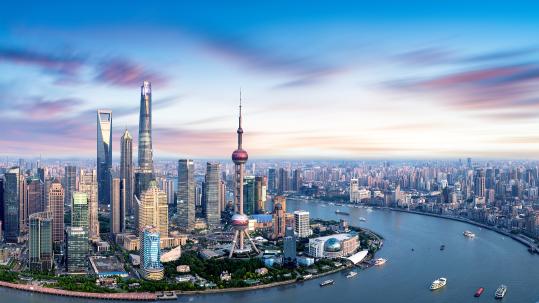
The Yangtze River Delta’s trillion-dollar cities have released their “third quarter report”. Six towns are growing faster than the rest of the country, and more and more positive economic signs are building.
The nine “trillion-dollar cities” in the Yangtze River Delta area make up about 14% of the country’s GDP, which is about one-seventh. Public information has revealed the economic success of nine cities over the first three quarters of this year. Six of the cities saw faster growth than the national average of 4.8%.
Overall, towns in Jiangsu have done well. For example, Nantong, Suzhou, and Wuxi have all grown at or above 6% per year. Changzhou, recently promoted, has witnessed its economy growing faster each quarter of this year. However, a number of indicators linked to production, investment, consumption, and expectations have gotten better in the nine trillion-dollar cities. This is beneficial for the economy and gives it a stronger push to recover.There are 26 cities in mainland China with an annual GDP of more than one trillion yuan. Nine of these cities are located in the Yangtze River Delta, known as the “Leader.”
Shanghai has an annual GDP of more than 4.7 trillion yuan, making it the country’s economic capital city; Suzhou and Hangzhou have an annual GDP of more than 2 trillion yuan; and Nanjing, Ningbo, Wuxi, Hefei, Nantong, and Changzhou follow. There are trillion-dollar cities in four provinces. The Yangtze River connects Shanghai and the five cities of Suzhou, Wuxi, Changfei, Nanjing, and Changzhou in Jiangsu, forming a “trillion-dollar city belt.” Every quarter, the growth rate of newly added trillion-dollar cities has been increasing. According to data from different areas, the nine cities’ combined GDP in the first three quarters was 13.2 trillion yuan, which was 13.9% of the country’s GDP during that time.
Shanghai had the most wealth (3,489,9 billion), followed by Suzhou (1848.4 billion), Hangzhou (1521.5 billion), and Nanjing (1312.4 billion). These cities ranked first through tenth in the country. Year-over-year growth: Ningbo had 82.7 billion, more than Nanjing and Hangzhou, putting it in third place out of the nine towns.The cities that did better than the national average were Nantong (6.3%), Suzhou (6.0%), Wuxi (6.0%), Changzhou (5.8%), Hefei (5.4%), and Ningbo (5.3%). The GDP of Changzhou, which became a member of the “trillion club” last year, grew by 5.0% in the first quarter, 5.6% in the first half of the year, and 5.8% in the first three quarters. We have improved and strengthened the economy’s upward trend.
Although Nantong is growing the fastest, there isn’t much land development going on there right now—less than 20% in the coastal area, to be exact. The coastal development park has almost 100,000 m2 of undeveloped land available for construction. The conditions are in place to establish a “modern industrial city” and foster further growth. More than 75% of Shanghai’s GDP comes from its tertiary industries, making it the most valuable of the nine towns. The added value of the tertiary industry grew at the fastest rate among the nine towns in the first three quarters, at 5.8%. In most trillion-dollar cities, the growth is primarily driven by the secondary industry, particularly large corporations.
If this industry grows quickly, the economy will grow faster overall. If it grows slowly, the economy will grow less quickly overall. Hefei’s industrial energy use went up by 15.9% in the first three quarters, and the added value of businesses bigger than the designated size went up by 15.2%. All together, the city’s growth rate has been the highest among all trillion-yuan towns in the country for five months in a row. The main reason for this is the strong pull of key businesses.
The flat panel display and electronic information industry and the car and parts industry each have an added value growth rate of about 35%. Collectively, these industries account for over 80% of the expansion of industrial businesses in the city, surpassing the required size. Industry investment surged by 15.4% in the first three quarters, fostering rapid momentum building. Last year, Suzhou had the slowest economic growth rate of the nine trillion-dollar cities in the country. This year, it has made a strong return, with a growth rate of 6.2% in the first half of the year, making it the fastest on the list. The added value of businesses bigger than a certain size rose by 9.3% by the end of the third quarter, and manufacturing investment rose by 10.7%. The rate of economic growth stayed in the “six-digit” range. What you can see about Suzhou’s “speed competition” is that “starting construction as soon as the land is obtained” has become the rule. The city released “Guiding Opinions (Trial)” this year on how to use the “starting construction as soon as the land is obtained” approval model for engineering construction projects. The city completed 198 of these projects in the first nine months.
Local news sources report that Zhangjiagang City’s container corner saw the removal of a 790 million yuan smart manufacturing project from the market on September 11, followed by the completion of the building permit on September 12. Lowes CNC Technology (Changshu) Co., Ltd. got the building permit on June 18 and the real estate certificate on May 20. They started building on June 20. They can complete the job nearly six months ahead of schedule, with completion expected in August of next year. More and more positive things are happening that will help the economy revive.The economy and people of my country are constantly moving to central cities and urban agglomerations, which are now the main types of space for carrying growth factors. Since the beginning of the year, the national level has made significant efforts to implement both core policies and a range of minor policies. In September, the national economy showed signs of improvement. Most measures got a little better, and the economy seemed to be bottoming out and stabilizing. Cities in the Yangtze River Delta, valued at a trillion yuan, have accelerated the implementation of the “two heavy” and “two new” policy effects. This facilitated the improvement of the economy, leading to an increase in momentum.
The output value of Shanghai’s three biggest industries rose by 8.6% in the first three quarters, which is 2.5 percentage points more than the first half of the year. Freight transport turnover rose by 9.6%, which is 5.1 percentage points more than the first half of the year. The industrial added value of Hangzhou went up by 4.2%, which is up 0.4 percentage points from January to August and 0.2 percentage points from the beginning of the year.
The industrial added value of Nantong went up by 9.7%, with private businesses accounting for 65.2% of that rise. This was enough to boost the industrial added value by 6.3 percentage points. Nanjing’s service industry added value went up by 5.4% during the same time period, which is 0.8 percentage points more than the first half of the year. From January to August, businesses in the service industry that were bigger than the required size saw their total profits rise by 15.4%.
Ningbo’s fixed asset investment grew by 3.0% in the first three quarters, which is up 0.3 percentage points from January to August. Out of the 21 consumer categories that make up retail sales of consumer goods, 13 saw growth pick up again in September compared to August. Home appliances and furniture saw growth pick up by more than 40 percentage points. It set a new record this year for the largest share of retail sales of consumer goods in Wuxi, growing by 26.6%. This was done through public networks. In Hangzhou, investments in fixed assets went up by 0.1% in the first three quarters, or 1.7 percentage points from January to August. Several areas have initiated various policies to enhance confidence, recognizing low expectations as an issue that requires resolution to accelerate growth.
A survey of over 10,000 industrial businesses in Ningbo, classified as being of a specific size, revealed that their expected prosperity index in the third quarter was 129.4, 2.9% higher than in the second quarter. This shows that market expectations have gotten better. The highest capacity utilization rate for Ningbo’s industrial companies above the designated size was 81.7% in the third quarter. This was the highest rate for a third quarter since 2022. In Hefei, industrial businesses larger than a certain size generated a total of 4.1 yuan for every 100 yuan in running income from January to August. This was an increase of 0.8 yuan from the same time last year. The purchasing managers’ index (PMI) for manufacturing was 50.7% in September.
It has been in the expansion band for 7 months in a row. Wenzhou (873.1 billion yuan) and Xuzhou (890 billion yuan last year) are likely to build the tenth trillion-yuan city in the Yangtze River Delta, either in the north or south of the region. Ten towns and four provinces in Jiangsu, Shandong, Henan, and Anhui comprise the Huaihai Economic Zone. The city of Xuzhou is in the middle of it all. Wenzhou is speeding up the building of Zhejiang’s “third pole” of high-quality growth. With a growth rate of 6.2%, the GDPs of the two cities reached 689.9 billion yuan and 673.2 billion yuan in the first three quarters of this year, significantly surpassing the national and regional levels.