

PPR Not Elderly-Friendly
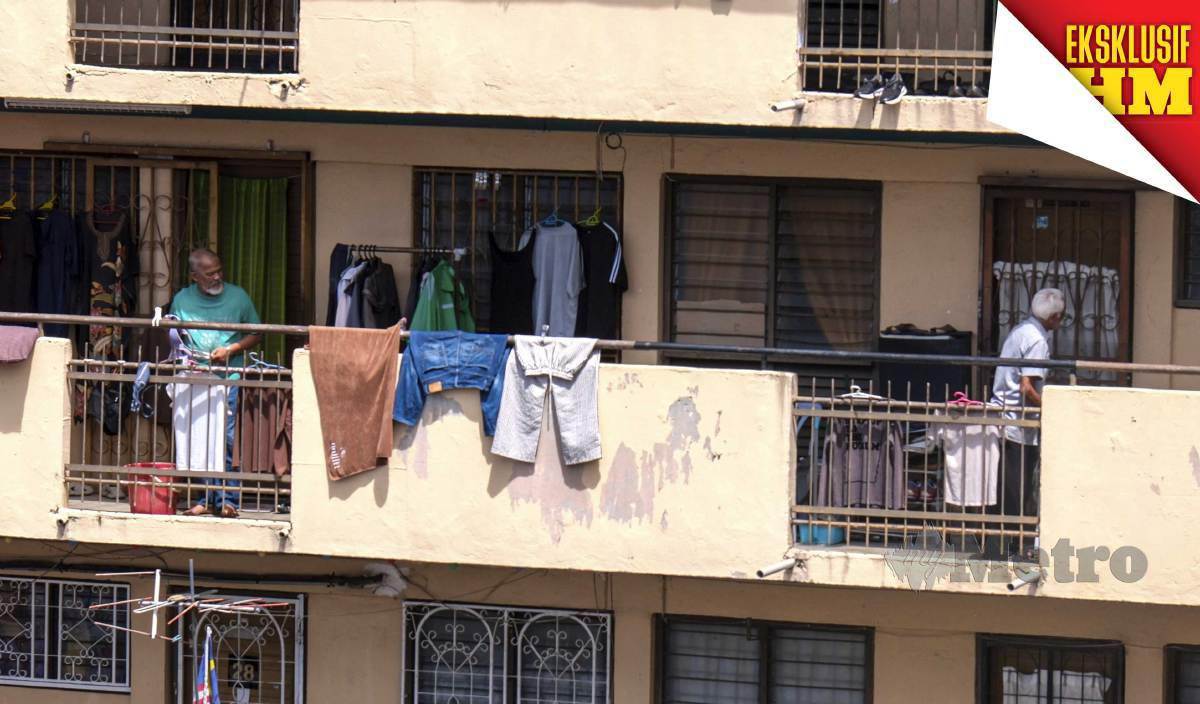
KUALA LUMPUR: Malaysia is now facing the reality of an ageing low-income urban population, with the majority of heads of households in several major People’s Housing Projects (PPR) expected to have already entered the elderly category this year.
Director of Research at Khazanah Research Institute (KRI), Dr Suraya Ismail said, this situation is based on findings from a study through the report Decent Shelter for the Urban Poor: A Study of Program Perumahan Rakyat (PPR) published in March 2023.
According to her, the study conducted by KRI between April 2016 and July 2017 involved five selected PPRs in Kuala Lumpur and Penang, namely PPR Beringin, Kerinchi, Wahyu, Salak Selatan and Jalan Sungai.
She said a total of 3,878 residents were interviewed to obtain a comprehensive picture of the socio-economic conditions and lives of the urban public housing residents.
“The report found that the median age of heads of households at the time of the study was between 52 and 54 years old. Based on current trends, the majority of heads of households interviewed nearly a decade ago have now entered the elderly category.
“At the time the study was conducted in 2016 and 2017, about 10 percent of residents were aged 60 and above, while nearly 47 to 50 percent were in the working-age group of between 25 and 59 years old,” she told Harian Metro.
She said, however, the average age of heads of households at that time had already reached around 54 years. So after nearly 10 years have passed, many in that group are now aged over 60,” she said.
According to her, the majority of heads of households, more than 50 percent involved in the study, are now estimated to have entered the elderly category given that their median age at the time of the study was around 54 years.
“Head of household means the individual who is the head of the family for each housing unit.
This differs from the overall age distribution of the population.
“At the time of the study, about 10 percent of the total population in the five PPRs were already in the elderly category.
“According to the report, the highest percentage of elderly at the time of the study was recorded at PPR Salak Selatan at 15 percent, followed by PPR Jalan Sungai at 12 percent,” she said.
She added that the study also revealed that the elderly in PPRs are in a highly vulnerable economic situation, with 72.1 percent of retirees found to be living in hardcore poverty.
“Most of them no longer have a fixed income as they have stopped working or retired, thus relying on social assistance and limited savings to cover living costs, medications and monthly rental payments.
“At the same time, the issue of home ownership also poses a major challenge, particularly for residents aged 45 and above who face difficulties in obtaining housing loans while still working,” she said.
According to her, this situation has caused many residents to continue depending on the PPR rental scheme well into their old age without owning their own home.
Commenting on the living conditions of the elderly in PPRs, Dr Suraya said one of the main issues identified is the cramped living space that is not suitable for the ageing process.
“Among the things I observed during the study was the cramped living space for the elderly. There were also wheelchair-bound residents living on the 12th or 14th floor. When the lift breaks down, this situation is very troubling.
“Lift breakdowns are among the most critical issues because they directly affect the mobility and safety of frail residents, especially those living on upper floors,” she said.
Harian Metro