

Sudanese Army Report Warns of Foreign Networks Fueling RSF War Effort
Boxes of ammunition bearing UAE military markings are shown in an image referenced by the Sudanese Armed Forces as evidence supporting allegations of foreign support for the RSF.
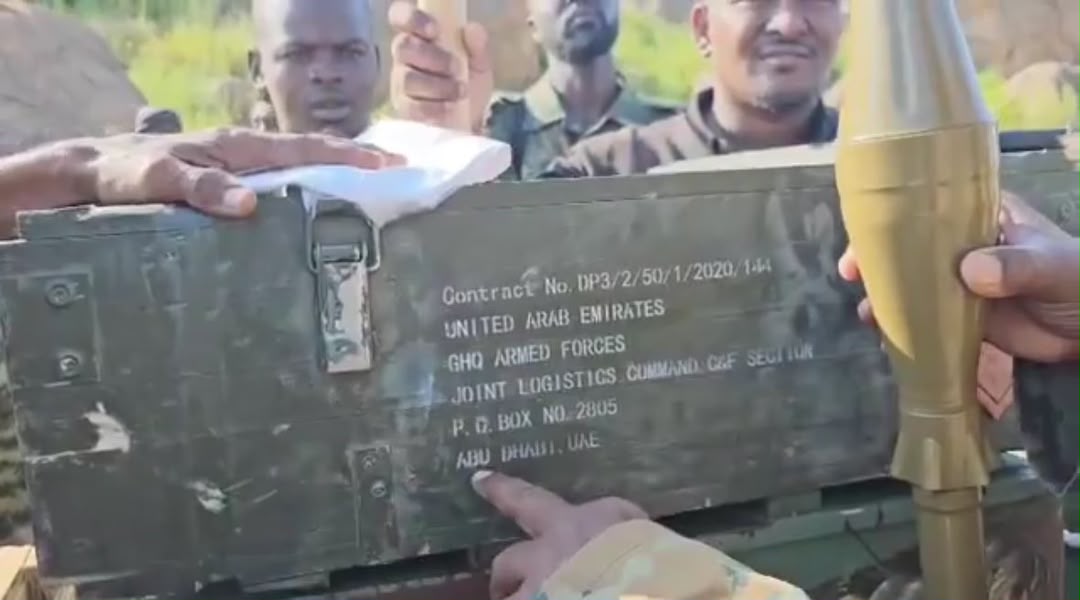
KUALA LUMPUR: A report circulated in Malaysia has warned that foreign logistical, financial and military networks are helping prolong Sudan’s war by strengthening the Rapid Support Forces (RSF), the paramilitary group fighting the Sudanese Armed Forces (SAF) since April 2023.
The report, prepared by the Sudanese Armed Forces and circulated by the Embassy of Sudan in Malaysia, presents the allegations as part of Khartoum’s wider effort to explain what it describes as external interference undermining Sudan’s sovereignty, stability and territorial integrity.
The RSF is a powerful paramilitary force led by Mohamed Hamdan Dagalo, widely known as Hemedti. The group emerged from armed formations linked to earlier conflicts in Darfur before becoming one of Sudan’s most influential security actors following the fall of former president Omar al-Bashir.
Tensions between the RSF and the Sudanese Armed Forces escalated into full-scale war in April 2023, triggering one of the world’s gravest humanitarian crises.
The conflict has devastated large parts of Sudan, displaced millions of people and raised international concern over the collapse of state institutions, civilian protection and humanitarian access.
According to the SAF report, the United Arab Emirates (UAE) allegedly provided sustained support to the RSF before and after the outbreak of the war.
The allegations, which could not be independently verified, include claims of military supplies, logistical facilitation, financial backing, political support and media efforts aimed at improving the RSF’s image locally, regionally and internationally.
The UAE has repeatedly denied supporting either side in Sudan’s conflict and maintains that it supports diplomatic and humanitarian initiatives intended to end the war.
The report alleges that support to the RSF moved through several regional routes, including land corridors crossing neighbouring countries, particularly Chad and the Central African Republic.
It also claims that civilian cargo aircraft, temporary landing strips and transit points in nearby states were used to move weapons, ammunition, drones, fuel and military equipment into Sudan.
According to the report, eastern Libya became a major logistical hub for the RSF, especially areas surrounding Kufra, where fighters, combat vehicles, ammunition and other military supplies were allegedly assembled before being transported through Chad into Sudan.
The report further alleges that from January 2025 until the date of publication, more than 20,000 fighters were mobilised, thousands of combat vehicles and supply trucks delivered, around 120 drones supplied, and electronic warfare and jamming systems transferred to RSF-linked forces.
It also claims that more than 160 cargo aircraft carrying military equipment were monitored arriving at Kufra Airport from several regional airports.
The SAF report names several actors it alleges were involved in facilitating these operations, including units linked to the Libyan National Army, armed formations in the Kufra region, local collaborators, Chadian opposition factions based in southern Libya, and elements affiliated with Sudanese armed movements operating in border areas.
The report additionally alleges that foreign mercenaries, including Colombians, were involved in training RSF forces and providing expertise in artillery operations, communications systems and reconnaissance equipment.
Beyond the military dimension, the report accuses external actors of seeking strategic influence in Sudan through access to gold resources, ports and agricultural land.
It argues that Sudan’s location between the Red Sea, the Horn of Africa and the Sahel has made the country vulnerable to proxy competition and regional power struggles.
For Malaysia, the Sudan conflict is not merely a distant African crisis. Kuala Lumpur has maintained diplomatic ties with Sudan and has repeatedly called for an immediate end to the fighting, protection of civilians and unhindered humanitarian access.
Malaysia also evacuated its citizens from Sudan shortly after the war erupted, reflecting direct concern over the deteriorating security situation in the country.
The allegations are likely to resonate with Malaysia’s broader diplomatic position, which generally emphasises sovereignty, non-interference, peaceful settlement of disputes and rejection of actions that prolong armed conflicts.
In this context, the Sudanese Armed Forces report frames the war not only as an internal struggle for power, but also as a conflict allegedly fuelled by external support networks.
The report recommends stronger international action against the use of mercenaries, closer monitoring of alleged foreign support to the RSF, and greater diplomatic engagement with neighbouring countries accused of facilitating supply routes.
It also calls for regional and international backing for Sudan’s unity, sovereignty and stability, while rejecting partition and foreign intervention.