

Anwar, Najib Cases Fundamentally Different, Hassan Must Understand Legal Principles – PKR Selangor
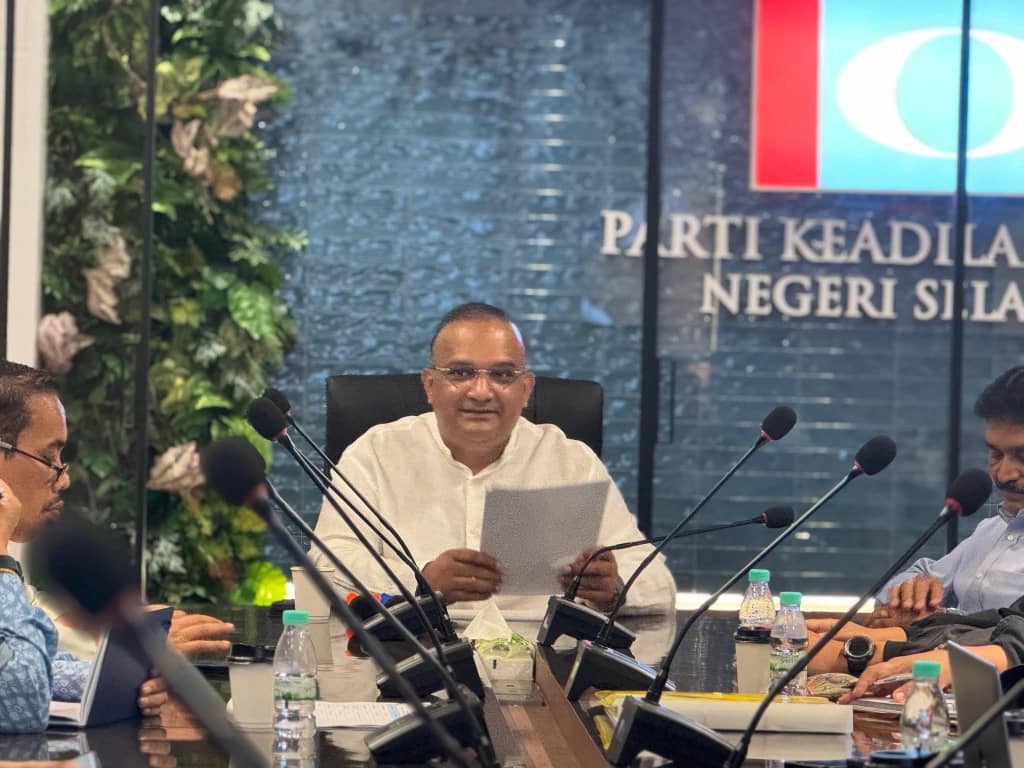
KUALA LUMPUR: The cases involving Datuk Seri Anwar Ibrahim and Datuk Seri Najib Razak are fundamentally different from a legal and constitutional standpoint, and comparisons between the two are misleading, said PKR Selangor Election Director Dr Sathia Prakash Nadarajan.
He was responding to remarks by Pasir Gudang Member of Parliament Hassan Abdul Karim, who questioned why Anwar received a full royal pardon while Najib was not allowed to serve the remainder of his sentence under house arrest.
According to Sathia, Hassan’s comparison reflects a failure to understand basic legal principles and constitutional procedures.
“Anwar received a full pardon through a lawful decision made during a meeting of the Pardons Board and was subsequently granted royal assent by the Yang di-Pertuan Agong. That is a legal fact which cannot be disputed,” he said.
“In contrast, Najib’s case does not involve a pardon decided by the Pardons Board, but rather an alleged existence of an additional royal decree allowing house arrest, which was never discussed or decided upon in any official meeting of the board.”
Sathia cited the High Court’s decision delivered by Justice Alice Loke, which clearly stated that house arrest was never part of the Pardons Board’s decision during its 61st meeting on Jan 29, 2024.
“This is the key difference that Hassan must understand before making statements that could mislead the public,” he said.
Earlier today, the Kuala Lumpur High Court dismissed Najib’s application for judicial review concerning the alleged addendum decree that purportedly allowed him to serve the remainder of his prison sentence under house arrest.
Justice Alice Loke ruled that the alleged decree was neither discussed nor decided upon during the Pardons Board meeting on Jan 29, 2024, and as a result, Najib must continue serving his sentence at Kajang Prison.
Commenting further, Sathia stressed that no party was challenging the authority of the Yang di-Pertuan Agong or the Conference of Rulers.
“The court merely ruled that any decision must be made through lawful channels as provided for under the Constitution and existing laws,” he said.
“The judge clearly stated that the concept of house arrest is not provided for under Malaysia’s current criminal law. Therefore, how can it be considered legally valid?”
He added that the ruling upholds constitutional supremacy by ensuring that all powers are exercised in accordance with due process.
Sathia also pointed out that Anwar received a full pardon in 2018 after the Pardons Board convened and made a formal decision, which was subsequently upheld by the High Court, Court of Appeal and Federal Court.
“All legal challenges against Anwar’s pardon were dismissed, demonstrating that the judiciary respects decisions made by the Yang di-Pertuan Agong when they comply with constitutional procedures,” he said.
“In Najib’s case, the court found that there was no official decision by the Pardons Board permitting house arrest, and therefore claims of an additional decree have no legal basis.
“This is a matter of procedural legality, not politics, sentiment, or disrespect towards the Malay Rulers,” he added.
Sathia described Hassan’s remarks as inaccurate and potentially confusing to the public regarding the roles of the judiciary and the Malay Rulers.
“As a lawyer, Hassan should have read and fully understood Justice Alice Loke’s judgment before drawing sweeping conclusions,” he said.
Najib is currently serving a prison sentence after being convicted of misappropriating RM42 million from SRC International Sdn Bhd.
He was initially sentenced to 12 years’ imprisonment and fined RM210 million, which was later reduced by the Pardons Board to six years’ jail and a RM50 million fine.