

Russia Ready to Deepen Cooperation with Iran in All Areas, Says Kremlin
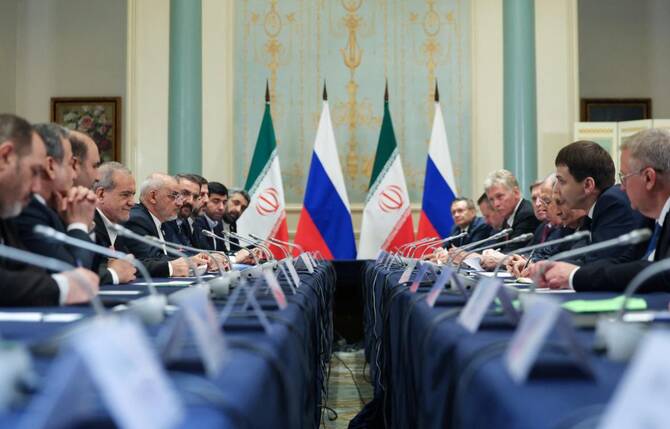
MOSCOW, Oct 20: The Kremlin announced on Monday that Russia is ready to expand its cooperation with Iran across all sectors, reaffirming the growing strategic partnership between the two nations amid rising tensions with the West.
Kremlin spokesman Dmitry Peskov said Moscow maintains strong ties with Tehran and is committed to strengthening them further. “Russia is definitely ready to expand cooperation with Iran in all areas. Iran is our partner, and our relations are developing very dynamically,” Peskov told reporters.
He noted that Western nations, particularly in Europe, were exerting “excessive pressure” on Iran over its nuclear program, calling the situation “very complicated.”
The statement comes ahead of a meeting between a Russian presidential envoy and Iran’s Supreme National Security Council Secretary Ali Larijani, scheduled for later Monday. The meeting follows Larijani’s recent visit to Moscow, where he delivered a message from Iran’s Supreme Leader Ayatollah Ali Khamenei to President Vladimir Putin.
Earlier this year, Moscow condemned US and Israeli strikes on Iranian nuclear facilities, which were reportedly aimed at preventing Tehran from developing a nuclear weapon, an allegation Iran has consistently denied.
In January, Putin and Iranian President Masoud Pezeshkian signed a strategic partnership agreement aimed at enhancing economic, energy, and defense cooperation, though the pact does not include a mutual defense clause.
Russia has supplied Iran with advanced military equipment under legal frameworks, while Tehran has provided Moscow with drones used in the ongoing war in Ukraine.
Further strengthening their energy cooperation, Russian state nuclear company Rosatom signed a $25 billion agreement with Iran last month to construct four new nuclear power plants. The facilities aim to address Iran’s chronic electricity shortages and will complement the country’s only operational nuclear power plant in Bushehr, also built by Russia.
The Kremlin’s latest statement signals a deepening alliance between Moscow and Tehran, as both nations continue to face international sanctions and geopolitical isolation from the West.