

Young People Are Not Reluctant To Marry, But Cost Of Living Poses A Challenge
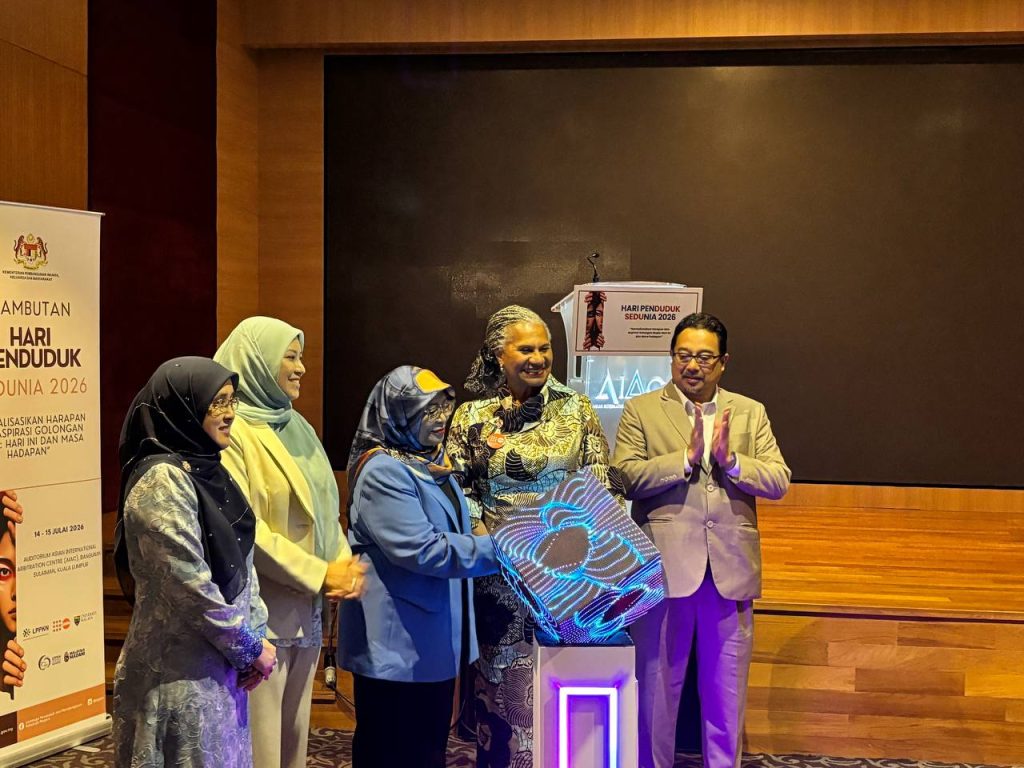
KUALA LUMPUR: The government will continue to strengthen the family-friendly ecosystem to help young people realise their dreams of getting married, building a family and having children, despite facing various economic challenges and the rising cost of living.
National Population and Family Development Board (LPPKN) Chairman, Datuk Seri Rohani Abdul Karim said the government’s responsibility is to create an environment that enables such aspirations to be realised through various supportive policies and initiatives.
She said this while officiating the 2026 National World Population Day Celebration, representing Women, Family and Community Development Minister, Datuk Seri Nancy Shukri, today.
According to Rohani, although global fertility rates show a declining trend, young people still place the family institution as a primary goal in life.
“Young people are not rejecting marriage or parenthood. They still dream of having a family, but face economic challenges, employment opportunities, the cost of living, housing, as well as fertility issues that make it difficult to realise that dream,” she said at the 2026 National World Population Day Celebration.
She said the UNFPA Demographic Futures Survey 2026, which involved more than 100,000 respondents across 73 countries, found that nearly 90 per cent of young people still want to have at least one child, while more than two-thirds intend to marry or live with a partner.
United Nations Population Fund (UNFPA) Assistant Representative, Tengku Aira Tengku Razif said the findings from public opinion surveys and the UNFPA survey show that young people still aspire to build families, but they need a more supportive ecosystem.
She further said Malaysia’s Total Fertility Rate (TFR) is currently at 1.6 per cent, which is below the population replacement rate of 2.1 per cent.
“However, this situation is not only occurring in Malaysia, but is a global trend, for example South Korea, which recorded a much lower fertility rate of 0.9 per cent,” she said at a press conference during the 2026 National Population Day Celebration.
The same trend is also recorded in Malaysia, where the LPPKN Public Perception Survey found that 90.9 per cent of single respondents intend to marry, while 91.1 per cent want to have children in the future.
Among married couples, 33.8 per cent still intend to have more children, with the desired average family size being 2.8 children.
However, 17.6 per cent of respondents admitted that they failed to achieve their desired number of children due to household income constraints, rising cost of living, work pressures, fertility issues and health factors.
To address these challenges, the government continues to strengthen the implementation of the National KASIH Family Policy as well as the National Family Action Plan 2026-2030, which focuses on strengthening the family institution throughout the life cycle.
Malaysia Gazzete