

UNHCR Hopes 200,000 Syrian Refugees Will Return from Lebanon by End of 2025 Under New Plan
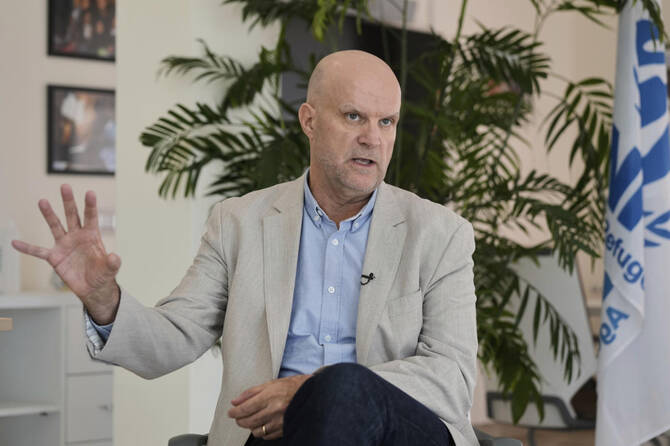
BEIRUT: The United Nations refugee agency (UNHCR) is hopeful that at least 200,000 Syrian refugees will return from Lebanon to Syria by the end of this year under a new government-backed voluntary return plan, according to the agency’s outgoing Lebanon representative, Ivo Freijsen.
Speaking to the Associated Press, Freijsen said there has been a significant shift in attitudes among Syrian refugees since the ouster of former Syrian President Bashar Assad in December following a rapid insurgent offensive that ended decades of autocratic rule.
“Before Assad’s fall, only about 1% of Syrian refugees in Lebanon considered returning. Now, that number has risen to 24% who are thinking or planning to return within the next 12 months,” Freijsen noted, calling it a “very positive shift.”
Since the outbreak of Syria’s conflict in 2011, more than half of the country’s prewar population of 23 million has been displaced. Lebanon, which borders Syria, has absorbed an estimated 1.5 million refugees—the highest number per capita in the world—placing enormous strain on the country’s infrastructure and economy.
Lebanese officials say at least 1 million Syrian refugees still remain in the country, even as Lebanon continues to grapple with a deep economic crisis.
While the UNHCR has long maintained that Syria was not safe for return, that stance has shifted in light of political changes and the growing desire among refugees to repatriate.
Freijsen revealed that over 120,000 refugees have already returned to Syria without any formal assistance from humanitarian groups since Assad’s ouster. Now, with the new plan in place, the agency hopes to scale up returns in a safer, more organized manner.
Under the new voluntary return scheme:
-
UNHCR and the International Organization for Migration (IOM) will provide $100 per family member.
-
Returnees will receive transportation by bus.
-
Lebanese authorities will waive fines and legal fees for overstaying visas or residency requirements.
-
Once across the border, UN agencies will assist with documentation, legal aid, mental health support, and basic needs.
So far, at least 17,000 refugees have registered for the program, with some opting to drive themselves across the border. Freijsen personally witnessed a pilot departure this week involving 72 Syrian refugees leaving via the Masnaa border crossing.
“Our most ambitious goal is 400,000 returns by year’s end,” Freijsen said. “But even if we achieve between 200,000 and 400,000, that would be a very positive outcome.”
Despite improved diplomatic ties under interim President Ahmad Al-Sharaa, Syria’s economy remains fragile, with 90% of its population still living in poverty. The UN estimates that hundreds of billions of dollars will be required to rebuild the war-torn country.
Recent developments, including the lifting of U.S. sanctions and new investment agreements with Turkey, Qatar, and Saudi Arabia, signal growing international support. However, the Syrian government continues to face challenges in establishing full control across the country and creating a stable environment for returnees.
Freijsen warned that while refugees are eager to return, economic conditions and limited job opportunities could make long-term reintegration difficult.
“People are willing to go back despite the hardship, but they need to be able to earn a living. And right now, that’s still a challenge,” he said.
The return initiative comes at a critical time, as UN agencies face major budget cuts, further limiting the support they can provide to both refugees in Lebanon and those returning to Syria.
Nonetheless, the UNHCR and its partners remain committed to facilitating safe, dignified, and voluntary returns—a key step toward resolving one of the world’s most protracted displacement crises.