

Malaysia Renews Urgent Call for Nuclear Disarmament at SEANWFZ 30th Anniversary Meeting
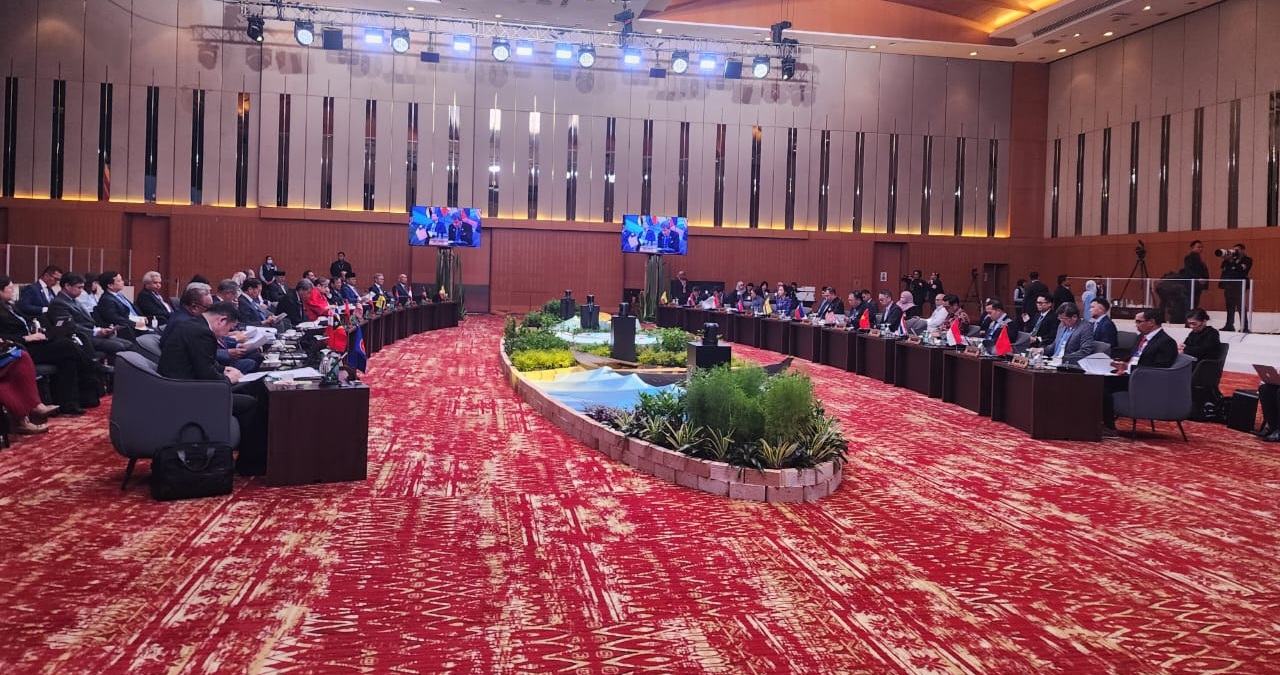
KUALA LUMPUR, July 8 (Voice of Malaysia)— Marking three decades since the founding of the Southeast Asian Nuclear Weapon-Free Zone (SEANWFZ), Malaysia’s Foreign Minister Dato’ Seri Utama Haji Mohamad bin Haji Hasan issued a strong warning against the rising nuclear threat and called on ASEAN nations to remain resolute in their pursuit of a nuclear-weapon-free region.
Delivering his opening remarks at the SEANWFZ Commission Meeting during the 58th ASEAN Foreign Ministers’ Meeting in Kuala Lumpur, the minister underscored the historical significance of the treaty while highlighting the mounting risks posed by emerging technologies and geopolitical instability.
“Thirty years ago, ASEAN member states drew a clear line—our region would never become a stage for nuclear conflict,” said Mohamad. “Yet today, nuclear weapons are even more dangerous than they were during the Cold War.”
He noted that the global non-proliferation regime is now under immense pressure due to the erosion of trust among nuclear powers, rapid modernization of nuclear arsenals, and the integration of disruptive technologies like cyber warfare, quantum computing, and artificial intelligence into military systems. These developments, he warned, increase the risk of miscalculation and unintended escalation.
The minister referenced ongoing global conflicts—including the war in Ukraine and Israel’s recent attack on Iran—as flashpoints that risk undermining decades of nuclear disarmament efforts. Quoting the International Atomic Energy Agency (IAEA), he emphasized that “nuclear facilities must never be attacked under any circumstances,” reinforcing the call for adherence to international law.
With SEANWFZ entering its 30th year, the Foreign Minister highlighted the treaty’s importance as a pillar of ASEAN’s regional security architecture and a cornerstone of its contribution to global disarmament. He welcomed Timor-Leste’s expected accession to the treaty by the 47th ASEAN Summit, saying it would expand the treaty’s geographic scope and reinforce Southeast Asia’s nuclear-free status.
While celebrating ASEAN’s success in remaining free of nuclear and other weapons of mass destruction, Mohamad expressed concern that Southeast Asia is the only nuclear weapon-free zone not yet formally recognized by the Nuclear Weapon States (NWS) through the signing and ratification of the treaty’s protocol.
He acknowledged the recent willingness by nuclear powers to engage with ASEAN but urged ASEAN Member States to act with “constructive urgency” to resolve outstanding issues and create the necessary conditions for full recognition.
“Let us ensure this treaty is not merely a legal document, but a living commitment to peace and security,” Mohamad stated. “With the existential threat that nuclear weapons pose, ASEAN must remain united in our pursuit of a truly nuclear-weapon-free Southeast Asia.”
The meeting comes at a critical moment, with escalating global tensions and shifting technological landscapes presenting new challenges to long-standing non-proliferation goals. ASEAN leaders are expected to discuss further actions to strengthen the SEANWFZ framework during the remainder of the AMM sessions this week.