

Malaysia Prioritises Raising People’s Income Before Expanding Tax Base – Akmal Nasrullah
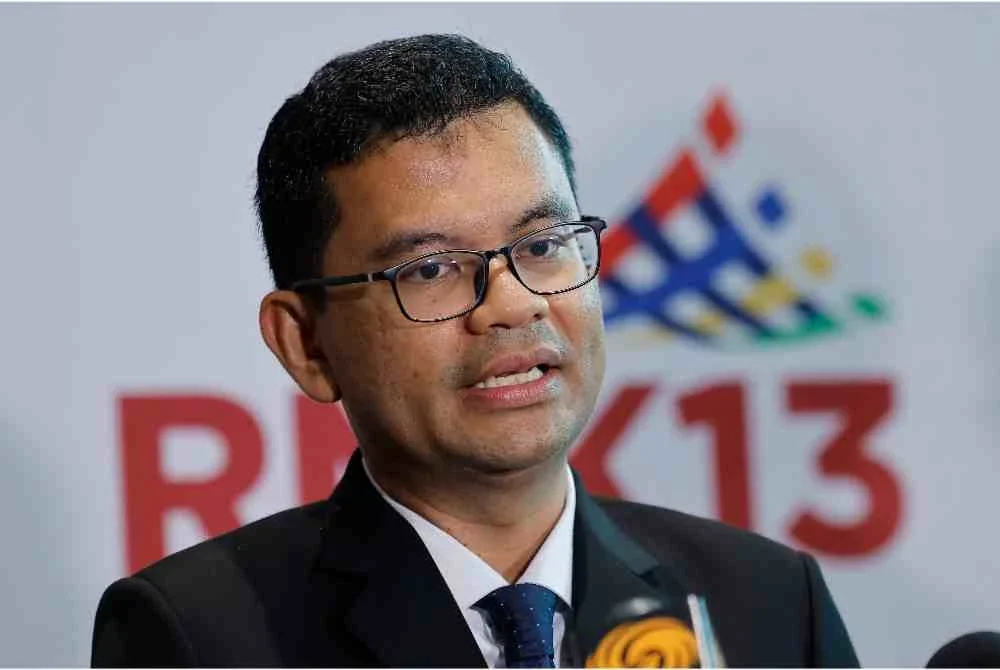
PUTRAJAYA: Malaysia’s immediate priority at this time is to increase the people’s income and address the issue of structural wages before expanding the tax base, said Economy Minister Akmal Nasrullah Mohd Nasir.
He said this step is in response to the Organisation for Economic Co-operation and Development’s (OECD) recommendation for Malaysia to reform its tax system including reintroducing a broad-based consumption tax and broadening the individual income tax base to generate additional revenue.
As highlighted in the OECD Economic Survey of Malaysia, only about 15 per cent of the country’s workforce is currently within the individual income tax net, he said.
“The issue is that Malaysia needs to continue focusing on the ability to increase income first. There may be views on introducing a more efficient taxation system, but we also need to consider the space to increase the people’s income first.
“At this time, while we respect the OECD’s views, the more important thing is how we can expand tax revenue because without higher salaries or better wages, any tax we introduce may have some impact in terms of consumption or the people’s income,” he told reporters after the launch of the OECD Economic Survey of Malaysia here, Tuesday.
Akmal Nasrullah said, therefore, at this time Malaysia’s focus is to address the wage issue more comprehensively.
When asked whether the expansion of the sales and service tax (SST) is sufficient to increase government revenue and achieve the fiscal consolidation target, he said the wage issue is still a structural problem that needs to be prioritised.
“We need to be bolder in addressing the wage issue, which is indeed still a structural problem that occurs because the issue in terms of taxation is to expand it, as wages are insufficient to pay income tax.
“The priority at this time is to continue addressing the structural issue regarding wages or the people’s income level. The tax regulations introduced also need to include ways so that taxes can be further expanded, but not to the extent of constraining existing economic growth,” he said.
Meanwhile, the OECD Country Studies Director, Dr Luiz de Mello said through the survey, various options in terms of expenditure and revenue have been identified that could help Malaysia achieve its fiscal consolidation targets.
He said Malaysia is targeting to reduce the fiscal deficit to three per cent by 2028 and stabilise debt below 60 per cent of Gross Domestic Product (GDP) in the long term.
“What we are trying to do in this survey is to identify several options, in terms of expenditure and revenue, that might be in line with efforts to achieve that target.
“One thing in this survey in terms of expenditure is regarding fossil fuel subsidies. The space we are considering is to gradually reduce expenditure in that category in a way that can protect public finances and at the same time protect vulnerable households from pressures related to significant energy shock increases,” he said.
He said, however, in terms of revenue, his side respects Malaysia’s decision not to focus on value-added tax at this time.
He said that step has been considered by many countries.
“This is part of our policy dialogue: we exchange views on options, and countries consider what they find most suitable for their specific objectives,” he said.
BERNAMA