

KKDW Requests RM14.39 Billion for RP2 2027 – Ahmad Zahid
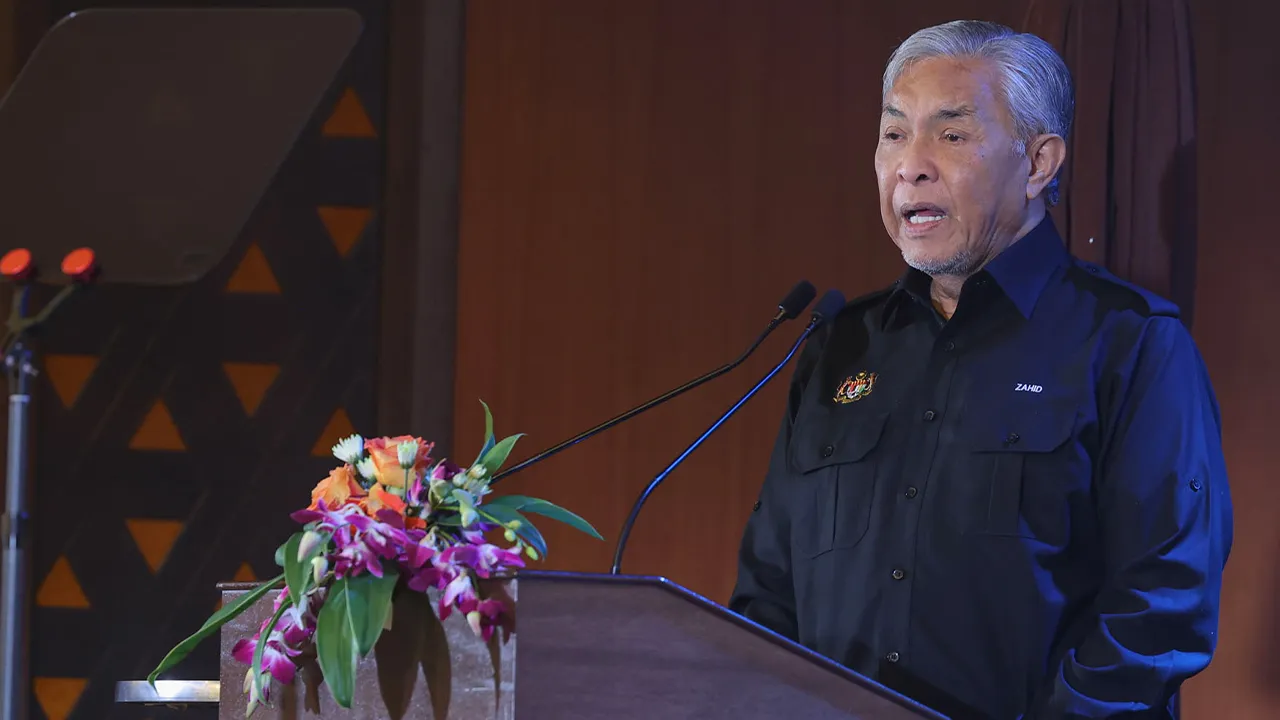
PUTRAJAYA: The Ministry of Rural and Regional Development (KKDW) has requested approximately RM14.39 billion for the Second Rolling Plan (RP2) 2027 development allocation, but the shadow ceiling provided is only around RM8.3 billion, said Rural and Regional Development Minister Datuk Seri Ahmad Zahid Hamidi.
He, who is also Deputy Prime Minister, said the difference creates a gap of about RM6 billion between the ministry’s request and the projected allocation ceiling.
“That is the shadow ceiling they (the Ministry of Finance) (MOF) have provided. This gap reflects an important reality in current government management, where needs are always greater than available resources.
“I also anticipate that the fiscal space we receive this time may not be as large as in recent years. But I hope I am wrong,” he said in a speech at the KKDW Monthly Assembly here today.
Ahmad Zahid said KKDW must ensure that every ringgit spent brings the greatest benefit to the people by adopting a “spending better” approach, rather than merely increasing expenditure.
“However, whatever amount we finally receive, we must view the budget not merely as a process of dividing allocations. The budget is a process of converting limited resources into the greatest public value,” he said.
Ahmad Zahid said he wants all divisions, departments, and agencies under KKDW to re-evaluate existing programmes, to ensure that the problems intended to be solved still exist, that the approaches used are still relevant, and that there is no overlap with other programmes or agencies.
“A large programme does not necessarily mean it is the most effective programme,” he said.
Ahmad Zahid said resources need to be redirected from low-value programmes to matters that truly solve the people’s problems, especially in circumstances of financial constraints, workforce limitations, and implementation capacity.
Meanwhile, he said good allocations do not necessarily produce good development if implementation capability is weak, with land acquisition delays, utility coordination issues, contractor problems, and postponed decisions being among the factors that can affect project implementation.
“This situation creates an implementation gap between what is planned and what actually happens on the ground,” he said.
He said KKDW also needs to avoid starting too many projects at one time, to the point where resources are spread too thinly, causing too many projects to begin but too few to be completed.
“It is better for us to focus on matters that are truly needed, provide sufficient resources, and ensure they are completed properly, rather than chasing a large number of projects but leaving too many commitments to be settled,” he said.
Ahmad Zahid said this approach is important because the nature of the rural development gap is now becoming more complex, especially when undeveloped areas are located in more remote locations, have small and scattered populations, and involve higher delivery costs.
“Rural development today can no longer be measured merely by what we build or how much we spend. Today, we must see what changes afterwards,” he said.
In that regard, he said engagement with MOF needs to be continuously refined to clarify KKDW’s priorities and ensure that the allocations received can be channelled to needs that have the greatest impact on rural communities.
“I have previously emphasised that such engagement is very important. That is why recently we (KKDW) held a coordination session with MOF to convey our intentions, resolve issues, clarify KKDW’s priorities, and submit several proposals for consideration, and I request that we refine them further,” he said.
BERNAMA