

Japan Bids Farewell to H2A Rocket After 24 Years of Service with Final Launch
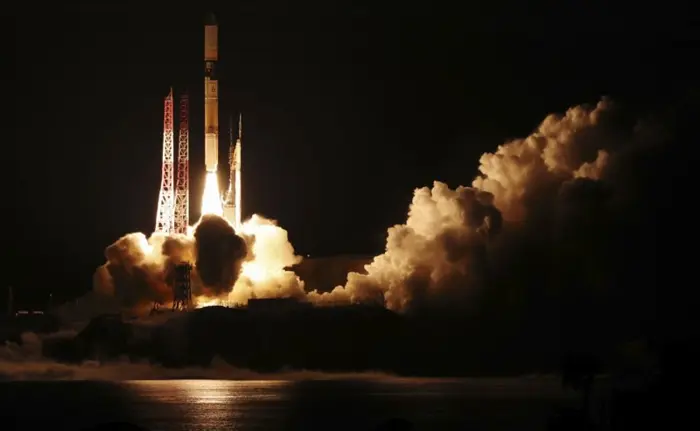
TANEGASHIMA, Japan||June 29: Japan marked the end of an era in space exploration on Sunday with the successful launch of its 50th and final H2A rocket, closing a 24-year chapter of reliable satellite missions and technological advancements.
The H2A, developed by Mitsubishi Heavy Industries Ltd. and the Japan Aerospace Exploration Agency (JAXA), lifted off from the Tanegashima Space Center in Kagoshima Prefecture at 1:33 a.m. local time, carrying a government satellite designed to monitor greenhouse gas emissions and climate change.
The satellite was placed into orbit approximately 670 kilometers above the equator. Its successful deployment and solar panel extension were later confirmed by JAXA, ensuring it was functioning as intended.
The launch concludes the operational life of the H2A rocket, which began service in 2001 and earned a reputation for reliability, achieving a 98% success rate across its career.
“I was more nervous than ever about this launch and still feel like I’m dreaming,” said Keiji Suzuki, a senior official at Mitsubishi Heavy responsible for the launch. “We achieved our long-cherished goal of a 98 percent success rate.”
The rocket series had a brief setback in 2003 when H2A Flight No. 6 was destroyed midair after a booster separation failure, later traced to a damaged jet nozzle. The program rebounded after a 15-month pause, with Flight No. 7 successfully returning the H2A to service.
The final liftoff drew 1,300 spectators to a nearby observation park, many of whom applauded as the rocket lit up the early morning sky.
“I was impressed by the loud sound and bright light,” said 7-year-old Hikari Nagoe, who watched the launch with her family. “I’m excited to see the next H3 rocket.”
Japan is now shifting its focus to the H3 rocket, designed to be more cost-effective and competitive in the global launch market, which is increasingly dominated by private companies like SpaceX.
Though the H3 faced a troubled debut in March 2023, when its maiden launch ended in failure, subsequent flights—including the most recent in February 2025—have proven successful, restoring confidence in the new platform.
Sunday’s launch was originally scheduled for June 24 but was delayed due to an equipment abnormality identified during pre-launch checks.
With the retirement of the H2A, Japan is positioning itself for a more aggressive role in the commercial satellite-launch sector while continuing to support scientific and environmental monitoring missions.