

Hamas appoints Sinwar as new leader amid rising tensions over Iranian retaliation
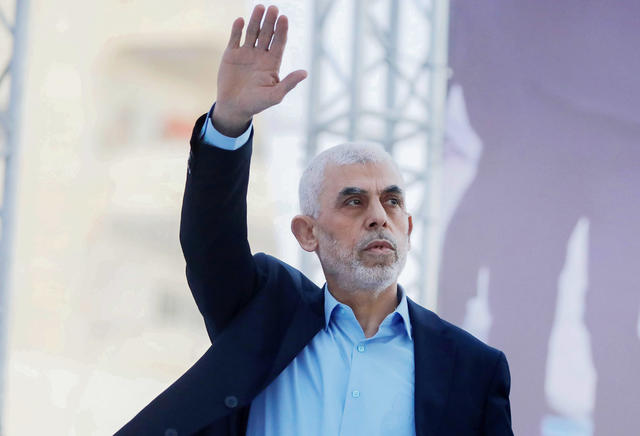
JERUSALEM: Hamas has named Yahya Sinwar, whom Israel accuses of orchestrating the October 7 attack that ignited the Gaza conflict, as its new political chief following the recent death of his predecessor, Ismail Haniyeh.
This announcement comes as the Middle East braces for potential Iranian retaliation for Haniyeh’s death, which Tehran attributes to Israel and has vowed to avenge. Hezbollah, Hamas’s ally in Lebanon, has also pledged to respond to the killings of Haniyeh and its military commander, Fuad Shukr, who was killed in an Israeli strike in Beirut.
Sinwar, who has led Hamas in Gaza since 2017 while Haniyeh resided in Qatar, has been out of the public eye since the attack on October 7. A senior Hamas official stated that Sinwar’s appointment signals the group’s continued commitment to resistance.
Jibril Rajoub, secretary of the Central Committee of the rival Fatah movement, described the decision as “logical and expected.” Hezbollah congratulated Sinwar, asserting that the appointment signifies that “the enemy… has failed to achieve its objectives” by targeting Hamas leaders.
Israeli Foreign Minister Israel Katz called for the swift elimination of Sinwar and the dismantling of what he termed a “vile organization.” Analysts suggest Sinwar might be more hesitant than Haniyeh to agree to a ceasefire. US Secretary of State Antony Blinken emphasized that Sinwar’s role is crucial in achieving a ceasefire, as he remains the primary decision-maker.
Hezbollah leader Hassan Nasrallah declared that both Hezbollah and Tehran are “obliged to respond” to the deaths of Haniyeh and Shukr, indicating potential retaliation “alone or as part of a unified response” from Iran-backed groups.
In response to heightened tensions, the United States is working “around the clock” to prevent an all-out war, deploying additional military assets to the region and engaging in diplomatic efforts with Jordan, Qatar, and Egypt to mediate a ceasefire.
Iranian President Masoud Pezeshkian condemned Israel’s actions and affirmed that while Iran does not seek to escalate the conflict, it will respond to what it perceives as Israeli crimes. Israel has not commented on Haniyeh’s killing but confirmed its strike on Shukr, holding him responsible for a deadly rocket attack.
Hezbollah has engaged in frequent cross-border fire with Israeli forces, with recent reports indicating casualties on both sides. The United Nations has urged all parties to act urgently to de-escalate the situation, as the conflict continues to impact civilians and escalate tensions across the region.