

Five Excellent Economic Achievements Of Negeri Sembilan
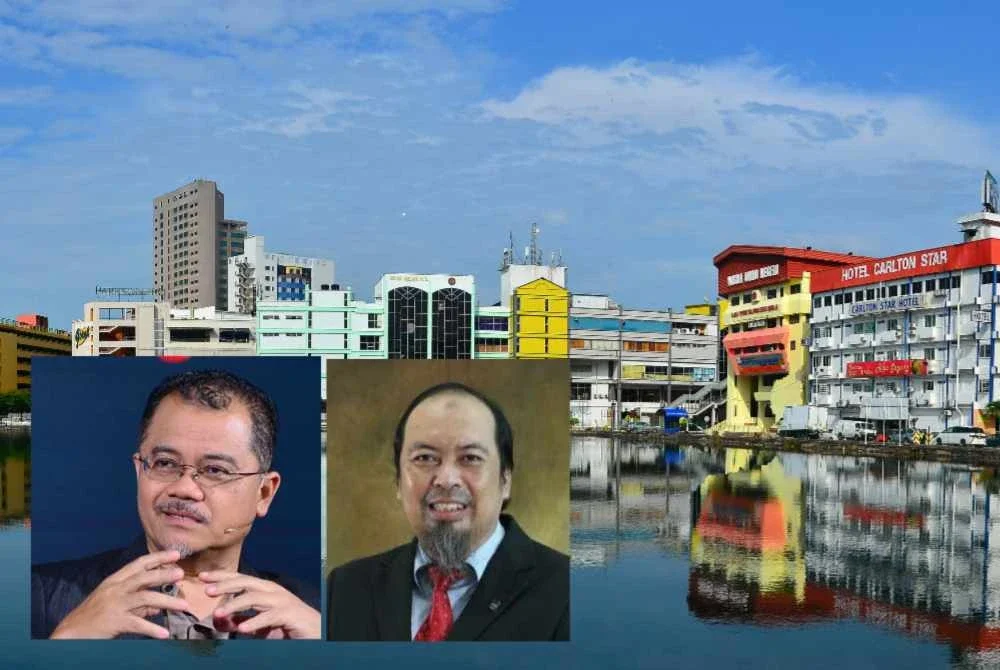
SHAH ALAM: The increase in Negeri Sembilan’s revenue collection from RM413 million in 2017 to RM610 million in 2025 provides a clear picture of a progressively healthier and more resilient fiscal position, said Associate Professor Dr Aimi Zulhazmi Abdul Rashid.
According to the UNIKL Business School Economic Analyst, the increase of 47.7 percent over an eight-year period signifies improved collection efficiency through the digitalisation of assessment tax, licensing, and a reduction in land revenue leakage issues.
He said the economic base of the state is also growing positively in the context of tax and non-tax revenue, increasing organically, alongside the growth of investments and business activities.
He further clarified that a state with robust revenue does not need to depend too heavily on federal grants and, indirectly, gives more autonomy to the state government to spend according to the people’s priorities.
“Touching on the extent of the increase in Negeri Sembilan’s reserves from RM725.96 million (2017) to RM1.04 billion (2025), which reflects a state’s financial strength, I see it as a very good indicator of fiscal buffer strength.
“Based on international practice, a healthy state reserve is three to six months of operating expenditure. With a reserve of RM1.04 billion last year, Negeri Sembilan has the capacity to face shocks.
“For example, flood issues, recessions, or a drop in commodity revenue without having to cut basic services. Additionally, it allows for funding development projects without needing to borrow and pay interest,” he told Sinar Harian.
Aimi Zulhazmi concluded that the reserve exceeding RM1 billion successfully places Negeri Sembilan in the top five states in terms of cash strength.
Commenting on the increase in investment from RM1.14 billion to RM54.3 billion over eight years, he described it as an extraordinary and unparalleled surge.
According to him, the increase of up to 47 times places Negeri Sembilan almost on par with Selangor and Johor during their respective peak years.
When asked about the main trigger for the surge, he said it was due to the implementation of the Johor-Singapore Special Economic Zone (JS-SEZ), the Kuala Lumpur International Airport (KLIA) Aeropolis, the data centre in Sendayan, as well as competitive land or logistics costs compared to Kuala Lumpur and Selangor.
“But we need to look at the value that will be realised, not just commitments. For me, 40 percent of RM54.3 billion is enough to change the landscape of Negeri Sembilan,” he said.
Meanwhile, Aimi Zulhazmi informed that the unemployment rate in the state dropped from 3.8 percent in 2020 to 3.1 percent (2025), indicating that new investments have successfully absorbed local labour.
“A decrease of 0.7 percent to 3.1 percent is considered full employment, this is very good.
“It means almost all who want to work have successfully obtained jobs.
“However, the challenge that must be noted is that Negeri Sembilan must ensure new jobs, whether from data centres or modern manufacturing, are able to pay salaries of more than RM4,000 per month,” he said.
According to Aimi Zulhazmi, Negeri Sembilan’s Gross Domestic Product (GDP), which recorded growth of 17.2 percent over the past five years, was driven by economic diversification.
He said it does not rely 100 percent on traditional agriculture and manufacturing but also on services, logistics, and digitalisation.
“Additionally, increased productivity, meaning GDP growth is higher than population growth, or in other words, each worker in Negeri Sembilan is becoming more productive.
“GDP growth of 17.2 percent over five years equals the Compound Annual Growth Rate (CAGR), which is higher than the national average over the same period,” he said.
He opined that Negeri Sembilan’s performance for the period of 2017 to 2025 can be labelled as a ‘significant fiscal and economic transformation’.
“All five indicators moved simultaneously in a positive direction. This rarely happens because usually, when investment rises, unemployment drops slowly. When revenue rises, reserves do not necessarily rise.
“This combination shows that state policies have successfully attracted investment, created job opportunities, expanded the economy, collected more revenue, and saved it as reserves. This is a healthy economic cycle,” he said.
Three statutory bodies record sharp profit gains
Meanwhile, three statutory bodies in Negeri Sembilan recorded significant increases in profits over the period of 2018 to 2024.
The Negeri Sembilan Foundation (YNS) recorded a profit of RM38.75 million in 2024 compared to RM2.52 million in 2018, while the Negeri Sembilan Foundation College (KYNS) shifted from a loss of RM800,000 (2018) to a profit of RM4.61 million (2024).
The Negeri Sembilan Water Company (SAINS) recorded a profit of RM14.66 million (2024) compared to only RM27,000 (2018).
According to the Director of the Master of Business Administration Programme at Putra Business School, Professor Dr Ahmed Razman Abdul Latiff, this financial performance serves as an indicator of effective management and good governance.
He said it is not only commendable but is expected to benefit the state’s economy and the well-being of the people.
He said the performance was influenced by a combination of external and internal factors, including positive national economic growth which also stimulated economic development in Negeri Sembilan.
“Aspects of efficient management and good governance practices also play an important role in improving the financial performance of statutory bodies.
“When the management team consists of professionals and is assisted by board members who have no conflicts of interest, statutory bodies can focus on the organisation’s main objectives.
“This situation ultimately contributes to more excellent financial performance and enables statutory bodies to continue adding value to the state’s economic development,” he said.
Sinar Harian