

FIFA World Cup 2026 Set for Major Rule Overhaul as Tournament Expands to 48 Teams
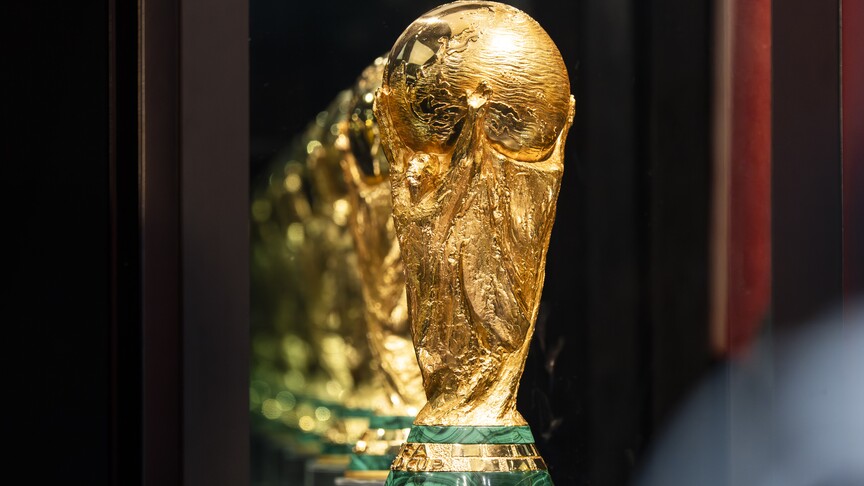
ANKARA: The FIFA World Cup 2026 will usher in one of the most significant rule changes in the tournament’s history, with new measures aimed at reducing time-wasting, improving player discipline, increasing match tempo, and expanding the authority of the Video Assistant Referee (VAR).
The tournament, which will be jointly hosted by the United States, Canada, and Mexico, will be the first major international competition to implement a series of amendments approved by the International Football Association Board (IFAB), football’s law-making body.
A total of 11 tournament-specific changes have been approved, marking one of the most comprehensive revisions to the Laws of the Game ever introduced at a FIFA World Cup.
Among the headline changes are stricter rules designed to prevent teams from deliberately slowing down the game.
Referees will be empowered to initiate a visible five-second countdown if they believe a goal kick or throw-in is being intentionally delayed. Failure to restart play before the countdown ends could result in possession being awarded to the opposing team.
Substitution procedures will also become more stringent. Players leaving the pitch after being substituted must exit within 10 seconds. If they fail to comply, the incoming substitute may be forced to wait until the next stoppage before entering the field, potentially leaving their team temporarily short-handed.
New injury regulations will require players who receive on-field medical treatment or cause a stoppage due to injury to remain off the field for at least one minute after play resumes. Exceptions will apply to goalkeepers, serious head injuries, collisions involving teammates, and penalty-kick situations.
FIFA is also introducing stricter disciplinary measures to improve player behaviour and protect match officials.
Under the new rules, referees may issue a red card to players who cover their mouths during heated confrontations, a measure intended to deter abusive, discriminatory, or inappropriate language that may be concealed from officials.
Players who leave the field in protest of a referee’s decision could face dismissal, while team officials found encouraging such actions may also be sent off.
The role of VAR will be significantly expanded during the tournament.
Video officials will now be allowed to intervene when a player receives a red card resulting from a clearly incorrect second yellow card. VAR will also be able to correct cases of mistaken identity when the wrong player is cautioned or dismissed.
Additionally, officials will be permitted to review clearly incorrect corner-kick decisions if the assessment can be completed quickly without delaying the restart of play.
VAR may also examine attacking-team offences that occur before the ball is put into play at corners or free kicks when those actions directly affect goals, penalty decisions, or disciplinary sanctions.
The rule changes will coincide with the largest FIFA World Cup ever staged.
The 2026 tournament will feature 48 teams, an increase from the previous 32-team format. The expanded competition will introduce a new round of 32 following the group stage.
A total of 48 nations will be divided into 12 groups of four teams. The top two teams from each group, along with the eight best third-placed teams, will advance to the knockout rounds.
The tournament is scheduled to run from June 11 to July 19, 2026, across 16 host cities in the United States, Canada, and Mexico.
Football authorities believe the new regulations will help create a faster, fairer, and more entertaining tournament while ensuring greater accountability on and off the pitch.