

Uganda’s President Museveni Signals Intent to Seek Re-election in 2026
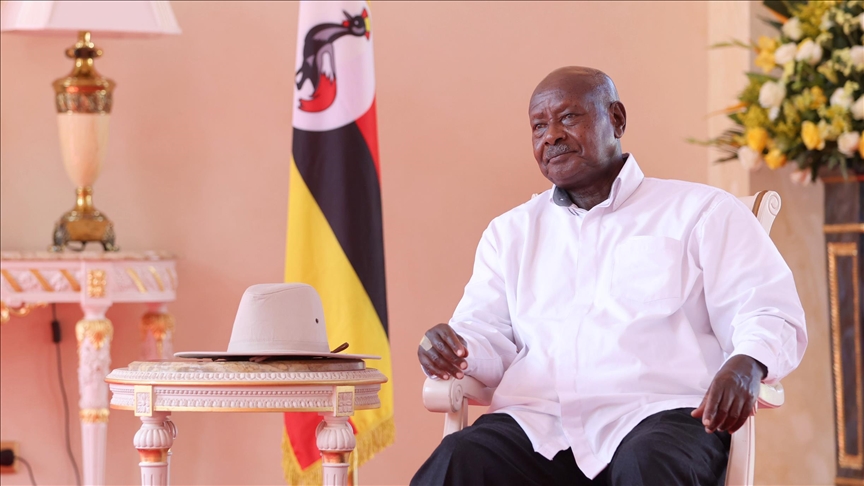
KAMPALA|| June 29: Uganda’s long-time leader Yoweri Museveni, who has ruled the East African nation since 1986, has indicated plans to seek re-election in next year’s general elections, potentially extending his presidency beyond four decades.
In a message posted Saturday on social media platform X, the 80-year-old president discussed Uganda’s political and economic development under the National Resistance Movement (NRM), the ruling party he has led since seizing power nearly 40 years ago. He said the country has gone through “five phases of development” under the NRM and now aims to grow its economy to $500 billion in GDP within five years.
Critics have long accused Museveni, who has already won six presidential elections—often amid allegations of electoral irregularities—of entrenching authoritarian rule, suppressing opposition voices, and using state resources to maintain power. However, he remains popular in rural areas for bringing stability after years of civil war and dictatorship.
Uganda’s constitution had previously barred leaders over the age of 75 from running, but a 2017 amendment backed by Museveni’s allies removed age limits, clearing the way for him to remain in office indefinitely.
In his message, Museveni urged newly elected NRM district chairs to avoid corruption and favoritism and to support leaders who “truly understand” the party’s ideology and national priorities. He warned against backing individuals driven by “personal agendas” rather than the collective good.
His comments are considered both a roadmap for his party ahead of the 2026 polls and a subtle signal of his continued personal political ambitions, despite questions surrounding his age and health.
Museveni came to power in 1986 after leading a guerrilla war against the government of then-President Milton Obote, whom he accused of rigging elections. Uganda had earlier suffered under the brutal dictatorship of Idi Amin (1971–1979), during which hundreds of thousands of Ugandans were killed.
Since assuming office, Museveni has been credited with restoring a measure of economic stability and security to Uganda, but his tenure has also seen increasing repression, with opposition figures, such as Bobi Wine, frequently detained or harassed.
With elections scheduled for 2026, Museveni’s potential candidacy is likely to intensify political tensions, both within the ruling party and among the opposition, as the country debates its democratic future.