

MDX Summit 2024: Opening the path for AI-driven future of ASEAN
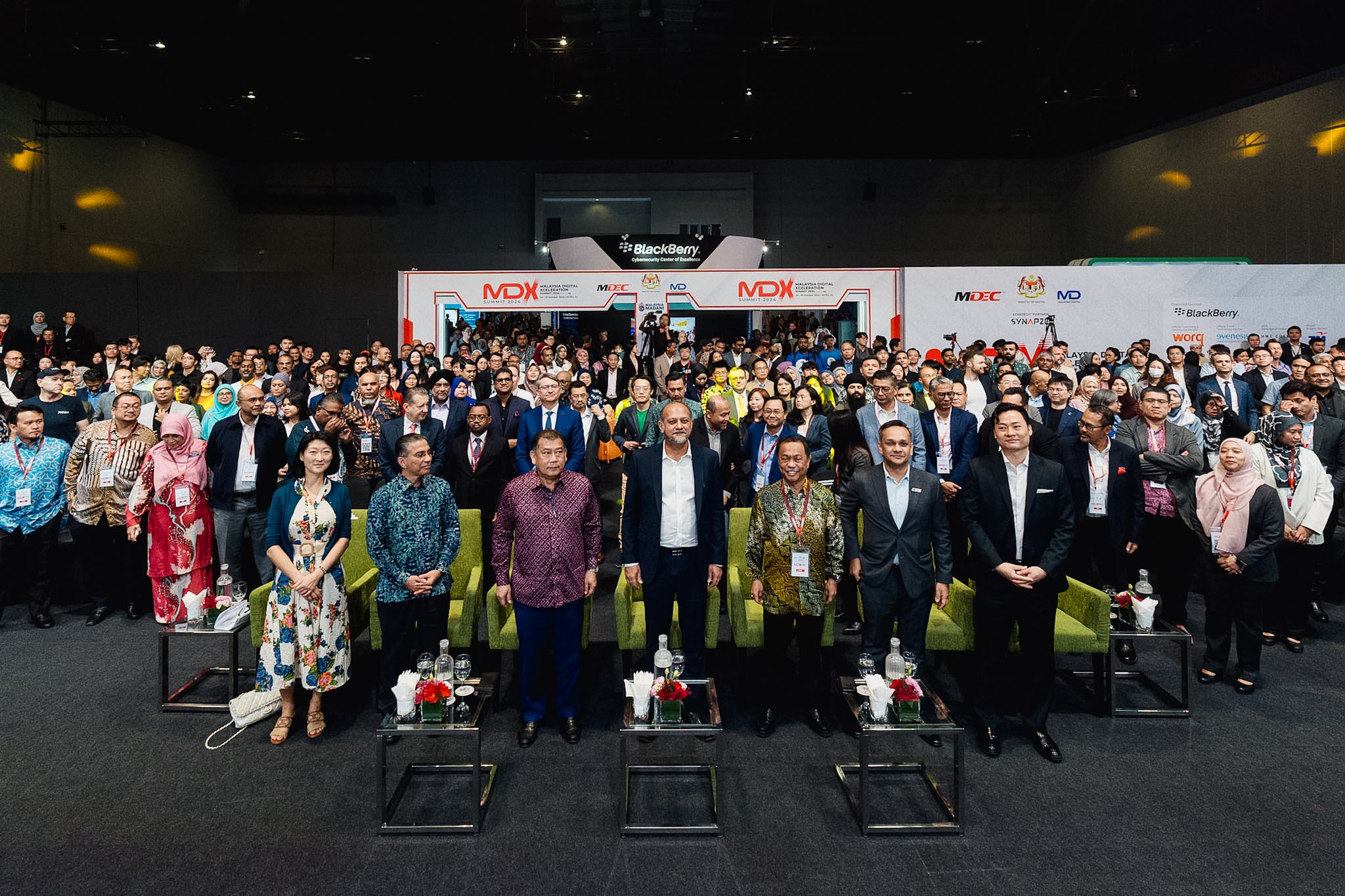
The recent Malaysia Digital Xceleration (MDX) Summit 2024 at the Malaysia International Trade and Exhibition Centre in Kuala Lumpur provided Malaysia with a significant opportunity to showcase the potential future of ASEAN’s digital economy.
The summit showed how Malaysia plans to use new technologies like quantum computing, digital twins, and better cybersecurity to change industries. It had over 20 exhibitors, immersive technology displays, and expert talks.
“Policy, Technology, and the Future of Innovation” was the events first forum.
Former French Minister of Digital Economy Fleur Pellerin and Digital Minister Gobind Singh Deo talked about how important policy is for building and maintaining a strong digital economy.
From the point of view of both policymakers and venture capitalists, the session showed the challenges and possibilities of going digital.
The first thing Pellerin did was describe her time as a government worker in France. Her job was to make the workplace tech-friendly at a time when digital tools were just starting to become popular.
That was more than 10 years ago, but she said, “It looks like not that much has changed.”
She said that at the time, the digital world was still taking shape. The iPhone, Facebook, and 4G were all new technologies.
“That was a very long time ago.” She discussed her efforts to encourage her coworkers and bosses to make France a more favorable business environment. “There was a lot to do; it felt like a blank page that I had to write,” she said.
Pellerin discussed the challenges of building infrastructure and creating an environment that fosters entrepreneurship.
She was responsible for fostering innovative ideas and ensuring the implementation of crucial digital infrastructure, such as high-speed internet.
The most challenging aspect was that her responsibilities included overseeing infrastructure and simultaneously fostering an environment conducive to entrepreneurship, two distinct tasks.
As part of his job, Pellerin had to both set the stage for a digital economy and figure out how to get the government to back new technologies, even when people at the highest levels didn’t fully understand them.
Dealing with leaders who, ironically, didn’t fully understand the stakes of digital change was a big part of her experience and gave her freedom she didn’t expect.
“I struggled to explain to my boss and the decision-makers what was at stake with the digital transformation.”
“Strangely, it made it easier for me to do whatever I wanted to do.” “It was both a problem and a benefit,” she said.
Pellerin drew attention to this dynamic, in which rapid technological progress challenges even the smartest decision-makers today, especially as new areas like quantum computing become more important.
“Sometimes their job is to do nothing and not get involved,” she said, emphasizing that a hands-off attitude can sometimes encourage new ideas by preventing too much regulation.
At the same time, Gobind stressed that trust and understanding among the public are essential for a digital community to thrive.
We can see technology all around us. He said, “Technology is going to change the way we live, think, and work.” He also said that most people are aware of this change, but that is not enough.
Using a real-life example, he asked if people really know how to use the tools they have access to.
“Everyone here has a cell phone.” His advice was that it wouldn’t help if you didn’t know how. He also said that while many people talk about new technologies like ChatGPT, not many have actually used them.
Gobind thinks that trust, infrastructure, and accessibility are the most important parts of making a digital environment that everyone can use.
“We need to explain technology and then set it up so everyone can use it.” “Most importantly, we need to be able to get them to join,” he said.
Gobind talked about how important it is to have a legal framework to protect users in the digital world. He did this by comparing it to the law and enforcement systems that keep people safe in the real world.
He also said, “We need to build a digital legal system and an ecosystem that will make people trust each other.” It is more important than ever to have rules and regulations that protect users and make them feel safe in digital places.
As Malaysia gets ready to lead ASEAN, Gobind said that he wanted Malaysia to be a leader in the region’s digital growth.
He stated that Malaysians should not only follow but also consider how they can influence leadership within their country and beyond. With this chance, Malaysia might be able to lead important discussions about digital policy and cooperation in the area.
Reflecting on recent policy shifts under the Madani government, Gobind cited the New Industrial Master Plan and National Energy Transition Roadmap as foundational steps in Malaysia’s strategy to empower local companies and future-proof its workforce.
“Once you put policies in place—like the Malaysian Digital Economy Blueprint—you will be able to build an environment that encourages Malaysian companies to become leaders,” he said.
Walsh described the third shift as the transition from apps to agents, AI-powered systems that will eventually independently manage several jobs.
He gave examples of newly developed artificial intelligence tools that are already capable of independently handling challenging tasks, such as booking tickets and hotels, ushering in an era where artificial intelligence-driven agents oversee various aspects of human life.
Walsh claims that these developments mark the beginning of a “fifth industrial revolution (IR5.0)” whereby artificial intelligence drives hitherto unheard-of levels of production.
He contrasted the 44,000-strong workforce of Adobe Inc. with the success of businesses like Midjourney, a generative artificial intelligence platform generating US$300 million (RM1.25 billion) with just 11 workers.
“Adobe cannot ignore that,” he stated, stressing the need for established enterprises to adjust to the new realities presented by AI-driven organizations. He urged businesses to reconsider how they handled organizational design and talent.
While artificial intelligence should enhance rather than replace human responsibilities, leaders should automate basic chores and save complicated decision-making for human intuition.
“The biggest issue with generative artificial intelligence today is that it makes terrible mistakes,” he remarked.
He stated that seasoned workers are crucial for refining these processes and providing training. Companies that deliberately strike a mix between artificial intelligence automation and human knowledge will be most suited for creativity and effectiveness.
After his speech, Walsh counseled leaders to approach artificial intelligence with inquiry instead of fear.
He exhorted the audience to accept the former as a tool for adjusting to the rapid change of artificial intelligence. Companies may better negotiate the uncertainty of an AI-driven environment by encouraging an exploratory culture.
The MDX Summit 2024 underscored the importance of policy, creativity, and leadership in navigating the rapidly evolving tech landscape, highlighting the country’s forward-looking strategy towards a digital economy.
The summit became a pivotal point in addressing why digital leadership and cooperative efforts are crucial not only to position Malaysia as a regional tech leader but also to create a safe, sustainable, and rich digital future across Southeast Asia as Malaysia’s ASEAN chairmanship in 2025 draws near.