

Signboards in Kuala Lumpur are causing a stir. An official says restrictions are not just in place for Chinese eateries
Many people call this part of Kuala Lumpur “Mini Dhaka.” There used to be numerous Bengali, Burmese, and Nepali signs on the walls and poles of buildings in this area.
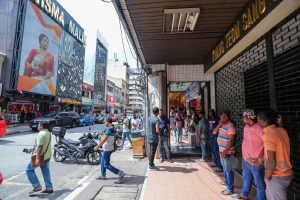
The Kuala Lumpur City Hall (DBKL) has been monitoring these signs for the past week and has either changed or removed most of them.
Recently, city officials have been working in this area to make sure that all shop signs use Malay, which is the national language.
However, when the DBKL posted on Facebook last month about police efforts targeting only Chinese restaurants, some internet users questioned whether the organization’s actions against the restaurants were political.
Ex-prime minister Mahathir Mohamad added to the argument on November 18 by writing on Facebook that he felt like he was in China when he went to one of Kuala Lumpur’s shopping malls.
“We write every sign in Chinese and translate it into English.” Not a word in Malay. Not at all. Malaysia operates similarly. “Or are we now part of China?” Dr. Mahathir asked in a post. Dr. Mahathir asked in a post.
Lai Chen Heng, a member of the DBKL advisory board, clarified to CNA that the operations did not solely target Chinese businesses.
He also stated that it was against DBKL’s rules for Bangladeshi, Korean, and Arabic businesses to not display signs in the national language.
“The law is the law.” He stressed the importance of the national language and the need for it to receive significant attention.
DBKL has been inspecting companies that serve migrants from Bangladesh and other countries, according to checks done by CNA on the ground.
Mr. Lai said some summonses were sent out because the signboards did not follow city council rules, and others were sent out because they were different from something given to officials.
The DBKL should have been following the rules on billboards all along, but Mr. Lai said that they hadn’t been for many years.
“I don’t understand why the operations are happening now.” The DBKL has taken action against illegal structures and traders but hasn’t focused as much on signboards. “However, we planned this months ago,” he said.
CNA has asked DBKL about the timing of its implementation.
DBKL said in a statement on November 25 that the way it enforces sign laws is in line with Malay’s role as the official language of Malaysia and the country’s national language.
It said that this was in line with the Local Government Act.
The Dewan Bahasa dan Pustaka (DBP), the government agency in charge of coordinating the use of the Malay language and Malay literature, said that all business owners must apply for a license for their signboards and have their signboards inspected by this agency.
There is no set language that all ads must be in; they can be in any language. “We should give words and letters in the national language more weight and make them bigger than words and letters in other languages,” DBKL stated.
It said that this year it worked with DBP to do police operations in six shopping malls and give out 31 notices.
DBKL said, however, that words that are not in the national language do not need to be translated if the name of a firm, association, or company established under the Registration of Businesses Act 1956, Companies Act 1965, or Societies Act 1966 is already in that language.
The former member of the Petaling Jaya City Council in the state of Selangor said, “For example, the word ‘clinic’ must be spelled ‘klinik’ in Malay, but ‘clinic’ can also be displayed.”
The signboard can say something in more than one language without any problems. The rule has always been this way, so this is nothing new. “It’s not a big deal,” he said.
HOW RACE ENTERED THE MIX
When Malaysia’s Tourism Minister Tiong King Sing spoke out against DBKL’s actions, he made the problem worse by calling them extreme and saying that visitors have questioned how open and welcoming the country is.
In a Facebook post on November 24, he said, “Some foreign visitors have asked me if Malaysia is a racist or extreme country.”
Last month, Chinese flags waving during a cultural event in Teluk Intan, Perak, caused a significant stir. This signboard issue emerged after the event, and Mr. Tiong expressed concern that it could potentially harm tourists visiting the country.

According to The Star, Malaysia had 2.29 million Chinese tourists in the first eight months of this year, which is 160% more than the same time last year.
The signboard issue also reached the parliament. Mas Ermieyati Samsudin, a member of parliament for Masjid Tanah, said that Mr. Tiong had to protect Malaysia’s national language as the minister in charge of culture.
She asked why the goal set by his ministry for five million Chinese tourists for the year had not been met yet, even though money was being spent to bring them in.
Many other Malay politicians also took issue with what Mr. Tiong said about the problem.
Dr. Syaza Shukri, a political scientist at the International Islamic University Malaysia (IIUM), asserts that the issue escalated when the media concentrated on a Kuala Lumpur business that primarily caters to Chinese customers.
“When Mahathir made comments about KL malls, it became a political issue,” she stated.
“The emphasis on the Chinese language stems from Malay people’s fear of Malaysia becoming more like China, given China’s superior business acumen compared to other groups.” “The fact that China recently said it would host the Lunar New Year celebration in Malaysia adds to this story even more,” she said.
Mr. Tiong announced on November 25 that Malaysia will host the first-ever Chinese New Year (CNY) celebration outside of China. This will happen in January 2025.
Dr. Syaza also said that the Malaysian government should do more to control the racial storyline and keep cultural wars from getting worse.
The Malay community perceives Chinese resistance as “disloyalty,” while the Chinese community perceives them as targets. Things could get worse quickly.” She said, “The government needs to do something now.”
Federal Territories Minister Zaliha Mustafa reportedly instructed “all parties, including politicians, to stop fueling this controversy” on Friday, November 29.
According to the news site Free Malaysia Today, she said, “We have many important issues that need our attention, and playing on racial feelings in this way will only make people more divided and angry.”
She said that DBKL has given 264 warnings and taken action against 36 businesses so far this year for having signboards that don’t follow the rules.
This is not Malaysia’s first signboard dispute over language.
Al-Sultan Abdullah Ri’ayatuddin Al-Mustafa Billah Shah, the regent of Pahang, declared in 2018 that road signs, business signs, office signs, government agencies, and all school offices should use the Jawi script. In 2020, Pahang started punishing business owners who didn’t use Jawi on their signs.
People who broke the rules could get an RM250 (US$56) fine and lose their business licenses.
Two businessmen from the state attempted to challenge the rule in 2023, but were unsuccessful. The court said the Kuantan Municipal Council’s order was “not irrational, unreasonable, or unlawful.”
When asked if Malaysia’s signboard language laws should be merged, Mr. Fernandez said that each state may have its own rules and that state assemblies are free to make their own laws.
“A mistake was made, and it has been fixed.”
After the most recent incident, businesses in Kuala Lumpur are trying to move on and follow the rules.
People in “Mini Dhaka,” a reference to Bangladesh’s capital, were complaining about the migrants in the area, according to a shop owner who only wanted to be known as Bala.
CNA saw pictures and videos of DBKL workers taking down signs and signboards in the area, captured by Malaysian Mr. Bala.
The Immigration Department and DBKL also conduct regular police operations there to apprehend individuals who are in the country illegally or involved in other crimes.
According to another shop owner named Raja, he was fined RM2,000 for having an English signboard and told he needed to register the name of his business first.
“In the four years since my shop opened, I haven’t had a problem with my signboard, so I don’t know why I’m getting a summons and need to change it,” he said.
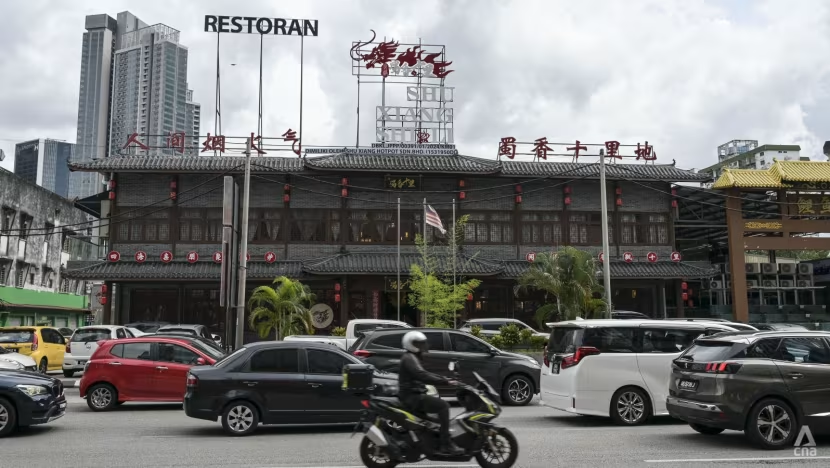
A Facebook post from DBKL on October 12 said that at least three of the restaurants on Jalan Imbi had changed their signs.
To go along with the Chinese and English words that were already on the signs, Chen Jiu Riu Beef Noodles and Steam Era Seafood Restaurant now have Malay words as well.
In place of the Chinese symbols that were there before, the Shu Xiang Shili restaurant put up a large sign in Malay.
People from China who are traveling or living in the area mostly use these companies.
One restaurant manager on Jalan Imbi told CNA that his business and the others had broken DBKL’s rules.
“We fixed the mistake we made.” “There are no problems now,” stated an anonymous boss. Furthermore, he said that the problem probably won’t stop tourists or other customers from eating at the place.