

Bumiputera Businesses to Move Beyond Small Enterprises and Dominate High-Value Industries: DPM Zahid
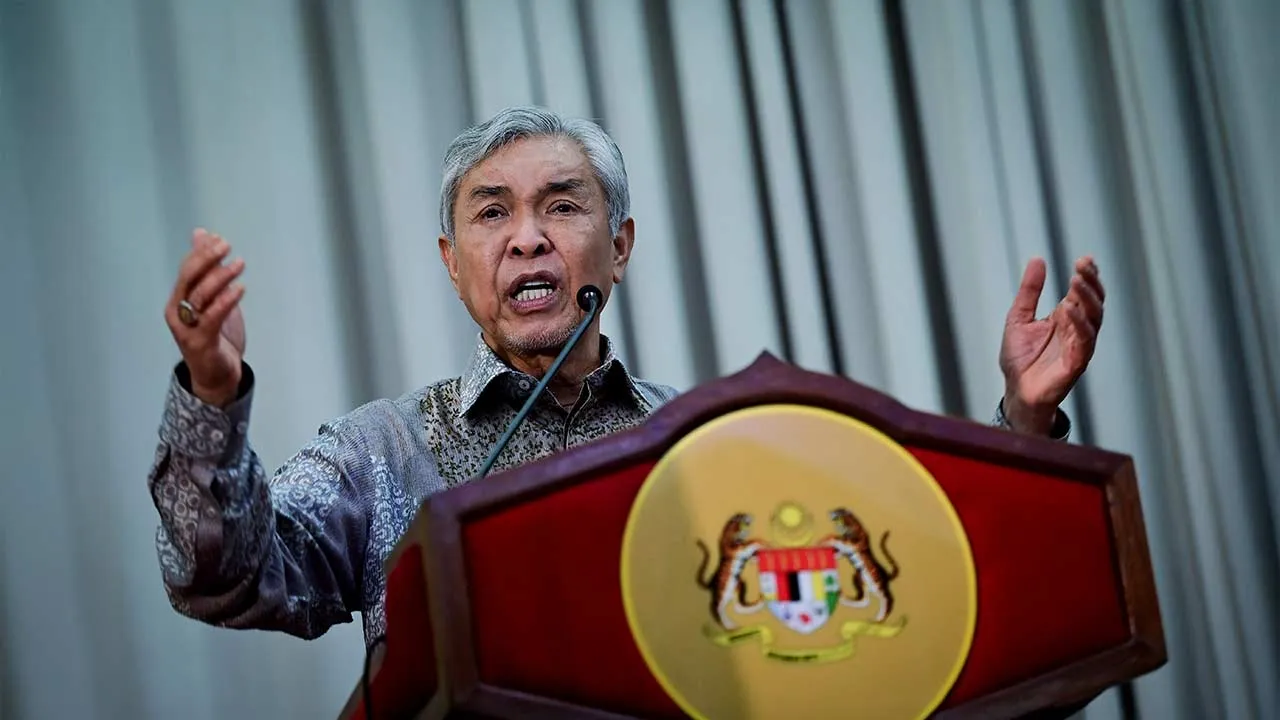
KUALA TERENGGANU: Deputy Prime Minister Datuk Seri Dr Ahmad Zahid Hamidi has called for a major shift in the Bumiputera economic agenda, urging entrepreneurs to move beyond small-scale business operations and take control of larger segments of the national and global value chain.
Speaking at the Bumiputera Entrepreneurs Economic Convention (KEUB) 2026, Ahmad Zahid said Bumiputera entrepreneurs should no longer be confined to the roles of small vendors, supporting suppliers, or end-of-chain industry players.
Instead, he stressed that they must be empowered to become leading manufacturers, technology owners, market leaders, and key drivers of high-value industries.
“Economic empowerment is not merely about participation. It is about ownership, control, and leadership within strategic sectors,” he said.
Using the halal industry as an example, Ahmad Zahid noted that Malaysia’s strength should extend far beyond halal certification. He said the country must strive to dominate the entire halal ecosystem, including raw material production, processing, packaging, logistics, marketing, and international distribution.
To achieve this, he proposed the formation of large-scale Bumiputera anchor companies capable of producing critical halal raw materials such as gelatin, enzymes, and pharmaceutical active ingredients, reducing dependence on imports while strengthening local industry capabilities.
The deputy prime minister also highlighted challenges faced by Bumiputera entrepreneurs in the food and franchise sectors, despite having quality products. Among the key obstacles are rising operational costs, limited scale, compliance standards, and market access.
He suggested collaborative approaches such as group purchasing systems, centralised commercial kitchens, and franchise builder models to improve competitiveness, standardise quality, and elevate Bumiputera brands to a higher level.
Looking ahead, Ahmad Zahid encouraged greater Bumiputera involvement in future-orientated industries, including aerospace technology, drone development, automation, and other advanced technology sectors.
“Bumiputera youths cannot remain mere consumers of technology. They must become technicians, designers, component suppliers, service providers, and ultimately industry owners,” he said.
He also called for a broader redefinition of Bumiputera economic success, arguing that traditional measurements based solely on participation are no longer sufficient in today’s digital economy.
According to him, real value in the digital age lies not only in transactions but also in platform ownership, data control, and equity creation.
As such, he expressed hope for the development of large-scale, competitive Bumiputera-owned digital platforms capable of becoming strong Malaysian brands in the global marketplace.
Ahmad Zahid further stressed the need for Bumiputera entrepreneurs to transition from technology users to technology-driven value creators in order to remain competitive in an economy increasingly powered by data, automation, and artificial intelligence (AI).
He concluded by calling for a more integrated national effort that unites policies, capital, technology, talent, markets, and entrepreneurial ambition to strengthen the Bumiputera economic ecosystem.
“When Bumiputeras own platforms, master technology, and lead value chains, we will not only build a stronger economy but also a more confident nation prepared for the future,” he said.