

Can CICA Become Asia’s Alternative to NATO? Middle East Crisis Tests Regional Security Model
ASTANA: As ceasefires collapse, peace negotiations stall, and tensions continue around strategic waterways such as the Strait of Hormuz, a growing Middle East crisis is putting global security systems under renewed pressure and raising questions about whether Asia could develop its own alternative framework to NATO.
One platform drawing attention is the Conference on Interaction and Confidence-Building Measures in Asia (CICA), a 28-member dialogue-based security organisation that includes both Israel and Iran, alongside several major Asian and Middle Eastern powers.
While CICA does not have military or enforcement powers, it focuses on diplomacy, trust-building and cooperation among member states that often hold opposing political positions.
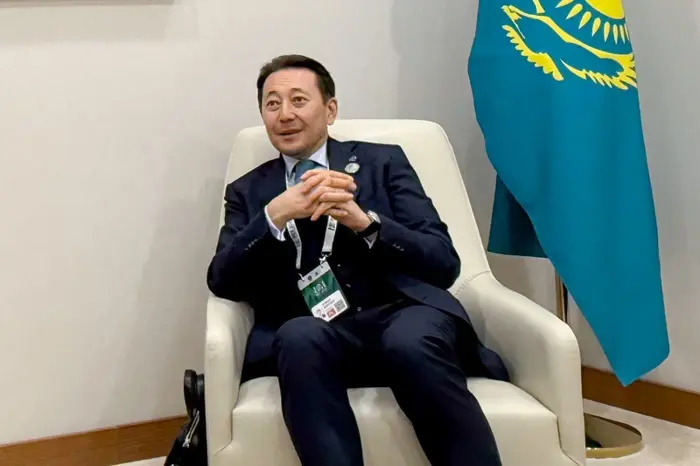
Kairat Sarybay, CICA’s secretary general, said the organisation remains one of the few multilateral platforms where rival states continue to engage despite escalating global tensions.
“The ongoing crisis in the Middle East is a significant test for the entire international community, including CICA,” he said, adding that the forum’s core mission is to preserve dialogue even when bilateral relations break down.
Unlike NATO, which is built on collective defence and military cooperation, CICA operates as a soft-power platform. It promotes voluntary cooperation in areas such as security dialogue, economic connectivity, environmental protection and counterterrorism initiatives.
Sarybay said member states including the UAE, Bahrain, Qatar, Iraq, Jordan, Egypt, India, China, Russia and others are often divided on political issues but still manage to cooperate on shared concerns.
“CICA’s mandate is not coercive diplomacy or direct crisis intervention; it is confidence-building,” he explained. “Our role is to ensure that dialogue remains open.”
The organisation covers nearly 90% of Asia’s landmass and represents about half of the world’s population and global GDP. Observers include countries such as the United States, Japan and Saudi Arabia.
China has been a key supporter of the platform since its establishment more than three decades ago. Sarybay praised Beijing’s “proactive role” in promoting dialogue and reducing tensions in the Middle East, saying China’s diplomatic approach aligns with CICA’s consensus-based model.
He also pointed to China’s Global Security Initiative as an example of its growing influence in shaping multilateral security discussions.
However, experts note that CICA’s effectiveness depends entirely on consensus among its 28 members, with even smaller states holding equal decision-making power. This limits its ability to enforce decisions but strengthens its role as a neutral dialogue platform.
The organisation is currently working on adopting a legally binding charter, expected to be discussed at its upcoming summit in Baku. If approved, it would mark a major step in transforming CICA from a consultative forum into a more structured international organisation.
CICA’s framework includes cooperation in 18 priority areas, ranging from military confidence-building and anti-terrorism efforts to environmental and economic initiatives. Member states often collaborate on small-scale projects aimed at building trust.
Sarybay said that in an increasingly fragmented global environment, multilateral platforms like CICA are becoming more important, particularly as geopolitical rivalries strain traditional institutions.
“The rise of unilateralism and violations of international law are major challenges,” he said. “Middle powers play a crucial role in keeping multilateral cooperation alive.”
While CICA is not seen as a direct competitor to NATO, analysts say its inclusive membership including rival states such as Israel and Iran makes it a unique experiment in regional diplomacy.
Sarybay concluded that Asia’s growing role in global affairs demands stronger cooperation mechanisms.
“Security and prosperity cannot be achieved in isolation,” he said. “CICA provides a space where cooperation is still possible even in difficult times.”