

Iran war exposes weakened state of Britain’s armed forces
LONDON: The ongoing Iran conflict has exposed significant strain on Britain’s armed forces, intensifying pressure on Prime Minister Keir Starmer to deliver on promises of increased defense spending amid long-standing concerns over declining military capacity.
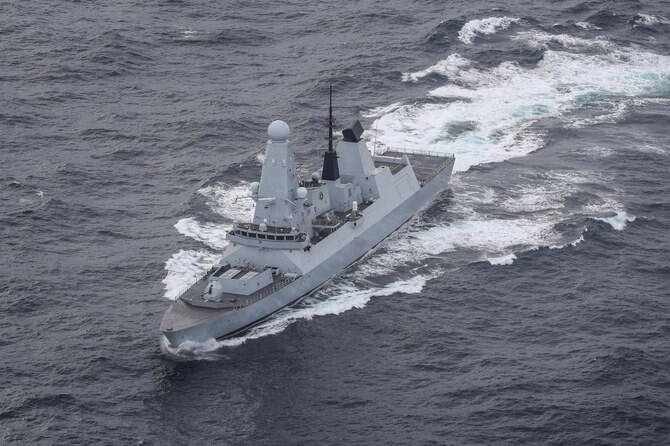
Recent developments highlighted operational delays, including the deployment of a British warship to the eastern Mediterranean weeks after a UK base in Cyprus was struck by a drone early in the conflict. In contrast, France, Greece, and Italy reportedly dispatched naval assets to the region within days.
The situation has drawn international attention, with U.S. President Donald Trump dismissing Britain’s aircraft carriers as “toys,” while U.S. Defense Secretary Pete Hegseth criticized what he described as the “Royal Navy’s” reduced strength.
Responding to criticism, Starmer said his government has initiated the largest sustained increase in military spending since the Cold War, emphasizing efforts to rebuild Britain’s defense capabilities.
Britain’s military has significantly reduced in size since the end of the Cold War. The armed forces now total roughly half their 1991 strength, with the army at its smallest size since the early 19th century.
The Royal Navy currently has around 38,000 personnel, operating two aircraft carriers and a fleet of 13 destroyers and frigates. In comparison, it had about 62,000 personnel and a far larger surface fleet in 1991.
Budget reductions over decades have seen defense spending fall from around 3.8% of GDP in the early 1990s to approximately 2.3% in 2024, contributing to reduced naval readiness and operational capacity.
The navy has also faced logistical constraints, including maintenance cycles and aging vessels. While new Type 26 and Type 31 frigates are expected to enter service in the coming years, current fleet availability remains limited.
Britain’s nuclear deterrent continues to be a central component of its defense strategy, with four Vanguard-class submarines maintaining continuous at-sea patrols under the Trident program. These vessels are expected to be replaced by Dreadnought-class submarines in the 2030s.
The Royal Air Force now operates just over 150 fighter aircraft and has around 31,000 personnel, down sharply from approximately 700 fast jets and 88,000 personnel in 1991. Limited deployments have been made to the region in response to rising tensions.
Meanwhile, the British Army has declined to around 74,000 full-time personnel, compared to 148,000 in 1991. Its main battle tank fleet has also shrunk dramatically, from about 1,200 at the end of the Cold War to roughly 150 operational units today.
Despite ongoing modernization plans, analysts say Britain’s ability to rapidly project military power has been reduced, particularly compared to its European allies and past capabilities during the Gulf War era.
While the UK remains engaged in defensive operations in the Middle East, officials stress that current deployments are limited in scope and focus on protecting British interests and personnel in the region.