

ASEAN Energy Ministers Adopt Key Frameworks to Drive Regional Energy Transition at 43rd AMEM in Kuala Lumpur
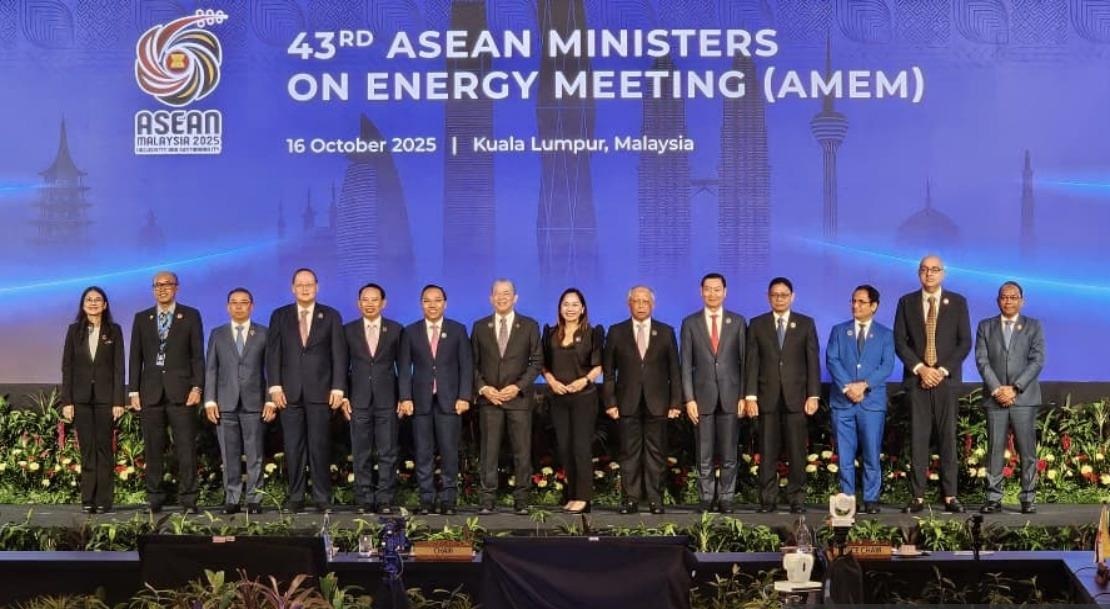
KUALA LUMPUR, Oct 16: The 43rd ASEAN Ministers on Energy Meeting (AMEM) opened today with member states set to endorse a series of major energy frameworks that will guide the region’s transition toward cleaner, more resilient, and integrated energy systems over the next five years.
Deputy Prime Minister Datuk Seri Fadillah Yusof, who is also Minister of Energy Transition and Water Transformation, said the meeting focuses on practical action, policy implementation, and regional collaboration to strengthen energy security and accelerate the shift toward sustainable energy.
“This AMEM is not just about concluding the current work plan, but about collectively charting the energy landscape for the next half decade,” Fadillah said in his opening remarks at the Kuala Lumpur Convention Centre (KLCC).
“We are set to deliver on the Priority Economic Deliverables (PEDs) under Malaysia’s Chairmanship, which are vital to accelerating ASEAN’s energy transition and enhancing energy security,” he added.
Fadillah highlighted that four key outcomes are expected from the meeting: Launch of the ASEAN Plan of Action for Energy Cooperation (APAEC) Phase II (2026–2030), a comprehensive roadmap to steer ASEAN’s collaboration toward a cleaner and more connected energy future. The exchange of documents for the Enhanced MoU on the ASEAN Power Grid (APG) is a vital step to advance cross-border grid connectivity and multilateral power trading. Formalization of the ASEAN Framework Agreement on Petroleum Security (AFAPS), ensuring regional preparedness against global supply disruptions. Announcement of the ASEAN Power Grid Financing Initiative (APGF), a new mechanism to mobilize investment and coordinate financing for APG infrastructure projects.
The meeting also discussed strategic frameworks proposed by the Senior Officials Meeting on Energy (SOME), including the Renewable Energy Long-Term Roadmap, the ASEAN Energy Efficiency Database and Investment Platform, and the Terms of Reference for Subsea Power Cable Development.
Ministers were also briefed on progress made under the ASEAN Nuclear Power Plant (NPP) Deployment Framework and the ASEAN Renewable Energy Certificate (REC) Framework.
“These platforms are essential for mobilizing investment, technology, and policy collaboration required to realize our shared goals,” said Fadillah.
“The decisions we make here will echo across our economies and directly impact the lives of over 670 million ASEAN citizens.”
On the sidelines of the AMEM, energy ministers from Lao PDR, Thailand, Malaysia, and Singapore reaffirmed their commitment to advancing multilateral and multidirectional electricity trade under the Lao PDR-Thailand-Malaysia-Singapore Power Integration Project (LTMS-PIP).
In their Sixth Joint Statement, the four nations celebrated a new milestone: the expansion of LTMS-PIP to enable two-way power trading of up to 200 megawatts (MW) across existing regional interconnections.
Launched in June 2022, the project began with 100 MW of power traded from Lao PDR to Singapore via Thailand and Malaysia, marking the first-ever multilateral electricity trade among ASEAN members. Following its 2024 expansion, it now allows power flows from Malaysia to Singapore, demonstrating its vital role in regional energy integration.
“The LTMS-PIP stands as a cornerstone of the ASEAN Power Grid,” the ministers said, lauding the project for showcasing the feasibility of multilateral power exchange.
The statement also commended the work of the LTMS-PIP Working Group and task forces in managing the project’s technical, commercial, and regulatory aspects to ensure smooth implementation.
The four countries pledged to further enhance the LTMS-PIP by developing new cross-border interconnectors and subsea power cables, key infrastructure for the ASEAN Power Grid.
They also called for deeper ASEAN-wide cooperation to expand power trade and attract clean energy investment, aligning with the goals of the ASEAN Economic Community (AEC).
“The success of the LTMS-PIP sets a strong foundation for a fully interconnected ASEAN Power Grid,” the joint statement concluded, reaffirming the shared vision of a sustainable, secure, and integrated regional energy future.