

US-Pakistan Ties Thaw as Army Chief Munir Meets Trump, But Challenges Loom Over Iran and China
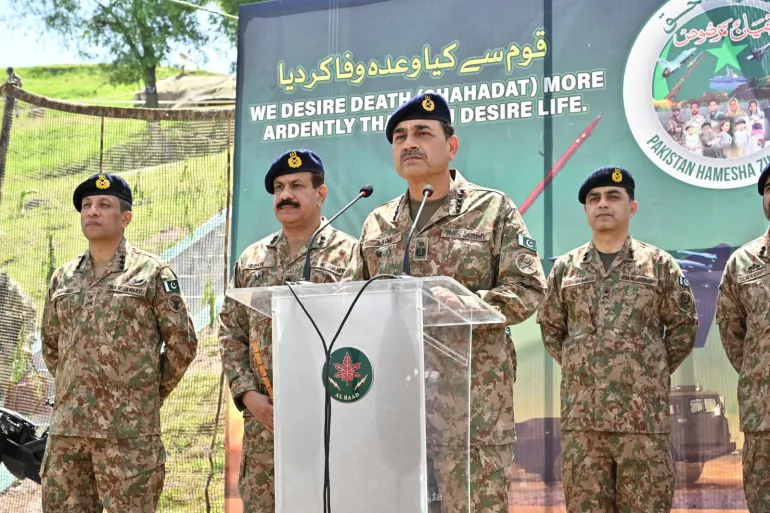
ISLAMABAD, June 22— In a rare and highly symbolic development, Pakistan’s army chief, Field Marshal Asim Munir, met privately with U.S. President Donald Trump at the White House this week, signaling a notable warming of relations between the two historically uneasy allies. The two-hour, closed-door meeting, held in the Cabinet Room and Oval Office, was described by Pakistani officials as “excellent,” marking a major step forward after years of diplomatic chill.
While the meeting may have cemented personal rapport and rekindled strategic dialogue, analysts say two looming challenges—rising tensions with Iran and Pakistan’s strategic partnership with China—will test the durability of any reset between Washington and Islamabad.
A Meeting Marked by Optimism and Opacity
The Inter-Services Public Relations (ISPR), Pakistan’s military media wing, reported that discussions spanned a wide array of topics, including economic development, energy, artificial intelligence, cryptocurrency, and regional security. However, the focus also inevitably turned to the escalating conflict between Iran and Israel, which has brought the Middle East to the brink of regional war.
While the White House did not release a formal statement, President Trump thanked Munir after their meeting, calling it “an honor,” and alluded to Pakistan’s deep familiarity with Iran—remarks that experts believe signal Washington’s interest in Islamabad’s potential role in Middle Eastern diplomacy.
According to officials who attended a private dinner later hosted by the Pakistani Embassy, Munir expressed optimism about the renewed engagement and was candid in his critique of past U.S.-Pakistan relations, calling the previous Biden-era ties among “the worst historically.”
Strategic Gains, But No Guarantees
Experts view Munir’s visit as a diplomatic victory for Pakistan. Elizabeth Threlkeld, director of the South Asia Program at the Stimson Center, called the trip “a significant upswing in U.S.-Pakistan ties,” emphasizing the importance of Trump’s personal diplomacy style.
However, Sahar Khan, a U.S.-based security analyst, warned that renewed contact does not necessarily equate to alignment. “It’s a thaw, not a full partnership,” she said. “Pakistan must use this opening wisely and resist being cornered by unrealistic demands, particularly concerning Iran and China.”
China: The Strategic Tightrope
Pakistan’s decades-long alliance with China presents one of the greatest obstacles to deeper ties with the U.S. As the backbone of the $62 billion China-Pakistan Economic Corridor (CPEC), Beijing is Islamabad’s principal economic and defense partner. Over 80% of Pakistan’s military hardware is sourced from China, including weapons used in recent clashes with India.
Muhammad Faisal, a security expert based in Australia, noted that Pakistan’s commitment to “no-camp politics”—refusing to choose between superpowers—will face mounting stress as U.S.-China competition intensifies.
“While the U.S. and China may both court Pakistan, that dual interest gives Islamabad valuable diplomatic flexibility,” he said. “But balancing those relationships will require careful, consistent diplomacy.”
Iran Conflict Tests Pakistan’s Neutrality
The more immediate challenge is Iran. As Israel continues its high-intensity strikes on Iranian territory, Pakistan—sharing a long and porous border with Iran—has repeatedly called for a ceasefire and emphasized diplomacy.
Munir’s visit to Iran last month, alongside Prime Minister Shehbaz Sharif, signaled Islamabad’s intent to strengthen ties with Tehran. The killing of top Iranian general Mohammad Bagheri during Israel’s opening salvo further complicated matters. Pakistan strongly condemned the strike as a “blatant violation” of Iranian sovereignty.
With 15-20% of Pakistan’s population identifying as Shia Muslims, public sentiment—and domestic stability—could be heavily influenced by the unfolding conflict. “Any overt pro-American stance risks inflaming sectarian tensions at home,” warned Faisal.
At the same time, Pakistan is under quiet pressure from the U.S. to play a mediating role. Analysts suggest Islamabad may be uniquely positioned to broker backchannel diplomacy between Washington and Tehran.
“It’s not just strategic geography,” said Sahar Khan. “It’s cultural, demographic, and religious factors that make Pakistan a potential bridge—but also a stakeholder in preventing regional escalation.”
Diplomatic Opportunity Amid Geopolitical Risk
Despite the complexity, analysts agree that Munir’s White House visit may offer a rare window of opportunity for Islamabad to recalibrate its global standing.
As the U.S. recalibrates its Middle East priorities and China’s regional influence continues to grow, Pakistan’s ability to navigate these two poles while promoting peace in Iran may define the future of its foreign policy.
Whether the moment results in lasting strategic realignment or a temporary warming remains to be seen. But for now, Pakistan appears back on Washington’s radar—with both risks and rewards on the horizon.