

U.S. Strikes on Iran’s Nuclear Sites Raise More Questions Than Answers as No Radiation Leak Is Detected
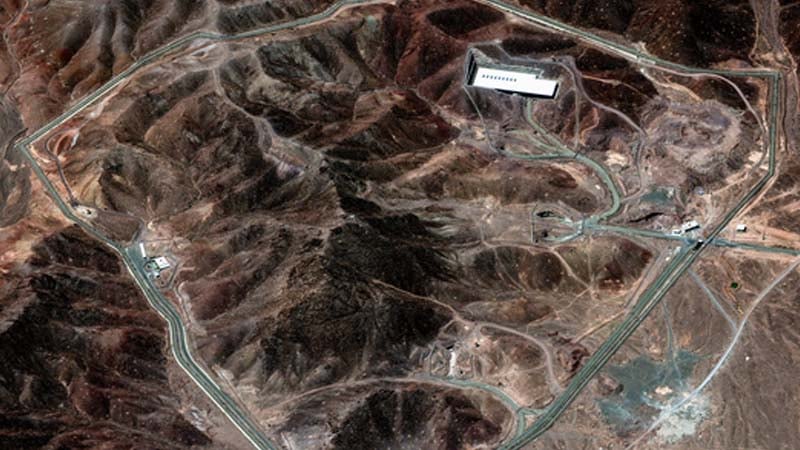
Tehran, June 24— The United States has come under increasing scrutiny following its high-profile airstrikes on three major Iranian nuclear facilities, as no signs of radiation leakage have been detected, casting doubt on claims of a successful neutralization of Iran’s uranium enrichment capabilities.
President Donald Trump confirmed the attack on his social media platform, Truth Social, declaring that the Fordow, Natanz, and Isfahan nuclear sites had been “successfully bombed” in a joint military move with Israel. The strikes represent an important development, effectively initiating direct military engagement between Washington and Tehran.
“Three nuclear facilities in Iran have been successfully hit—Fordow, Natanz, and Isfahan,” Trump posted. “All aircraft involved are now out of Iranian airspace.”
According to U.S. Air Force Chief Gen. Dan Kane, bunker-buster bombs were deployed on Fordow and Natanz, while over two dozen Tomahawk cruise missiles were launched at Isfahan from a U.S. submarine. The Pentagon later confirmed that 14 GBU-57 Massive Ordnance Penetrator (MOP) bombs were used in the operation—each capable of penetrating up to 18 meters of concrete or 61 meters of earth.
The operation involved 125 aircraft, including stealth B-2 Spirit bombers, which dropped 75 precision-guided munitions. Despite the scale of the strike, both Iranian authorities and the International Atomic Energy Agency (IAEA) reported no evidence of radioactive leakage, leading to growing speculation over the fate of Iran’s enriched uranium stockpile.
Where Is Iran’s Uranium?
The absence of any detectable radiation leak has triggered strategic questions within Western intelligence circles. Experts are now questioning whether the uranium was ever at the targeted facilities at the time of the strike or if Iran had relocated or concealed its critical nuclear assets in anticipation of an attack.
The absence of radioactive fallout has also put the U.S. in a delicate diplomatic and strategic position, as its primary rationale for the strike—the destruction of Iran’s enrichment capability—seems to be questionable.
“If Iran’s uranium was moved before the strikes, then the operation failed to achieve its intended goal and could embolden Tehran’s nuclear ambitions further,” one senior analyst noted.
Escalating Regional Tensions
Iran has warned of a strong retaliatory response if the U.S. launches another attack. In response to the strikes, Iranian-aligned militias in Iraq, Syria, and Yemen have already begun mobilizing. The Houthi movement in Yemen has also threatened to target U.S. ships in the Red Sea, raising fears of a wider regional conflict.
Meanwhile, Trump hailed the mission as a “tremendous military success,” although critics argue that even if the operation was tactically effective, it has triggered severe geopolitical consequences and left Washington exposed to further risks.
The situation remains volatile, with fears mounting over a full-blown confrontation in the Middle East. Analysts warn that if Iran retaliates on American assets in the region, especially in the Gulf, it could ignite a broader war with unpredictable outcomes.
As of now, the whereabouts of Iran’s enriched uranium remain uncertain, adding another layer of complexity to an already tense and dangerous standoff.