

The government is looking into the need to rationalize the RON95 petrol subsidy, said Rafizi
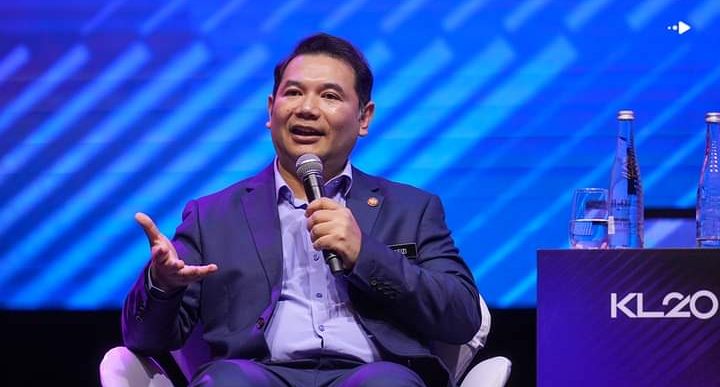
KUALA LUMPUR: The government is examining the need to rationalize the subsidy implemented on RON95 petrol, said Economy Minister Rafizi Ramli.
Report Berita Harian, however, he said for the time being, focus and priority will be given to the implementation of the diesel subsidy which was implemented from June 10 until the targeting of the subsidy becomes stable, thus achieving the set objectives.
He said, at the same time, the research is to strengthen the country’s fiscal sustainability and reduce the leakage in the distribution of diesel subsidies.
“If the rationalization of the subsidy on RON95 petrol is implemented in the future, the government will take appropriate measures to ensure that the affected people will be given appropriate assistance,” he said in a written reply in the Dewan Rakyat, yesterday.
He answered Dr Radzi Jidin’s (PN-Putrajaya) question about when the targeted subsidy will be fully implemented as stated by the Prime Minister, Datuk Seri Anwar Ibrahim on 27 November 2022 and whether the targeted subsidy for petrol will be implemented this year, in addition to the government’s guarantee that the price of goods will not continued to increase after targeted subsidies were implemented.
Rafizi explained that the implementation of subsidy rationalization will also help the government strengthen its fiscal position and optimize available resources.
“Savings from the subsidy retargeting initiative will be returned to the people through the implementation of programs and projects that are more beneficial and really needed by the people, such as improvements in the provision of social services and public facilities, including health, education, transport and security,” he said.
In a written reply to Datuk Mohd Shahar Abdullah (BN-Payar Besar), he said that the realignment of fuel subsidies is expected to have an impact on the country’s inflation rate.
However, he said, a well-designed strategy together with targeted cash assistance will help reduce the impact.
For example, the government still subsidizes and maintains diesel prices at RM2.15 per liter to 23 types of logistics vehicles through the Subsidized Diesel Control System (SKDS) 2.0.
In addition, the maintenance of the diesel price of RM1.88 for land public transport including school buses, express buses, ambulances and firefighters, while the rate of RM1.65 remains for fishermen and the government also provides BUDI MADANI cash subsidy assistance.
“Bank Negara Malaysia (BNM) through the publication of the 2023 Economic and Monetary Survey expects the implementation of subsidy rationalization to have short-term implications for the country’s inflation rate.
“The inflation rate for 2024 is projected to be between two to 3.5 percent. This situation is partly due to the gradual shift towards a targeted subsidy implementation mechanism, especially involving fuel subsidies,” he said.
Rafizi informed that the government’s fiscal position is increasingly challenging and requires a commitment to retarget the subsidy which is one of the main components in the operating budget.
“The welfare of the people as a whole is still a priority. Therefore, the government needs to choose a method of retargeting subsidies that can balance the government’s goal to improve the fiscal position and at the same time, reduce the impact on the cost of living borne by the people,” he said.
Regarding mitigation measures, Rafizi said, based on projections made by several international organizations such as S&P Global, EIU and Bloomberg, the average global price for Brent oil is projected at US$85 per barrel for 2024.
“However, if the price of oil rises sharply, the government through the Ministry of Finance, BNM and the Ministry of Economy will re-examine according to current needs.
“This is to ensure that the people, especially the low-income group, are not burdened by any price changes,” he said.