

New Saudization targets for marketing and sales roles come into effect
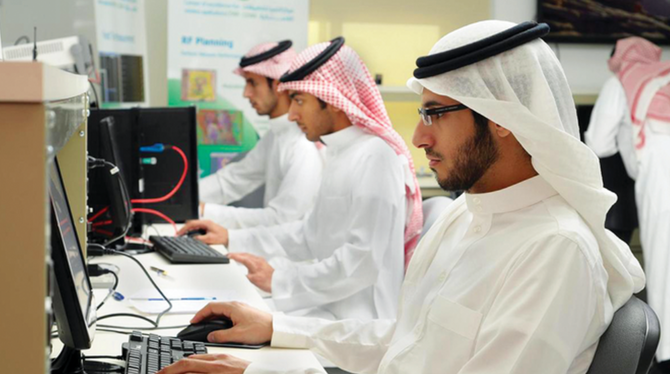
RIYADH: Saudi Arabia began on Sunday implementing higher Saudization rates for marketing and sales professions as part of efforts to increase the participation of nationals in the private sector.
The Ministry of Human Resources and Social Development said the measures raise localization rates in both sectors to 60 percent following the end of a grace period for private sector establishments, the Saudi Press Agency reported.
The decision applies to companies employing three or more workers in the targeted roles, the ministry said. A minimum monthly salary of SR5,500 ($1,466) has also been set for Saudi employees to be counted toward Saudization rates in marketing professions.
Marketing roles covered include marketing manager, advertising manager, advertising agent, graphic designer, advertising designer, public relations specialist, marketing specialist, public relations manager, and photographer.
Sales roles include sales manager, retail and wholesale sales representative, sales representative, information and communications technology sales specialist, commercial specialist, and commodity broker.
Speaking to Arab News, Fahad Al-Kastaban, human resources advisor, said the move represents “an important regulatory step” expected to enhance the participation of national talent in one of the most dynamic and fast-growing sectors.
He added that the decision is also expected to expand job opportunities for Saudi men and women, particularly with the introduction of a minimum wage, which “helps improve job quality and reduce inefficient employment.”
Al-Kastaban noted that “the most prominent challenges include the limited availability of qualified talent for some specialized roles, high turnover rates in the marketing and sales sector and operational cost pressures.”
He said these challenges can be addressed through “investment in training and upskilling, improving the work environment, and building clear career pathways that enhance job stability,” alongside leveraging support programs offered by the ministry.
Al-Kastaban emphasized that achieving the intended impact will depend on the quality of implementation, including developing skills, improving the work environment, and building clear career pathways that ensure sustainability.
“In doing so, the impact of the decision will go beyond merely raising localization rates, contributing meaningfully to improving labor market efficiency and advancing the goals of Saudi Vision 2030 in a sustainable way,” he said.
The ministry said it has published procedural guidelines on its website detailing the targeted roles, implementation mechanisms, and how localization rates will be calculated, along with penalties for non-compliance.
Over recent years, Saudi Arabia has expanded Saudization requirements across a range of sectors as part of broader labor market reforms under Vision 2030.
According to statistics released by the ministry in December 2025, more than 2.48 million Saudis have entered the private sector since 2020.
The data also showed that the overall labor force participation rate reached 68.2 percent in the first quarter of 2025, while Saudi participation rose to 51.3 percent.
During the same period, the Human Resources Development Fund supported about 143,000 Saudis into private sector jobs, with SR1.83 billion allocated to training and employment programs.